Key Takeaways
- Men who discharge directly from inpatient treatment to independent living without structured support face the highest relapse risk of their recovery — the first 90 days are the most critical window, and transitional housing fills it with daily accountability and peer structure.
- Monthly costs for men’s sober living in San Antonio range from $500–$2,500 depending on structure and amenities; first 30 days out-of-pocket typically total $2,600–$3,000, and neither private insurance nor Medicaid covers room and board.
- Texas Senate Bill 1295 (effective September 1, 2023) established a voluntary certification framework for recovery residences under HHSC — ask any operator for NARR/TROHN or HHSC certification status before committing.
- Research consistently shows that men who stay in structured recovery housing for 3–6 months have significantly higher rates of sustained sobriety, employment, and housing stability compared to those who skip this step.
- Trust Drew’s Sober Living for daily accountability, brotherhood, and a proven 83% sober move-out rate — visit Drew’s Sober Living to learn how we bridge the gap between treatment and independent life.
What is post-rehab transitional housing, and why do men need it after treatment?
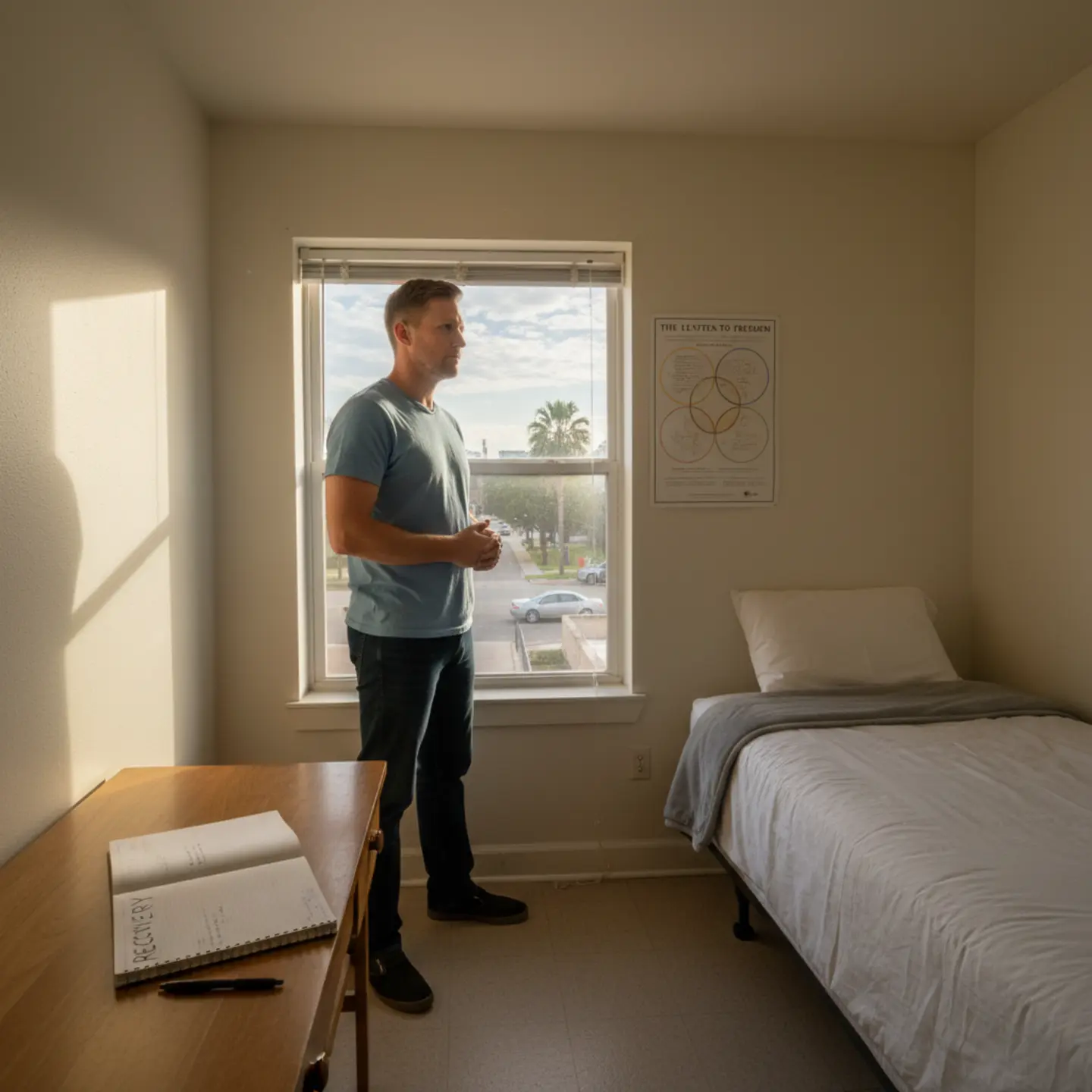
Post-rehab transitional housing—also called sober living or recovery residences—is a structured, substance-free living environment that bridges the critical gap between inpatient treatment and independent life. Most men who discharge directly from rehab to their own apartment or back home without this bridge relapse within 30 days. Transitional housing provides daily accountability, peer support, employment structure, and a brotherhood of men committed to staying sober—the exact foundation most men need to turn treatment into lasting recovery.
Understanding what transitional housing is, how it works in San Antonio, what it costs, and what outcomes it delivers will help you or your loved one make an informed decision about this critical step in recovery.
Drews Sober Living
Daily Breathalyzer Testing for Every Resident
Core Service Programs:
- Structured Sober Living Homes for men transitioning from treatment to independent, sober living
- Daily Accountability & Drug Testing for residents and families who need consistent, verifiable structure
- Life-Skills & Employment Readiness for men rebuilding work history, finances, and a sober support network
Why Choose Drews Sober Living:
- ✓ Trusted by customers with a perfect 5.0-star Google rating across 91 verified reviews
- ✓ Daily breathalyzer testing for every resident, plus drug testing every two weeks
- ✓ Four operating houses, 38 beds in San Antonio and New Braunfels, Divine House coming soon
- ✓ Live in house managers who are men in long term recovery themselves
- ✓ Founded in 2023 by Drew, who built every house policy from his own recovery
- ✓ 83% of residents who moved out of the community did so sober
- ✓ Strongly encouraged 30 hour work week plus financial literacy and life skills training
Why the Gap Between Rehab and Independent Life Is Where Most Men Relapse
Treatment programs typically last 28–90 days. That’s enough time to detox, stabilize, and start understanding the patterns that drove the addiction. It is not enough time to rebuild a life. Real recovery — the kind that holds up when money gets tight, when old friends call, when the stress of a bad week hits — requires 6–12 months of consistent, structured support to solidify.
When a man discharges from inpatient treatment directly to independent living, he walks back into the exact conditions that made staying sober hard in the first place: isolation, unstructured time, old triggers, and zero accountability. There’s no one to notice when he’s slipping. No one to say something. That’s not a character flaw — it’s just the math of recovery without a foundation.
Here’s the honest version: completing treatment is genuinely hard, and you should be proud of it. But the guys who struggle most after rehab aren’t the ones who didn’t try hard enough in treatment. They’re the ones who went straight home to a situation that hadn’t changed — same address, same people, same empty afternoons. Structure isn’t a punishment. It’s the thing that buys you time to build something real.
The first 90 days after discharge are the highest-risk window of your recovery. Transitional housing exists specifically to fill that window with daily breathalyzers, a work requirement, 12-step meetings, and a brotherhood of men who are doing the same thing you’re doing. You don’t have to do it alone.
Research from SAMHSA and peer-reviewed studies in the Journal of Substance Abuse Treatment consistently shows that men in structured recovery housing have significantly lower relapse rates than those who return directly to independent living. The data isn’t subtle — the gap between outcomes is large, and it’s driven by the daily accountability and peer support that structured housing provides.
The San Antonio and New Braunfels Recovery Housing Market: What’s Available and What’s Growing
San Antonio, with a population of approximately 1.5 million, and New Braunfels, one of the fastest-growing cities in the United States at roughly 104,000 residents, are both experiencing the demand pressures that come with rapid population growth. More people means more need for every social service — including recovery housing.
Bexar County’s substance use disorder numbers reflect national trends. Texas HHSC data from 2023–2024 shows hundreds of thousands of Texans needing treatment annually, with men representing a substantial share. The most common substances driving treatment admissions for men in the San Antonio metro are alcohol, methamphetamine, and opioids — including fentanyl — with cannabis and cocaine also significant. The demand for quality recovery housing is real and consistent.
The market itself spans several provider types. Peer-run Oxford Houses offer affordable, democratically operated housing at the lower end of the cost spectrum. Faith-based programs incorporate spiritual principles alongside recovery support. Nonprofit residences sometimes offer reduced-cost or scholarship beds. And structured private sober living homes — like those operated by Drew’s Sober Living — provide the highest level of daily accountability, testing, and life-skills programming. San Antonio’s significant veteran population (Fort Sam Houston and JBSA are major demand drivers), active court-system referrals, and a growing IOP/PHP treatment corridor all keep demand for quality men’s recovery housing consistently strong. Notable gaps remain for veterans, young men aged 18–25, Spanish-speaking residents, and men with co-occurring disorders.
What Transitional Housing Costs in San Antonio and How to Afford It
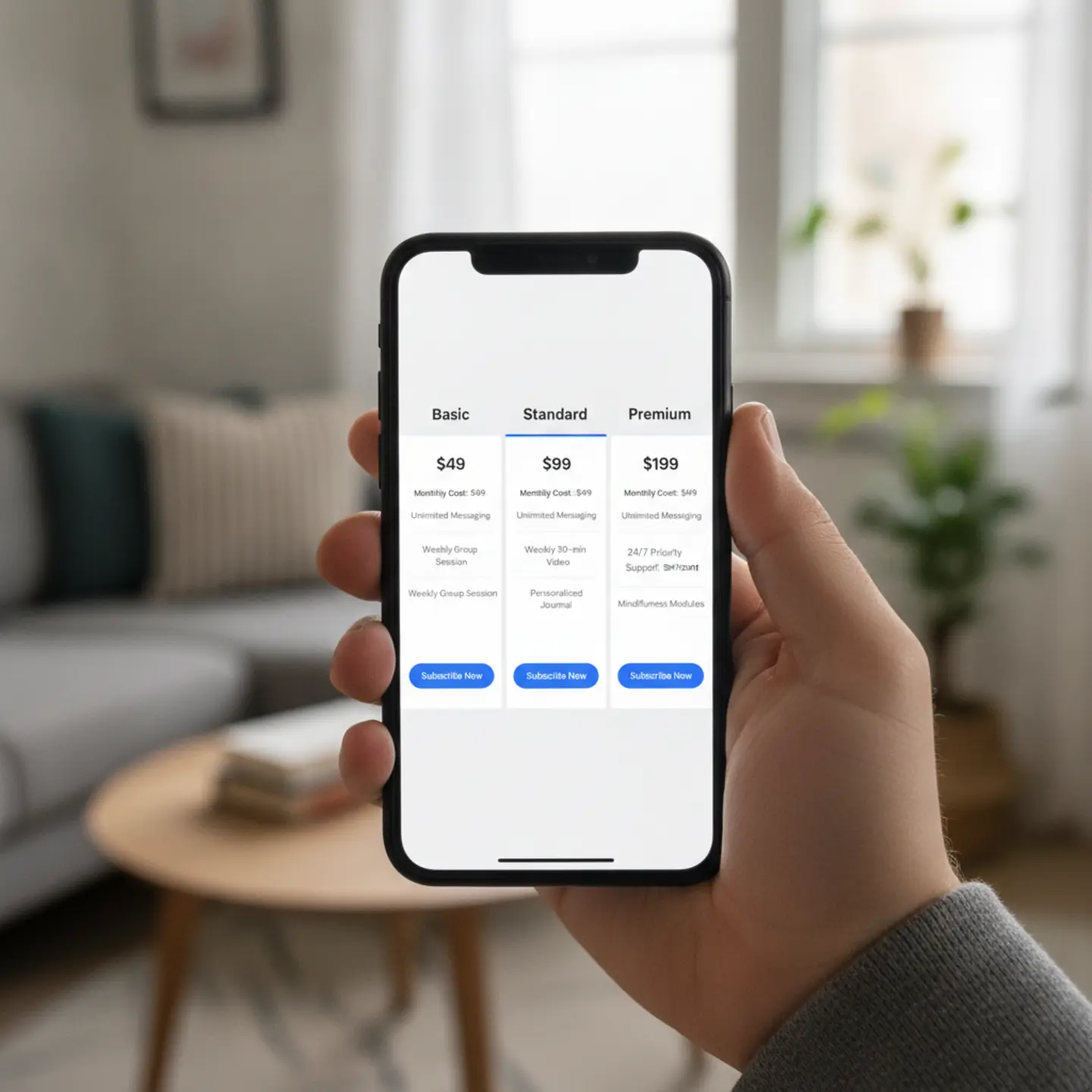
Monthly costs for men’s sober living in San Antonio run from roughly $500 to $2,500 depending on the level of structure, location, and what’s included. Peer-run homes on the Oxford House model typically land between $500–$800 per month. Mid-range semi-structured homes run $800–$1,500. Structured program-model homes with daily testing, house managers, and employment support — the level that produces the best outcomes — generally run $1,200–$2,500 per month.
For the first 30 days, a realistic out-of-pocket estimate looks like this: a $100 move-in fee, two weeks’ rent upfront, the next month’s rent, every two weeks drug testing costs ($50–$100/month), food, and basic transportation — totaling roughly $2,600–$3,000. That’s a real number, and it’s worth planning for. Compared to Austin and Dallas, San Antonio’s sober living costs are relatively affordable and generally at or below the national average for structured recovery residences.
It’s Normal to Feel Scared About the Cost
First 30 days out-of-pocket can feel overwhelming — roughly $2,600–$3,000 including move-in fees, rent, testing, and living expenses. But this investment in structured recovery is far cheaper than the cost of relapse: emergency room visits, re-incarceration, lost employment, and family strain. The question isn’t whether you can afford transitional housing. It’s whether you can afford to skip it.
On the funding side, the picture is straightforward: Texas Medicaid and private health insurance generally do not cover the room and board component of sober living. Their focus is on licensed clinical services. SNAP benefits can help offset food costs for eligible residents. The Texas Workforce Commission’s Vocational Rehabilitation Services can support employment and job training, which indirectly helps with financial stability. But families and men entering recovery housing should realistically plan to cover room and board out of pocket, through personal savings, or with family support. For a detailed breakdown of costs across the Texas market, the San Antonio recovery housing cost guide covers the full range of options.
Texas Regulations, Certifications, and Consumer Protections for Recovery Residences
As of 2026, sober living homes in Texas are not subject to mandatory state licensure the way clinical treatment facilities are. There is no required state license to operate a recovery residence — which means the quality of homes varies significantly, and the burden of vetting falls on the consumer.
Texas Senate Bill 1295, effective September 1, 2023, changed the landscape meaningfully. It established a voluntary certification framework for recovery residences under HHSC, aligned with NARR (National Alliance for Recovery Residences) standards. NARR’s tiered system runs from Level I (peer-run, minimal structure) through Level IV (highest oversight, near-clinical support). Most structured private sober living homes operate at Level III. The Texas affiliate, TROHN (Texas Recovery Oriented Housing Network), certifies homes that meet these standards. SB 1295 also introduced consumer protections: required disclosures of certification status, house rules, costs, and eviction policies; established grievance procedures; and complaint mechanisms for certified residences.
Red Flags That Signal an Unsafe or Predatory Sober Living Operator
Watch out for vague or non-existent house rules, untransparent financial terms, lack of structure or accountability, overcrowding or unsafe living conditions, and discouraging family involvement. Any operator who guarantees sobriety, lacks verifiable certification, or pressures you toward a specific treatment center for referral fees is a serious red flag. Reputable operators answer every question clearly and provide documentation — if they won’t, walk away.
Questions to Ask Before Committing to Any Sober Living Home
Before moving in, ask about daily expectations (curfew, chores, meetings, work requirements), drug testing protocol and consequences for a failed or refused test, employment support offered, written house rules and resident agreement, staff qualifications, NARR/TROHN or HHSC certification status, and the eviction process. Reputable operators will answer every question clearly and provide documentation without hesitation.
To verify any operator’s legitimacy, request proof of NARR/TROHN or HHSC certification, ask for written house rules and a resident agreement before signing anything, conduct a site visit, and if permitted, speak with current residents about their experience. For a deeper look at how Texas defines these terms legally, the sober living vs. halfway house comparison for Texas breaks down the distinctions clearly.
What to Expect in a Structured Sober Living Home: Daily Life, Rules, and Accountability
Daily breathalyzer testing begins on day one. Bi-weekly drug screening is standard. Zero tolerance for drugs, alcohol, and banned substances — including Kratom, K2, and CBD — means immediate dismissal if violated. These aren’t arbitrary rules. They’re the floor that keeps the house safe for every man living there.
The first 30 days are a probationary period. Weeknight curfew is 10 PM; weekends are 11 PM. No overnight passes. A 20-hour weekly productivity requirement kicks in immediately. Mandatory 12-step meeting attendance and finding a sponsor are non-negotiable from the start. After probation, curfews adjust based on time in the program and demonstrated responsibility, and the work requirement steps up to 30 hours per week.
Every resident has assigned house chores. Everyone is up by 10 AM Monday through Friday unless at work, class, or a volunteer commitment. Residents keep their personal phones, choose their own employment, and maintain their identity as adults. The structure is about accountability — not surveillance or control. For a full breakdown of what the program requires day-to-day, the Drew’s Sober Living program overview covers every expectation in plain language.
Typical stays run 3–12 months, with 3–6 months recommended for the best outcomes. There is no predetermined graduation date. A man exits when stable employment, sound finances, a real sober support network, and demonstrated readiness all exist — not on a calendar schedule.
Outcomes and Data: Why Transitional Housing Works
The research on structured recovery housing is consistent and clear. Men in these environments have significantly lower relapse rates than those who return directly to independent living after treatment. Length of stay matters: 3-month stays show initial improvements in sobriety and recovery engagement; 6-month stays correlate with sustained sobriety, increased employment, and greater housing stability; 12-month stays demonstrate even stronger long-term abstinence, reduced criminal justice involvement, and improved social functioning. These findings come from Oxford House research and peer-reviewed studies in the Journal of Substance Abuse Treatment.
Employment outcomes are particularly striking. Studies consistently report that 70–80% or more of men in structured recovery residences are employed at the 6-month mark, with earnings improving over time. Employment isn’t just a financial metric — it’s one of the strongest predictors of long-term sobriety, because it provides purpose, routine, and financial independence that reduce relapse triggers. Regular 12-step participation, which structured homes encourage and often require, is also consistently correlated with sustained sobriety in the first year of recovery.
The cost of not entering transitional housing is harder to quantify but very real: higher emergency room utilization from overdose or medical crises, increased criminal justice costs from probation violations or re-incarceration, lost employment and wages, and enormous strain on families. The societal cost of untreated addiction or revolving-door treatment without stable housing runs into hundreds of billions annually at the national level. For families in Bexar County, it shows up in far more personal ways. To understand how drug testing accountability supports these outcomes, the San Antonio sober living drug testing and accountability guide explains the mechanics in detail.
Is Structured Sober Living the Right Next Step for You or Your Loved One?
If you’re in the final weeks of treatment — or a family member trying to figure out what comes next — you don’t have to sort this out alone. Drew’s team responds to every inquiry, answers specific questions about fit and availability, and will tell you honestly if the program is right for your situation.
Why Drew’s Sober Living Is the Right Choice for San Antonio and New Braunfels Men
Drew’s Sober Living has four operating houses, 38 beds across the region: Chittim House in North San Antonio (10 beds), Evergreen House in Central San Antonio (8 beds), and Chapel Bend in New Braunfels (9 beds) — 27 beds total. Every house runs the identical program. There’s no variation in standards based on which location a man is placed in.
DSL was founded in 2023 by Drew, who built every policy from his own recovery experience. That matters because the program isn’t designed around what sounds good on paper — it’s designed around what men actually need when they’re rebuilding from the ground up: daily accountability, a brotherhood that notices when you’re slipping, employment structure, and financial literacy training that teaches men to handle money before money handles them. With a perfect 5.0-star Google rating across 91 verified reviews and 83% of past residents moving out sober, the model has proven itself in the real world, not just in theory.
Every resident receives daily breathalyzer testing, drug testing every two weeks, a strongly encouraged 30 hour work week, encouraged 12 step meeting attendance, and financial literacy training. That combination of structure and daily action is what separates men who stay sober from men who don’t. For families who want to understand what their loved one’s experience will look like, the Drew’s Sober Living family resources page is a good starting point.
Schedule a call today to discuss your situation and get answers to your specific questions about whether Drew’s Sober Living is the right fit.
Frequently Asked Questions
How long should a man stay in sober living after treatment for the best outcomes?
Research consistently shows that longer stays in structured recovery housing lead to better long-term sobriety, employment, and housing stability. While typical stays range from 3–12 months, a duration of 3–6 months is generally recommended for optimal outcomes — enough time to build a real foundation in recovery, secure stable employment, and establish a sober support network that holds up after you leave. There is no graduation date at Drew’s Sober Living; a man exits when the evidence of readiness is there, not when the calendar says so.
What happens if a resident relapses while living in sober living?
Reputable sober living homes, including Drew’s Sober Living, maintain a zero-tolerance policy for drug and alcohol use on premises — this means immediate dismissal to protect the safety and sobriety of every other resident in the house. That’s not a punitive stance; it’s the floor that makes the environment work. Many operators, including Drew’s, will work with the individual and their family to facilitate a return to treatment or a different level of care, because relapse is part of many men’s recovery story, even when it means leaving the current residence.
Can a man work and earn money while living in a structured sober living home?
Yes — and in a structured program like Drew’s, working isn’t optional. After the initial 30-day probationary period, a strongly encouraged 30 hour work week is standard. Employment is one of the strongest predictors of long-term sobriety because it builds financial stability, self-esteem, and a productive daily routine. Residents choose their own jobs, keep their own earnings, and are supported with financial literacy training to make sure the money they earn actually moves them forward.
What is the legal difference between a “sober living house” and a “halfway house” in Texas?
In Texas, the terms aren’t always clearly defined by state law. Functionally, a recovery residence or sober living home refers to a substance-free, peer-supported living environment that does not provide clinical treatment services — it is not state-licensed as a treatment facility. “Halfway house” historically referred to housing for individuals transitioning from incarceration, which may or may not have had a recovery focus. Sober living homes are generally not state-licensed, though voluntary certification is increasingly common in Texas through SB 1295 and NARR/TROHN affiliation. For a full breakdown of how these terms differ in practice, the San Antonio sober living for veterans guide addresses some of these distinctions in the context of court and VA referrals.
What makes Drew’s Sober Living different from other sober living options in San Antonio?
Drew’s Sober Living was founded by Drew from his own recovery, which means every policy in the program was built on lived experience — not theory. The combination of daily breathalyzer testing, drug testing every two weeks, a mandatory strongly encouraged 30 hour work week, 12-step participation, and financial literacy training creates a brotherhood where men don’t just stay sober — they rebuild. The results back it up: a perfect 5.0-star Google rating across 91 verified reviews and 83% of past residents moving out sober. If you’re ready to explore whether Drew’s is the right fit for you or your loved one, schedule a call today to discuss your specific situation.
Recovery doesn’t happen in a treatment center. It happens in the months after — in the mornings you get up when you don’t want to, in the meetings you show up to when you’re tired, in the conversations with other men in the house who’ve been exactly where you are. That’s what transitional housing is actually for.
The courage it takes to walk out of rehab and say “I need more structure, not less” is real. It’s not weakness. It’s the most honest assessment a man can make about what he needs to build something that lasts. Brotherhood, accountability, and daily action — not willpower alone — are what make long-term recovery achievable.
The foundation gets built one day at a time. Might as well build it somewhere it’ll hold.
Ready to Explore Post-Rehab Transitional Housing in San Antonio or New Braunfels?
Whether you’re finishing treatment, planning a discharge, or a family member trying to understand the options — Drew’s Sober Living is here to answer your questions honestly. We’ll tell you what the program requires, what it costs, and whether it’s the right fit for your situation.
Drew’s Sober Living · Men’s Recovery Residences in San Antonio & New Braunfels, TX
Drew’s Sober Living is a structured sober living residence and does not provide clinical treatment, detox, or medical services. This article is for informational purposes only and does not constitute medical advice. Program availability, pricing, and admission requirements are subject to change, and recovery outcomes vary by individual. Please contact us directly for current information.