Key Takeaways
- Court-ordered sober living in San Antonio typically costs $900–$1,500+ per month for structured, accountability-based homes; Bexar County opioid settlement funds, HHSC block grants, and TDCJ’s Temporary Housing Assistance Program can subsidize approved placements.
- Bexar County operates a Felony Drug Court, Misdemeanor Drug Court, and DWI Court — all of which regularly mandate structured sober living as a condition of probation, bond, or parole; leaving or getting dismissed from an approved placement triggers a warrant and revocation hearing.
- Texas HB 299 (2023) directed HHSC to develop voluntary accreditation standards for recovery housing aligned with NARR; courts and probation departments look for homes with daily testing, chain-of-custody documentation, and direct communication with supervision officers.
- Research consistently shows that stays of 6–12 months in structured sober living produce the highest rates of sustained sobriety and reduced recidivism; approximately 47% of offenders admitted to Texas prisons report current drug use, making recovery housing a direct intervention in the cycle of re-incarceration.
- Trust Drew’s Sober Living for daily accountability, a perfect 5.0-star Google rating across 91 verified reviews, and 83% of past residents moving out sober — visit Drew’s Sober Living to start the conversation about your placement.
What Should I Expect From Court-Ordered Sober Living in San Antonio?
Court-ordered sober living is a structured, accountability-based living environment designed to bridge the gap between treatment and independent life—not a punishment or lockdown. You’ll face daily breathalyzer testing, drug testing every two weekss, mandatory 12-step meetings, and a work requirement, but you keep your phone, choose your job, and live as an adult. The goal is simple: build a foundation solid enough to stay sober when the court order ends.
Understanding what that structure actually looks like, how courts use it, and how to choose the right home can mean the difference between relapse and real recovery.
Drews Sober Living
Daily Breathalyzer Testing for Every Resident
Core Service Programs:
- Structured Sober Living Homes for men transitioning from treatment to independent, sober living
- Daily Accountability & Drug Testing for residents and families who need consistent, verifiable structure
- Life-Skills & Employment Readiness for men rebuilding work history, finances, and a sober support network
Why Choose Drews Sober Living:
- ✓ Trusted by customers with a perfect 5.0-star Google rating across 91 verified reviews
- ✓ Daily breathalyzer testing for every resident, plus drug testing every two weeks
- ✓ Four operating houses, 38 beds in San Antonio and New Braunfels, Divine House coming soon
- ✓ Live in house managers who are men in long term recovery themselves
- ✓ Founded in 2023 by Drew, who built every house policy from his own recovery
- ✓ 83% of residents who moved out of the community did so sober
- ✓ Strongly encouraged 30 hour work week plus financial literacy and life skills training
The Local Court System and Why Sober Living Matters in Bexar County
Bexar County’s judicial system has moved deliberately toward diversion and community supervision for substance-related offenses. The county operates a Felony Drug Court, a Misdemeanor Drug Court, and a DWI Court — all three regularly place individuals under supervision conditions that include structured recovery housing. Comal County, home to New Braunfels, runs its own Drug Court as well. These aren’t fringe programs; they’re the primary mechanism by which courts keep men out of a cell and in the community, provided those men show up and stay accountable.
The demand for quality recovery housing in this region is real and growing. San Antonio’s population sits at approximately 1.63 million, with Bexar County reaching 2.07 million — and Comal County is one of the fastest-growing counties in the entire country, posting an 18.7% population increase between 2019 and 2022 alone. More people means more court caseloads and more men who need a structured place to land. Bexar County’s receipt of $12 million in opioid settlement funds in 2023 specifically earmarked for recovery and housing programs signals that local policy is moving in the right direction — but the supply of truly structured, court-approved homes still lags behind demand.
The stakes of that gap are not abstract. Research consistently identifies the first 90 days after inpatient treatment discharge as the highest-risk window for relapse. Without daily structure and accountability during that window, the odds stack against you fast. Structured sober living exists precisely to close that gap — not to punish you, but to give you the foundation you need to survive those first months and build something that lasts.
What Court-Ordered Sober Living Actually Costs in San Antonio
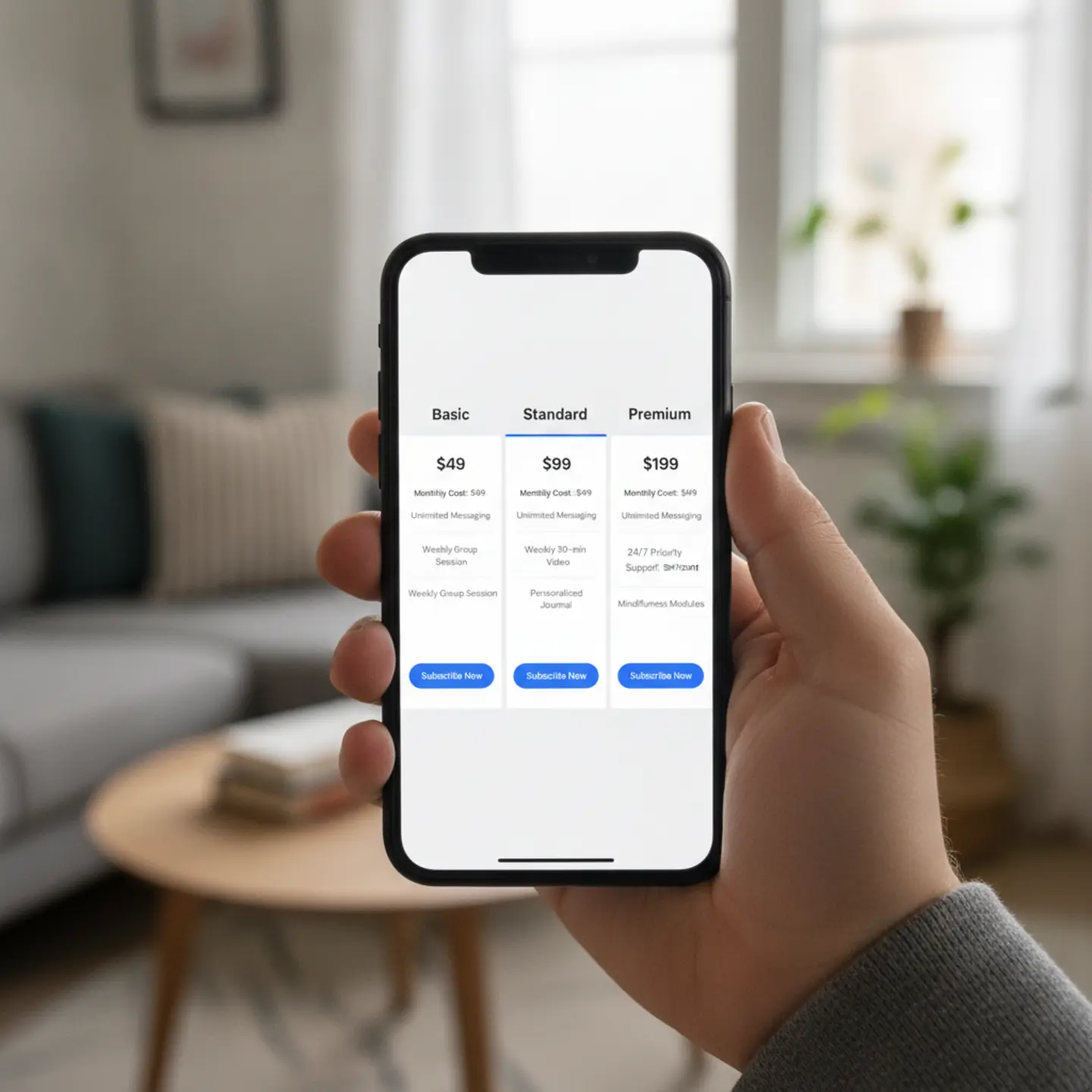
Cost is one of the first questions men ask, and it’s a fair one. In San Antonio, men’s sober living breaks into three tiers. Basic peer-governed homes — think Oxford Houses — typically run $450–$650 per month. Mid-range homes with more management oversight land around $650–$900. Structured, accountability-based homes like Drew’s Sober Living sit in the $900–$1,500+ range. That higher cost reflects what you’re actually getting: daily breathalyzer testing, drug testing every two weeks, professional management, encouraged 12 step meeting attendance, a work requirement, and financial literacy training. For a court-ordered placement, that level of documentation and structure isn’t optional — it’s what your probation officer needs to verify compliance.
Beyond monthly rent, budget for additional expenses. Court-mandated drug tests ordered separately by your probation officer typically run $25–$50 per test. Bexar County probation supervision fees are generally $60–$80 per month. Add transportation, work attire, and any court-specific program fees (DWI classes, anger management), and your real monthly number is higher than rent alone. For a detailed breakdown of what sober living costs across Texas, the San Antonio and New Braunfels sober living cost guide covers the full picture.
You’re Not Alone in This Fear
If you’re worried that court-ordered sober living means losing your freedom or being treated like an inmate, that’s a legitimate concern — and it’s also why choosing the right home matters. Real accountability-based sober living respects your dignity as an adult while providing the structure that actually works.
The good news: you may not be paying full freight. Bexar County’s $12 million in opioid settlement funds can support approved residents. Texas HHSC receives federal block grants to subsidize recovery housing — Be Well Texas (UT Health San Antonio) received a $3.4 million grant in 2023 specifically to subsidize recovery housing for young adults with substance use disorders in San Antonio. For parolees, TDCJ’s Temporary Housing Assistance Program (THAP) can pay approved vendors directly. Entry-level employment in San Antonio averages around $36,052 annually — roughly $1,400–$1,500 semi-monthly — meaning most men can cover sober living costs within 2–3 months of starting consistent work.
Ask About Financial Support Before You Assume You Can’t Afford It
Bexar County’s $12 million in opioid settlement funds, HHSC block grants, and TDCJ’s Temporary Housing Assistance Program can subsidize or pay for approved recovery housing. Before you rule out a structured home because of cost, ask the sober living operator what funding options or sliding scale arrangements might be available.
Texas Regulatory Requirements and Court Approval Standards
Texas does not currently require mandatory state licensure for all sober living homes — but that doesn’t mean anything goes. Texas HB 299, passed in 2023, directed HHSC to develop voluntary accreditation rules for recovery housing aligned with National Alliance for Recovery Residences (NARR) standards. Texas’s state affiliate, the Texas Association of Recovery Residences (TARR), certifies homes that meet those standards. While NARR/TARR certification isn’t universally mandated by courts, it’s increasingly the benchmark that probation officers and parole agents use to evaluate whether a home is legitimate.
Bexar County CSCD and TDCJ Parole have their own practical requirements. They want to see a resident handbook, clear house rules, curfew enforcement, mandatory recovery participation, and — critically — frequent drug and alcohol testing with chain-of-custody documentation. Results need to be reportable to supervision officers. Homes that can’t provide that paper trail don’t get approved for court-ordered placements. For parolees specifically, TDCJ’s Alternate Housing Resource (AHR) process requires the home to complete an application with the Parole Division and demonstrate its ability to provide regular compliance reports.
What Rights Do You Keep in a Court-Ordered Sober Living Home?
You retain your civil rights — personal property ownership (including your phone), freedom from harassment, and the right to safe and habitable living conditions. The Texas Deceptive Trade Practices Act (DTPA) protects you against fraudulent operators. For serious violations by a home, your probation or parole officer is your primary advocate. Fair Housing Act protections also apply, as individuals in recovery are generally considered a protected class under federal law.
How to Evaluate and Choose a Court-Approved Sober Living Home
Not every home that calls itself a sober living residence is equipped to handle a court-ordered placement. The difference matters — both for your compliance and for your recovery. Start by verifying NARR/TARR certification status and asking directly whether the home has established relationships with Bexar County CSCD or TDCJ Parole. A home that has never managed a court-ordered placement before is going to create friction with your supervision officer that you don’t need.
Questions to Ask Every Sober Living Home Before You Commit
- Are you pre-approved or recognized by Bexar County CSCD or TDCJ Parole for court-ordered placements?
- What are your drug and alcohol testing protocols — frequency, type, and how results are reported to supervision officers?
- What is your curfew policy, and how does it align with standard probation conditions?
- What happens if a resident fails a drug test or refuses one — and how quickly do you notify the probation officer?
- What is the weekly work or productivity requirement, and what support is available for employment?
- What is the total monthly cost, and what financial assistance options might apply?
Red Flags That Signal a Predatory or Substandard Home
Vague rules, hidden fees, no clear testing protocol, loose curfews, “second chances” for substance use, overcrowding, poor maintenance, or promises of guaranteed outcomes are all warning signs. If a home won’t answer your questions directly or seems evasive about structure, keep looking. For court-ordered residents, the stakes of choosing wrong aren’t just personal — they’re legal.
Homes that accept court-ordered residents must maintain open communication with supervision officers, provide documentation of attendance and test results, and have immediate notification protocols when a resident violates or leaves. If a home can’t describe that process clearly, it isn’t ready for your placement. The accountability and drug testing standards that courts actually require are a useful reference point when comparing homes.
What Happens If You Violate Court-Ordered Sober Living or Leave
This section isn’t here to scare you. It’s here because knowing the consequences clearly is part of respecting your own situation. A well-run sober living home is required to immediately notify your probation or parole officer if you are dismissed or leave voluntarily. That notification constitutes a violation of your supervision conditions. From there, the sequence is predictable: a warrant for your arrest, a revocation hearing, and a real possibility of re-incarceration depending on your case history and the severity of the violation.
Zero-tolerance policies for substance use mean immediate dismissal — not a warning, not a conversation, immediate dismissal and notification. Refusing a drug test or breathalyzer carries the same outcome as failing one. These aren’t arbitrary rules designed to trip you up. They exist because the court system needs verifiable accountability, and because the men who build lasting sobriety are the ones who learn to show up even on the days they don’t feel like it.
Here’s the honest truth: the structure isn’t the enemy. The 10 PM curfew, the daily breathalyzer, the work requirement — none of that is designed to make your life miserable. It’s designed to give you something you can point to at the end of six months and say, “I did that. Every single day.” That’s not compliance. That’s a foundation.
The men who struggle most in court-ordered sober living are the ones who spend energy resenting the structure instead of using it. The ones who do well are the ones who decide, early, that the rules are working for them — not against them.
Research Data: Why Structured Sober Living Works for Court-Ordered Residents
The evidence for structured sober living isn’t anecdotal. Approximately 47% of offenders admitted to Texas prisons report current drug use at the time of admission — meaning substance use disorder is a direct driver of incarceration for nearly half the prison population. Structured sober living addresses that driver head-on by removing access to substances, building daily accountability, and creating the peer support network that criminogenic environments destroy.
Research on court-ordered participants in highly structured programs shows that completion rates are comparable to voluntary residents — the external accountability from the court system acts as a strong motivator for compliance, not a barrier to it. Bexar County’s drug courts consistently show higher graduation rates and lower recidivism compared to traditional probation for similar populations. Nationally, drug court graduates demonstrate significantly higher sobriety rates at one year post-graduation than individuals processed through standard criminal justice channels.
Length of stay matters more than most people realize. Thirty-day stays are rarely enough for real behavioral change. Ninety-day stays show meaningfully improved outcomes. Six to twelve months — the range that peer-reviewed research identifies as optimal — is where sustained sobriety and reduced recidivism become the norm rather than the exception. Employment stability is a strong independent predictor of sobriety: a man who holds a job, pays his own rent, and builds savings has concrete reasons to protect his recovery every single day. The comparison between supervised and independent living outcomes in San Antonio illustrates exactly why that transition period matters so much.
Why Drew’s Sober Living Is the Right Choice for San Antonio and New Braunfels Men
Drew’s Sober Living has four operating houses, 38 beds — Chittim House in North San Antonio (10 beds), Evergreen House in Central San Antonio (8 beds), and Chapel Bend in New Braunfels (9 beds) — for a total of 27 beds across the region. Founded in 2023 by Drew, who built every house policy from his own recovery journey, DSL is not a corporate program. It’s a brotherhood built by someone who knows exactly what the first 90 days feel like and designed a structure that actually addresses that reality.
The program requirements align directly with what Bexar County CSCD and TDCJ Parole need to see: daily breathalyzer testing starting on day one, drug testing every two weeks with documentation, encouraged 12 step meeting attendance, a strongly encouraged 30 hour work week after the probationary period, and financial literacy training. Residents keep their phones, choose their own jobs, and live as adults — accountability without surveillance. The full program structure at Drew’s is built for exactly this kind of court-ordered placement.
The numbers back it up: a perfect 5.0-star Google rating across 91 verified reviews, and 83% of past residents who moved out of the program did so sober. Drew’s coordinates directly with treatment centers, accepts applications during the final weeks of inpatient care, and delivers admission decisions within 24 hours. The recommended stay of 3–6 months — with typical stays running 3–12 months — aligns with the research on what actually produces lasting sobriety. There’s no arbitrary graduation date. You leave when you’re stable: employed, financially grounded, with a sober support network and demonstrated readiness for independent life.
Contact Drew’s Sober Living today to discuss your court-ordered placement — applications are reviewed within 24 hours, and the brotherhood is ready when you are.
Frequently Asked Questions
Can a judge force me into a specific sober living home in San Antonio?
A judge cannot mandate a specific home by name, but they can require you to reside in an approved structured sober living environment as a condition of probation, bond, or parole. Your probation or parole officer then verifies and approves a home that meets the court’s and agency’s requirements for structure, testing, and accountability. This means you have some choice in which home you select — but that home must be able to demonstrate it meets supervision standards before your officer signs off on the placement.
What happens if I get kicked out of a court-ordered sober living placement in Texas?
Getting dismissed from a court-ordered placement is serious. A reputable sober living home is required to immediately notify your probation or parole officer, and that notification constitutes a direct violation of your supervision conditions. The likely outcome is a warrant for your arrest and a revocation hearing — which can result in re-incarceration depending on the circumstances and your case history. Zero-tolerance policies mean that a failed or refused drug test triggers the same outcome as any other dismissal.
How do probation officers verify I’m actually staying sober in a sober living home?
Probation officers verify compliance through multiple channels. They receive regular reports from the sober living home covering your attendance, curfew adherence, employment status, and drug test results. They also conduct unannounced visits to the residence and may administer their own independent random drug tests or breathalyzer tests. For court-ordered placements, the home’s internal testing and the officer’s independent testing work together — the home provides real-time daily monitoring, while the officer’s tests serve as an independent verification layer.
Can I still work or go to school while living in court-ordered sober living?
Yes — and in most structured, court-approved sober living homes, you’re required to. Employment, school attendance, or other productive activity is considered a core component of successful recovery and reintegration, not an optional add-on. Many courts mandate productivity as an explicit condition of supervision. At Drew’s, the strongly encouraged 30 hour work week after the probationary period isn’t just a house rule — it’s a deliberate part of building the financial stability and daily structure that sustain long-term sobriety.
What makes Drew’s Sober Living different from other sober living homes in San Antonio?
Drew’s Sober Living holds a perfect 5.0-star Google rating across 91 verified reviews — and 83% of past residents who completed the program moved out sober. Three structured men’s recovery homes , Divine House coming soon, across San Antonio and New Braunfels, daily breathalyzer testing and drug testing every two weeks, encouraged 12 step meeting attendance, a strongly encouraged 30 hour work week, and financial literacy training set Drew’s apart from homes that offer basic shelter with minimal accountability. Founded in 2023 by Drew from his own recovery, every policy in the program was built by someone who lived it. The recommended 3–6 month stay aligns with peer-reviewed research showing that longer stays produce the sustained sobriety and real reintegration that court systems — and the men themselves — are actually looking for. Contact Drew’s Sober Living today to discuss your placement and next steps.
The men who arrive at Drew’s on a court order often come in with their guard up. They’ve heard “structured program” before and assumed it meant surveillance, lectures, and being treated like a problem to be managed. What they find instead is a brotherhood — other men who are doing the same work, showing up to the same meetings, clocking in to the same jobs, and holding each other accountable in the way that only people who’ve been through it can.
The daily breathalyzer isn’t a gotcha. The curfew isn’t a punishment. They’re the same tools that every man in that house is using to build something real — a foundation that doesn’t depend on a court order to hold together. The court order gets you in the door. What happens after that is up to you.
That’s what Drew’s is built for.
Ready to Discuss Your Court-Ordered Placement in San Antonio or New Braunfels?
If you’re navigating a court order, probation condition, or parole requirement and need a structured home that meets Bexar County CSCD or TDCJ Parole standards, Drew’s Sober Living is ready to talk. Applications are reviewed within 24 hours, and direct coordination with treatment centers and supervision officers is part of how we operate.
Drew’s Sober Living · Men’s Recovery Residences in San Antonio & New Braunfels, TX
Drew’s Sober Living is a structured sober living residence and does not provide clinical treatment, detox, or medical services. This article is for informational purposes only and does not constitute medical advice. Program availability, pricing, and admission requirements are subject to change, and recovery outcomes vary by individual. Please contact us directly for current information.