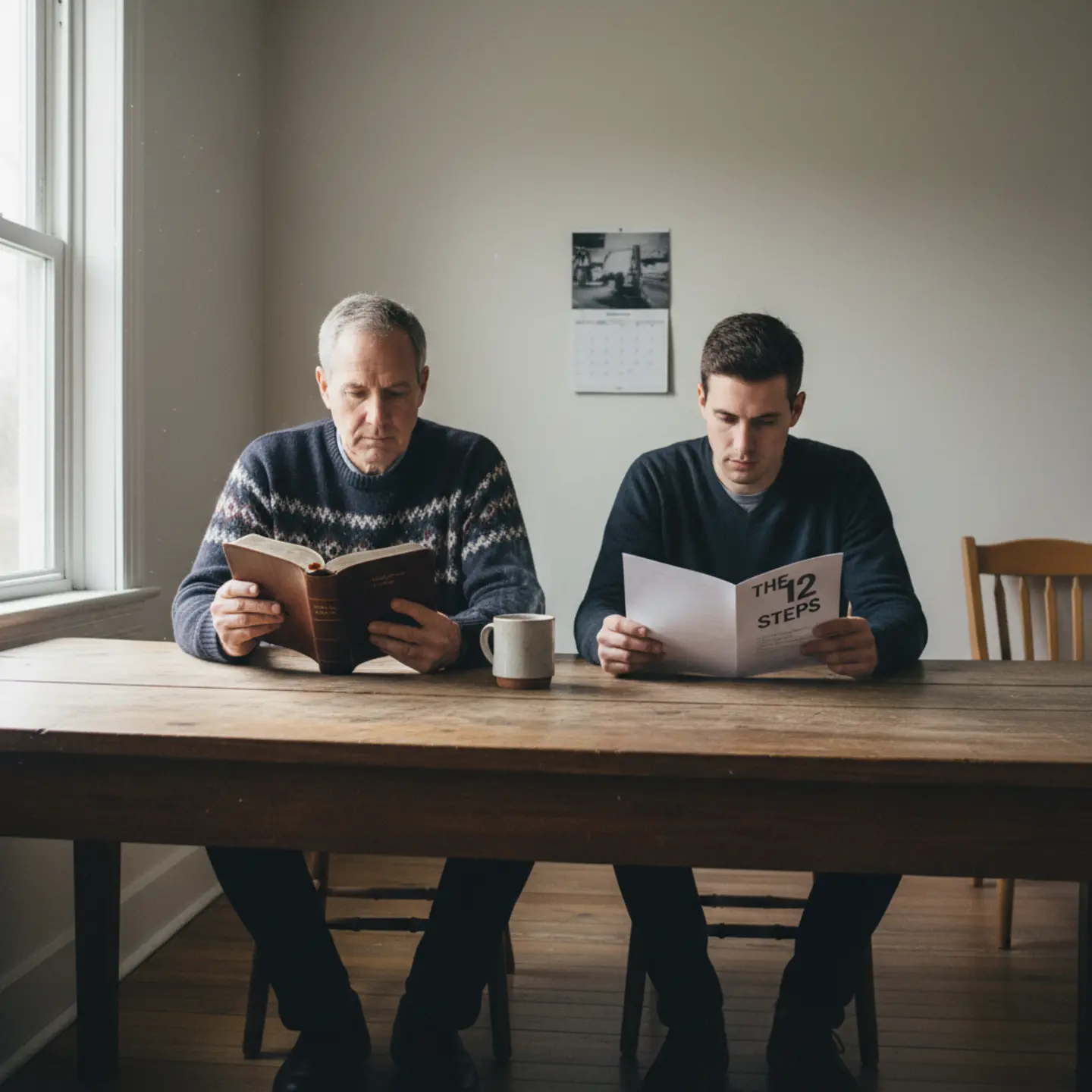
Key Takeaways
- Faith-based sober living requires active religious belief and daily spiritual practice (prayer, scripture, church attendance); 12-step sober living is spiritually flexible and welcomes residents of any faith or secular worldview.
- Both models share nearly identical operational accountability — daily drug and alcohol testing, employment requirements, house chores, and curfews — the primary difference is the spiritual framework, not the structure.
- Sober living costs in San Antonio range from $400–$1,200/month for faith-based programs and $500–$1,500/month for 12-step programs; neither is typically covered by insurance, though some nonprofits offer sliding-scale fees.
- Research consistently shows that length of stay matters more than program type — residents who stay 6 months or longer have significantly better long-term sobriety outcomes than those who leave after 30–90 days.
- Trust Drew’s Sober Living for structured accountability, daily testing, and a brotherhood that bridges treatment and independent life — visit Drew’s Sober Living to explore whether it’s the right fit for your recovery.
Faith-Based vs 12-Step Sober Living in San Antonio: Which Is Right for You?
Both faith-based and 12-step sober living can be effective bridges from treatment to independent life — the right choice depends on your spiritual beliefs, support network, and recovery priorities. Faith-based programs anchor recovery in religious practice and community; 12-step programs center on the 12 steps and peer accountability. Neither is inherently superior; what matters is finding a structured environment that aligns with how you want to rebuild your life.
Understanding the core differences — philosophy, daily structure, spiritual requirements, and cost — will help you make a decision that feels authentic to your recovery.
Drews Sober Living
Daily Breathalyzer Testing for Every Resident
Core Service Programs:
- Structured Sober Living Homes for men transitioning from treatment to independent, sober living
- Daily Accountability & Drug Testing for residents and families who need consistent, verifiable structure
- Life-Skills & Employment Readiness for men rebuilding work history, finances, and a sober support network
Why Choose Drews Sober Living:
- ✓ Trusted by customers with a perfect 5.0-star Google rating across 91 verified reviews
- ✓ Daily breathalyzer testing for every resident, plus drug testing every two weeks
- ✓ Four operating houses, 38 beds in San Antonio and New Braunfels, Divine House coming soon
- ✓ Live in house managers who are men in long term recovery themselves
- ✓ Founded in 2023 by Drew, who built every house policy from his own recovery
- ✓ 83% of residents who moved out of the community did so sober
- ✓ Strongly encouraged 30 hour work week plus financial literacy and life skills training
Core Philosophy: Faith-Based vs 12-Step Approaches to Recovery
The most important thing to understand about these two models is that the difference is philosophical, not structural. Both approaches reject the idea that willpower alone sustains sobriety. Both demand that you surrender to something larger than yourself. Where they diverge is in what that “something” is.
Faith-based programs position recovery as a spiritual transformation rooted in a specific religious tradition — most commonly Christian, though Islamic, Jewish, and other faith-based programs exist across San Antonio. In these homes, faith in God is not a supplement to recovery; it is the recovery. Healing flows from your relationship with God, your faith community, and the religious practices that anchor your daily life.
12-step programs define recovery through the 12 steps and the concept of a “higher power” — which can be God, nature, the group, the universe, or any force larger than yourself. The framework is deliberately flexible. What it requires is not religious belief but honest acceptance that you cannot stay sober on willpower alone. Peer support, personal accountability, and working through a structured step process with a sponsor are the primary engines of change.
What Both Models Have in Common
Despite their philosophical differences, faith-based and 12-step sober living share a foundational principle: recovery requires surrender to something beyond yourself, consistent daily action, and accountability to a community. Neither model works in isolation — both require you to show up, every day, and do the work.
Daily Structure and Accountability: What Each Model Looks Like in Practice
If you’re trying to decide between these two models, one of the most useful questions to ask yourself is: what does a typical day look like, and can I commit to it honestly?
In a faith-based sober living home, your day is likely to include mandatory morning prayer or devotional time, grace before meals, evening Bible study or faith-based group meetings, and church or religious service attendance on weekends. Your faith community becomes your primary support network. Some programs may also restrict secular entertainment or media that conflicts with the home’s religious values.
In a 12-step sober living home, the daily rhythm centers on 12-step meetings — AA, NA, or CA — typically one per day. You’ll work with a sponsor, progress through the steps at a structured pace, and participate in house meetings and peer accountability conversations. The 12-step fellowship is your primary support network, and it’s available anywhere you go, for the rest of your life.
Here’s what both models share: daily drug and alcohol testing, employment or productivity requirements, house chores, and structured curfews. The operational accountability is nearly identical. The spiritual framework is where they part ways. To get a clear picture of what rigorous daily testing looks like in practice, the Drew’s drug testing program page walks through exactly what residents can expect from day one.
Here’s the honest question worth sitting with: which daily routine can you actually commit to for six months or more? Not which one sounds better on paper — which one will you actually do when you’re tired, frustrated, and tempted to skip? The best program in San Antonio is the one you’ll stay in long enough for it to work.
If your faith is central to who you are, a faith-based home may feel like the most authentic version of recovery. If you’re skeptical of religion or practice a different faith than the program requires, forcing it will likely breed resentment — and resentment is a relapse waiting to happen.
Spiritual Flexibility and Belief Requirements: Who Fits Where
This is the section that matters most if you’re on the fence. Let’s be direct about what each model actually requires.
Faith-based programs are explicit: they require belief in God (or a specific religious tradition) and active participation in faith practices. If you are agnostic, atheist, or practice a different faith than the program is built around, most faith-based homes are not a fit. Some Christian programs may allow residents of other faiths to participate but will not accommodate secular residents — clarify this directly during your application conversation.
12-step programs are intentionally designed for flexibility. The “higher power” concept is deliberately broad — it can be God in your religious tradition, the group itself, nature, or any force you recognize as larger than yourself. Atheists and agnostics can and do work the 12 steps. What 12-step does require is honest acceptance that you cannot stay sober on self-will alone — a spiritual principle, but not necessarily a religious one. For a broader look at how different recovery housing models compare, the supervised vs. independent living comparison covers additional dimensions worth considering.
It’s Okay to Choose Based on Your Beliefs
Many men feel pressure to choose the “right” recovery model based on what others recommend. The truth: the right model is the one that aligns with your values and that you’ll actually commit to. If faith is central to who you are, a faith-based program may feel more authentic. If you’re skeptical of religion, 12-step’s flexibility may feel more honest. Both work — if you work them.
Cost, Insurance, and Accessibility in San Antonio
Money is a real part of this decision, and it deserves a straight answer. Here’s what the San Antonio market looks like in 2026.
Faith-based sober living in San Antonio typically ranges from $400–$1,200 per month. Programs run by churches or religious nonprofits often operate at the lower end of that range because they benefit from donated facilities or volunteer staff. Some offer sliding-scale fees or scholarships for residents with limited income — worth asking about directly.
12-step sober living in San Antonio typically ranges from $500–$1,500 per month, with most structured programs in the $800–$1,200 range. For-profit programs may have higher overhead but often provide more consistent staffing and operational reliability. Move-in costs — deposits, first month’s rent — are similar across both models. Clarify whether your program requires a refundable deposit or whether move-in funds are non-refundable. For a detailed breakdown of what drives sober living costs across Texas, the San Antonio recovery housing cost guide covers pricing factors in depth.
On insurance: neither faith-based nor 12-step sober living is typically covered by insurance. Sober living is a recovery residence, not a clinical treatment service, which puts it outside standard insurance coverage. Some faith-based nonprofits accept Medicaid or offer payment plans — contact programs directly to understand your options.
Ask These Questions During Your Program Tour
Before committing, ask: How long do residents typically stay? What percentage move out sober? Do you coordinate with my treatment center? What happens if I slip? Can I practice my faith (or secular spirituality) here? What’s the actual cost, and are there payment plans? A good program will answer directly and respect your autonomy.
Faith-Based vs 12-Step Sober Living: Side-by-Side Comparison
| Category | Faith-Based Sober Living | 12-Step Sober Living |
|---|---|---|
| Spiritual Foundation | God-centered / specific religious tradition | Higher power (flexible definition) / peer-based recovery |
| Daily Spiritual Practice | Mandatory prayer, devotionals, religious services | 12-step meetings, sponsor work, step study |
| Group Requirements | Church / faith group attendance required | Daily AA / NA / CA meetings required |
| Flexibility on Belief | Low — requires religious belief and participation | High — accommodates secular and religious residents |
| Cost Range (San Antonio) | $400–$1,200 / month | $500–$1,500 / month |
| Primary Accountability | Faith community and pastoral guidance | Sponsor relationship and peer accountability |
| Typical Length of Stay | 3–12 months | 3–12 months |
| Best Fit For | Residents with strong faith seeking spiritual recovery | Residents seeking peer support and flexible spirituality |
Both models require daily drug and alcohol testing, employment, house chores, and structured curfews. The primary difference is spiritual framework and daily practice.
Relapse Prevention and Long-Term Sobriety: Which Approach Actually Works?
This is the question underneath every other question: which model keeps people sober? The honest answer, backed by research, is that both models show similar long-term outcomes when residents stay engaged and complete 3–6 months or longer. The best model is the one you will actually commit to.
Faith-based programs leverage the faith community as ongoing support after sober living ends. Residents often remain connected to their church or faith group indefinitely, providing lifelong accountability that doesn’t require a meeting schedule or a sponsor relationship — it’s woven into weekly life.
12-step programs leverage the fellowship — AA, NA, CA — as lifelong support. Residents can attend meetings anywhere in the world, anytime, and maintain sponsor relationships for years or decades. The portability of 12-step is one of its genuine strengths: the support structure travels with you.
What the research is clear on is this: residents who stay in sober living 6 months or longer have significantly lower relapse rates than those who leave after 30–90 days, regardless of the spiritual model. The critical factor is not faith vs. 12-step — it’s consistency. Daily structure, accountability, employment, and community connection are what rebuild a life. Both models provide all of these, when you stay long enough to let them work. For a deeper look at how to evaluate programs and make a confident choice, the 2026 guide to San Antonio’s best sober living homes covers what to look for in any structured program.
Beware of the 30-Day Myth
Insurance often covers 28–30 days of treatment, and some sober living programs market quick “graduation.” Don’t fall for it. Thirty days is detox and crisis stabilization — not recovery. Real recovery — rebuilding a job, a support network, financial stability, and new habits — takes 3–6 months minimum. Choose a program that optimizes for length of stay, not speed of exit.
Not Sure Which Path Is Right for You?
You don’t have to figure this out alone. Drew’s team works with men at every stage of the decision — whether you’re just out of treatment, still in IOP, or a family member trying to help someone you love. No pressure, no pitch — just a straight conversation about what fits.
Why Drew’s Sober Living Is the Right Choice for San Antonio Men in Recovery
Drew’s Sober Living was founded in 2023 by Drew, who built every house policy from his own experience in recovery — not from a corporate playbook. That matters, because the difference between a program that feels like surveillance and one that feels like brotherhood comes down to whether the people running it actually understand what you’re going through.
With a perfect 5.0-star Google rating across 91 verified reviews, Drew’s has earned the trust of residents and families across San Antonio and New Braunfels. Three structured men’s recovery homes — Chittim House in North San Antonio, Evergreen House in Central San Antonio, and Chapel Bend in New Braunfels — provide 27 beds total, each running the identical program with the same daily standards.
Drew’s is 12-step-friendly but not 12-step-only. Residents attend daily meetings, work with sponsors, and engage the fellowship — but men of faith are genuinely welcomed and supported in their spiritual practice. You choose your path; Drew’s provides the structure. Daily breathalyzer testing, drug testing every two weeks, a strongly encouraged 30 hour work week, and financial literacy training ensure accountability without making you feel like you’re being watched. You keep your phone, choose your job, and live like an adult.
83% of past residents moved out of Drew’s sober — because the program is built for 3–12 months of real change, not 30-day insurance cycles. That number reflects what happens when men stay long enough for the daily structure, the brotherhood, and the employment requirements to actually rebuild a life.
Schedule a call with Drew today — no pressure, just a conversation about whether Drew’s is the right fit for your recovery.
Frequently Asked Questions
Can I practice my faith while in 12-step sober living?
Yes — 12-step programs are spiritually flexible and explicitly welcome residents of all faiths. You can attend church, pray, read scripture, and engage your faith community while working the 12 steps. Many residents find that their faith deepens during recovery. The 12 steps reference a “higher power,” which can absolutely be God in your religious tradition — the framework accommodates, rather than conflicts with, sincere religious belief.
What if I’m not religious and don’t believe in God — can I do faith-based sober living?
Most faith-based programs require belief in God and active participation in religious practice, so they are not a good fit for atheists or agnostics. The daily structure — mandatory prayer, Bible study, church attendance — is built around sincere religious participation, not just tolerance of it. If you’re not religious, a 12-step sober living program is explicitly designed for people with flexible or secular spirituality and will likely feel more authentic and sustainable over the 3–6 months you need to stay.
How long do I need to stay in sober living to see real results?
Research consistently shows that residents who stay 3–6 months or longer have significantly better long-term sobriety outcomes than those who leave after 30–90 days. Both faith-based and 12-step models are optimized for 3–12 months of real change — that’s the window where employment stabilizes, finances rebuild, and a genuine support network forms. Thirty days in treatment plus 30 days in sober living is rarely enough to rebuild a life; plan for at least 90 days, and ideally 6 months or more.
Will my insurance cover sober living, whether faith-based or 12-step?
Most insurance does not cover sober living because it is a recovery residence, not a clinical treatment service — and that distinction matters for how insurers categorize it. However, some faith-based nonprofits and 12-step programs offer sliding-scale fees, payment plans, or scholarships for residents with limited income. Contact the program directly to discuss financial options and whether they work with Medicaid or other assistance programs; the answer varies significantly by organization.
What makes Drew’s Sober Living different from other faith-based or 12-step programs in San Antonio?
Drew’s Sober Living is 12-step-friendly but spiritually flexible — residents of faith are genuinely supported in their spiritual practice while the program centers on daily accountability, employment, and peer brotherhood. Drew’s holds a perfect 5.0-star Google rating across 91 verified reviews, operates three homes , Divine House coming soon, across San Antonio and New Braunfels, and 83% of past residents moved out sober. Every resident is drug-and-alcohol tested every single day — same standard, every house — and the strongly encouraged 30 hour work week plus financial literacy training means residents leave with more than sobriety; they leave with a foundation. Visit Drew’s Sober Living to learn more or schedule a call with Drew directly.
Choosing a sober living program is one of the most important decisions you’ll make in early recovery — and it’s one you’re making while already exhausted from everything that got you here. That’s not a small thing. The fact that you’re researching, comparing, and asking real questions about philosophy and structure and cost means you’re taking this seriously.
Whether faith is the cornerstone of your recovery or you’re drawn to the flexibility and fellowship of 12-step, what matters most is that you choose a program you can commit to for long enough to let it actually work. Thirty days won’t rebuild a life. Six months of daily structure, accountability, employment, and brotherhood can.
You don’t have to have it all figured out before you make the call. That’s what the conversation is for.
Ready to Find the Right Sober Living Fit in San Antonio?
Whether you’re coming straight out of treatment, still in IOP, or a family member trying to help someone you love find the right next step — Drew’s is here to have a straight, no-pressure conversation about whether our program is the right fit. You choose your path; we provide the structure, the accountability, and the brotherhood to make it stick.
Drew’s Sober Living · Men’s Recovery Residences in San Antonio & New Braunfels, TX
Drew’s Sober Living is a structured sober living residence and does not provide clinical treatment, detox, or medical services. This article is for informational purposes only and does not constitute medical advice. Program availability, pricing, and admission requirements are subject to change, and recovery outcomes vary by individual. Please contact us directly for current information.