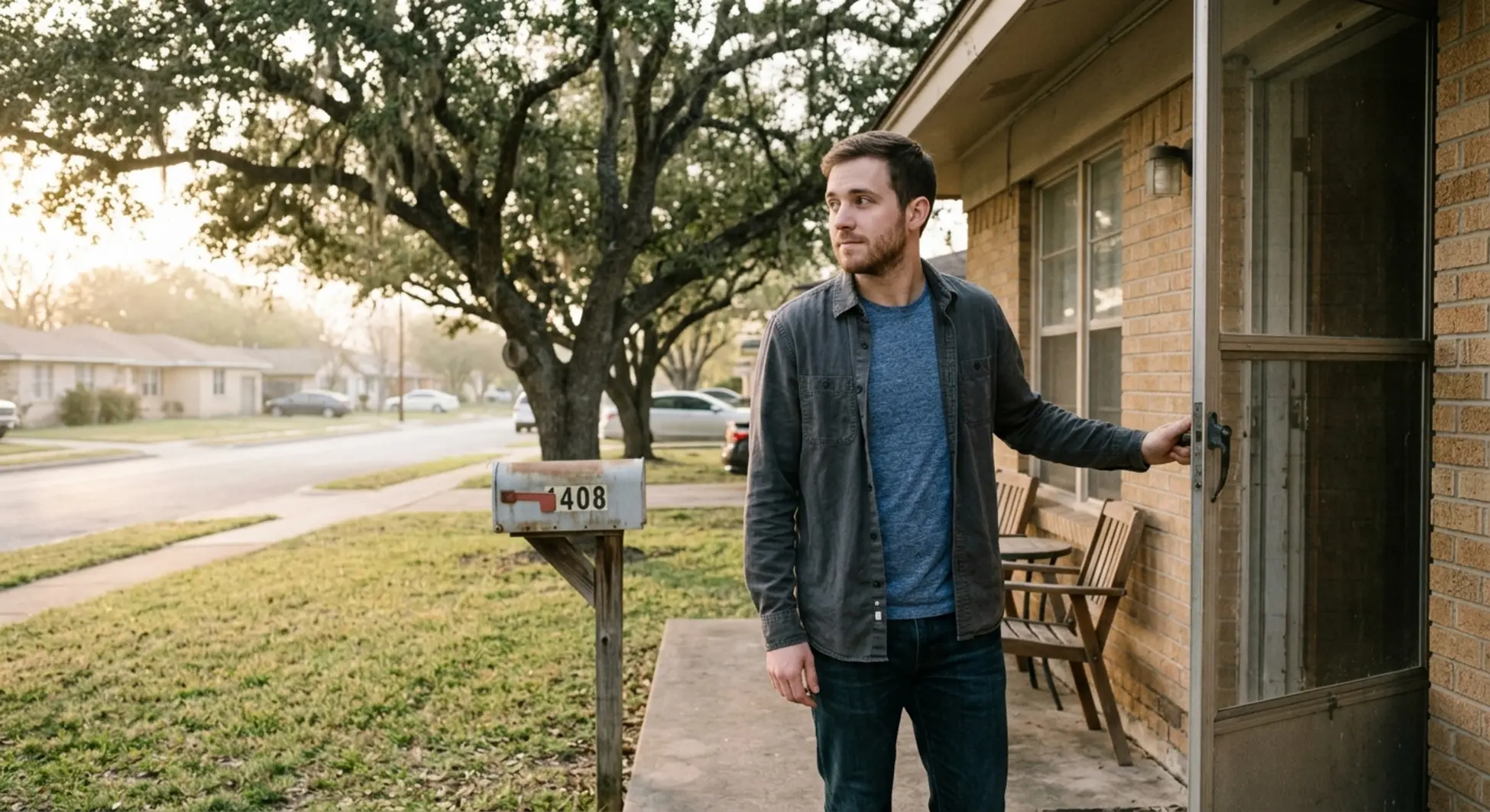
The discharge paperwork is signed. The counselor shook your hand and said, “You’re ready.” You’ve got a bag, maybe a ride, and thirty days of hard work behind you — and now you’re standing at the door of the rest of your life, feeling equal parts proud and absolutely terrified. Because here’s what nobody fully prepares you for: the world didn’t pause while you were in treatment. The same people, the same neighborhoods, the same pressures are all still there. And thirty days, as hard as they were, is rarely enough time to build the foundation that independent life demands. That’s not a failure — that’s just the reality of recovery. And it’s exactly why sober living exists.
This guide is for the man standing at that threshold — and for the family members who love him and are searching for answers at 2 AM. We’ve done the research on the best sober living homes in San Antonio and New Braunfels for 2026: what NARR certification actually means, what these homes cost, what your first 30 days will look like, and how to spot the bad actors before they cost you your sobriety and your money. We’ve also put together an honest, side-by-side comparison of five real providers serving this market so you can make a clear-eyed decision.
Recovery is possible. It’s a lifestyle built through consistency, accountability, and community — not a program you complete on a schedule. The right sober living home is the bridge between where you are right now and the independent life you’re building. Let’s find it.
Key Takeaways
- Relapse rates for men returning directly to unsupervised environments post-treatment run 40–60% in the first year; structured sober living cuts that risk to 20–30%.
- NARR certification (administered in Texas by TARR) is the gold standard for verifying a sober living home’s quality, ethics, and accountability — always verify before committing.
- San Antonio sober living costs range from $500–$3,000+/month depending on structure level; a realistic 6-month budget including all costs is $9,400–$10,400+.
- Most quality homes require daily breathalyzer testing, drug testing every two weeks, a work requirement, and daily 12-step meeting attendance — this structure is the point, not the punishment.
- The optimal stay length is 3–12 months; shorter stays under 3 months are associated with significantly worse outcomes and higher relapse risk.
- Families play a critical support role — but supporting recovery means respecting structure and boundaries, not shielding your loved one from accountability.
- The bridge between treatment and independent life is where most people relapse — the right sober living home closes that gap with daily action, not good intentions.
Why Sober Living Matters: The Gap Between Treatment and Independent Life
A 30-day treatment program does something remarkable: it breaks the acute cycle of use, clears the fog, and gives a man his first real look at what sobriety feels like. But 30 days — even 90 days — of clinical care cannot fully prepare anyone for the thousand small decisions that independent life demands every single day. The moment a man walks out of treatment and back into an unsupervised environment, he faces the same triggers, the same social pressures, and the same emotional patterns that drove the addiction in the first place. Without a structured recovery environment to bridge that gap, the odds are stacked against him.
Research consistently shows that relapse rates spike dramatically in the first six months post-treatment for those returning directly to unsupervised environments — studies place that figure between 40% and 60% within the first year. That’s not a statistic meant to scare anyone. It’s a reality that explains why sober living homes exist. Men who complete a recommended stay in structured recovery housing see those relapse rates drop to 20–30% in the first year. The difference isn’t willpower. It’s structure, accountability, and peer support — the three things that a good sober living home provides every single day.
Think of sober living as the bridge model: it’s not treatment, it’s not a lockdown, and it’s not a destination. It’s the functional middle ground where men rebuild the life skills, employment history, financial foundation, and sober social network that make long-term recovery possible. The gap between leaving treatment and living independently is real, and it’s dangerous. Sober living closes it.
You’re Not Alone in This Fear
Leaving treatment and facing independent life is terrifying. That’s exactly why sober living exists — to bridge the gap when 30 days of treatment isn’t enough to prepare for real-world challenges. Thousands of men have walked this path before you, and the ones who built a real foundation did it through structure, accountability, and brotherhood — not by going it alone.
What Is a Sober Living Home? Definitions and How It Differs from Rehab
The terminology in this space gets confusing fast. Sober living home, halfway house, recovery residence, Oxford House — these terms get used interchangeably, but they mean different things. Understanding the distinctions helps you make a smarter decision and set the right expectations before you walk through the door.
At its core, a sober living home provides housing and peer support — not clinical treatment, therapy, or medical care. Residents typically attend outside treatment (an IOP, individual therapy, or 12-step programming) while living in the home. The home itself provides the structure: testing protocols, curfews, work requirements, house meetings, and a community of men in recovery who hold each other accountable. That accountability is the product. The house is just where it happens.
Sober Living vs. Halfway House: What’s the Real Difference?
In Texas and most states, “halfway house” carries a specific connotation tied to the criminal justice system. Halfway houses often operate under court oversight, serve individuals transitioning from incarceration, and involve mandatory participation and supervision. Sober living homes, by contrast, are voluntary, recovery-focused residences that operate independently of the court system — though some residents may be court-referred. Both provide structure and accountability, but sober living emphasizes peer support and life rebuilding over supervision. If you want a full side-by-side comparison, the sober living vs. halfway house Texas breakdown covers every distinction clearly.
Sober Living vs. Rehab: Why You Need Both (Usually)
Rehab treats the acute phase of addiction — it’s where the clinical work happens, where detox occurs, where therapy begins. Sober living supports the long-term phase — it’s where the daily habits, employment, financial stability, and sober identity get built. Rehab is typically 28–90 days. Sober living is 3–12 months or longer. Most men attend both sequentially: treatment first to stabilize, then sober living to consolidate and build. The Drew’s Sober Living program accepts direct referrals from treatment centers during a resident’s final weeks of care, making that transition as seamless as possible.
What Does “Recovery Residence” Actually Mean?
A recovery residence is the umbrella term for any housing that supports people in recovery from substance use disorder. Sober living homes are a type of recovery residence. NARR (National Alliance for Recovery Residences) sets the national standards for what qualifies as a legitimate, ethical recovery residence — and those standards are what separate accountable operations from unregulated boarding houses. Understanding NARR certification is the single most important thing you can do before choosing a home.
NARR Certification Explained: What It Means and Why It Matters in Texas
NARR stands for the National Alliance for Recovery Residences — the organization that sets national standards for ethical, quality recovery housing. In Texas, NARR’s state affiliate is TARR (Texas Association of Recovery Residences), which certifies homes operating in this state. When a home carries NARR or TARR certification, it means they’ve undergone site inspections, demonstrated adherence to written policies on resident rights and conduct, provided evidence of staff training, and established formal grievance procedures. It means someone is watching — and that accountability flows both ways.
NARR operates on four levels. Level I homes are peer-run (Oxford House is the most common example) — democratically governed by residents themselves with minimal outside staff involvement. Level II homes are operator-managed with foundational support structures. Level III homes provide enhanced support including life skills programming. Level IV homes represent the highest level, integrating clinical oversight or significant therapeutic programming alongside housing. Homes that commit to daily breathalyzer testing and drug testing every two weeks are demonstrating the kind of operational accountability that NARR standards demand at the Level II/III range.
Why does certification matter? Because without it, a sober living home is essentially an unregulated boarding house. There’s no inspection, no accountability structure, no resident rights protection, and no recourse if something goes wrong. Predatory operations — and they exist — exploit the desperation of men in early recovery and their families. Certification is the floor, not the ceiling, of legitimacy.
How to Verify NARR Certification: A Step-by-Step Checklist
Don’t take anyone’s word for it. Verification takes five minutes and can save you from a costly mistake. Start by checking narronline.org — the official NARR directory — and search for the home’s name and address. Cross-reference against txrecovers.org, TARR’s Texas-specific listing, to confirm state affiliation. Ask the home directly for their NARR certificate or TARR affiliation documentation, and request written copies of their house rules, testing protocols, and dismissal policies. If they cannot provide proof or redirect you to unverified third-party sites — walk away.
Sober Living Costs in San Antonio and New Braunfels: What to Budget in 2026
Cost is one of the first questions families and residents ask — and one of the most important to answer honestly, because sticker shock can push people toward cheaper, lower-quality options that end up costing far more in the long run. San Antonio is generally a lower-cost market than Austin or Dallas, which works in your favor. But “affordable” still requires a real budget, and there are costs beyond monthly rent that most people don’t account for until they’re already in. For a detailed breakdown of what sober living costs across Texas, the sober living cost Texas guide covers pricing tiers, financial assistance, and what insurance does and doesn’t cover.
Here’s the honest 2026 range for San Antonio and New Braunfels:
| Tier | Monthly Cost Range | What’s Included |
|---|---|---|
| Basic / Oxford-House Style | $500–$750/month | Shared housing, peer-run governance, minimal programming |
| Structured Mid-Range | $800–$1,500/month | Daily testing, house meetings, life skills support, staff oversight |
| Higher-End NARR Certified | $1,500–$3,000+/month | Private rooms, on-site staff, integrated programming, clinical coordination |
Hidden Costs to Budget For Beyond Monthly Rent
Monthly rent is only part of the picture. A realistic 6-month budget for a mid-range structured home in San Antonio looks something like this: rent at roughly $900/month totals $5,400; move-in fees and initial drug testing run $500–$1,000; transportation adds $100/month or $600 over six months; food (if not provided) runs $400/month or $2,400 total; and miscellaneous costs — work clothing, meeting contributions, personal items — add another $500–$1,000. Total realistic budget: $9,400–$10,400+ for a 6-month stay. That’s real money. It’s also significantly less than what a single relapse episode costs.
Why Sober Living Costs Less Than a Relapse
A single relapse episode — ER visit, detox admission, potential legal fees, lost wages — runs $5,000–$15,000 or more. A 6-month structured sober living stay costs $9,400–$10,400 all-in. The math is clear: structured housing is an investment in long-term sobriety, not an expense to minimize. Cutting corners on where you live in early recovery is one of the most expensive decisions a man can make.
Financial Assistance Options in Texas
Health insurance typically covers clinical treatment (detox, residential, IOP) but does NOT cover room and board in sober living homes. That’s an important distinction. For residents who need financial help, options include: HHSC grants (accessed via referrals, funding specific programs or beds), SAMHSA block grants (funding state and local SUD services), the Oxford House loan program (for residents needing help with initial fees), HUD-VASH vouchers and VA per diem funding for eligible veterans, and limited slots through Bexar County Behavioral Health.
Top 5 Sober Living Homes in San Antonio and New Braunfels: Compared and Reviewed
This comparison covers five verified providers serving the San Antonio and New Braunfels metro area in 2026. Each is reviewed on location, certification status, specialties, pricing, and what makes them distinct. The goal isn’t to sell you on any one option — it’s to give you enough honest information to make the right call for your situation. Pricing and availability change; always verify directly with each provider before making a decision.
1. Drew’s Sober Living — San Antonio & New Braunfels
Chittim House — North San Antonio (10 beds)
Located in a quiet, peaceful North San Antonio neighborhood, Chittim House is well-suited for men who thrive with distance from city-center triggers while maintaining access to employment and 12-step meetings. The structure here is consistent with all Drew’s houses — same program, same testing, same expectations.
Evergreen House — Central San Antonio (8 beds)
Evergreen House puts residents closer to the city center — useful for men with jobs or IOP commitments in the urban core. The smaller bed count creates a tighter community dynamic, which many residents find accelerates the brotherhood aspect of the program.
Chapel Bend — New Braunfels (9 beds)
Chapel Bend offers a slower pace in New Braunfels, with proximity to both San Antonio and Austin job markets. Men who benefit from a smaller-city environment — fewer triggers, more community feel — often find Chapel Bend the right fit. The program is identical to the San Antonio houses.
Drew’s Sober Living operates 27 total beds across three houses, all running the same structured program. Daily breathalyzer testing begins on day one. Bi-weekly drug screening follows. The strongly encouraged 30 hour work week kicks in after the 30-day probationary period. Daily 12-step meeting attendance is required. Financial literacy training — budgeting, savings, credit rebuilding — is woven into the program because a man cannot stay sober if he cannot pay rent. Move-in requires a $100 fee and two weeks of rent upfront. Decisions are made within 24 hours of application. Founded and operated by Drew, with years of personal recovery and operational experience behind the program.
Differentiator: Three locations across two cities give residents flexibility that single-location homes can’t offer. The brotherhood-focused peer accountability model — where men notice when someone is slipping and say something — is the functional core of the program. Treatment center coordination is active and maintained throughout a resident’s stay. Residents report feeling respected as adults, not managed as patients. Learn more about all three Drew’s houses to find the right fit.
2. Oxford House — Multiple Locations, San Antonio Metro
Oxford Houses are peer-run, democratically governed recovery residences operating at NARR Level I. They’re the lowest-cost option in the market — typically $500–$750/month — and residents have significant say in how the house operates. The model works well for men who are self-sufficient, financially stable enough to manage their own recovery, and prefer peer support over staff-led structure. Check oxfordhouse.org for current San Antonio-area locations and availability, as houses open and close regularly.
Differentiator: Lowest cost tier. High resident autonomy. Oxford House loan program available for initial fees. The peer-run model means variable quality depending on who’s currently living in the house — some chapters are exceptional, others struggle with inconsistent governance. Best for men who are further along in their recovery and don’t need staff oversight to stay accountable.
3. The Sanctuary — San Antonio, TX
The Sanctuary is frequently mentioned in San Antonio recovery circles as a reputable structured option. Reviews suggest a supportive environment with robust programming and a genuine focus on long-term recovery. Estimated pricing runs mid-to-higher range ($1,200–$2,000+/month), reflecting enhanced services and potentially higher NARR certification level. Verify current NARR/TARR status directly before committing, as certification status should always be confirmed at the time of inquiry.
Differentiator: Potentially higher NARR certification level indicating more structured programming. Emphasis on long-term recovery sustainability. Some reviews mention the higher cost as a consideration, but also note the quality of the environment and support.
4. Haven for Hope — San Antonio, TX
Haven for Hope (1 Haven For Hope, San Antonio, TX 78207) is not a traditional sober living home — it’s a comprehensive homeless services provider that integrates housing with case management, treatment access, and recovery support. It’s a critical resource for individuals experiencing homelessness who also have substance use disorder, offering a pathway to housing for people who may not qualify for private sober living homes due to financial constraints or complex needs.
Differentiator: Continuum of care approach with integrated social services. Subsidized or free housing depending on eligibility and funding. Longer intake processes and variable program quality are noted in reviews. Not the right fit for someone seeking structured peer recovery housing, but a vital resource for those with the most acute need and fewest resources.
5. New Life Men’s Residence — San Antonio, TX
New Life Men’s Residence focuses on men’s recovery in the San Antonio area. Estimated pricing falls in the mid-range ($800–$1,500/month), and the program likely includes standard accountability measures — testing, meeting requirements, and work/school engagement. Specific address, current NARR certification status, and updated 2026 resident feedback should be verified directly with the facility before making any decisions.
Differentiator: Men’s-only focus with a recovery-centered program. Verification of current operations and NARR status is essential — as with any provider, confirm details directly and ask for written documentation of policies and certification.
Ready to Explore Whether Drew’s Is the Right Fit?
Drew’s Sober Living offers three locations across San Antonio and New Braunfels with decisions made within 24 hours of application. If you’ve done the comparison and want to talk through whether the program matches your situation, reach out — no pressure, just an honest conversation.
What to Expect in Your First 30 Days: The Probationary Period
The first 30 days in sober living are probationary — a period for both the home and the resident to assess fit, commitment, and readiness. This isn’t a test designed to trip you up. It’s a structured on-ramp that builds the habits and accountability muscles you’ll need for the months ahead. Understanding what to expect before you arrive eliminates the anxiety of the unknown and lets you focus on the work. The structured program requirements at Drew’s are a clear example of what probation looks like in practice at a quality mid-range home.
Daily Routine: What a Typical Day Looks Like
6:00–10:00 AM — Wake-Up and Morning Testing
Breathalyzer testing happens in the morning window. Residents are expected up by 10 AM Monday through Friday unless at a job, class, or volunteer commitment. Breakfast and morning routine.
10:00 AM–5:00 PM — Work, School, or Approved Activities
The productivity requirement is in effect. During probation, that’s 20 hours per week of approved activity. After probation, it increases to 30 hours per week. This is the core of the day — structure, purpose, and financial momentum.
5:00–7:00 PM — Dinner, Chores, Personal Time
House chores are assigned to every resident. Participation is required. Dinner and personal time follow. The house functions because everyone contributes — that’s not incidental, it’s part of the program.
7:00–9:00 PM — 12-Step Meeting or In-House Meeting
Daily 12-step meeting attendance is required. During probation, residents are also expected at in-house meetings. Finding a sponsor and beginning step work is expected within the first 30 days.
9:00 PM–Curfew — Personal Time and Wind-Down
Personal time, phone use, and preparation for the next day. Curfew is 10 PM weeknights and 11 PM weekends during probation. After probation, curfews adjust based on demonstrated responsibility and time in program.
The Zero-Tolerance Policy: What Results in Immediate Dismissal
Every legitimate sober living home has a zero-tolerance policy. It’s not punishment — it’s the only way a sober living home can function. If one resident is using, every other resident’s sobriety is at risk. Understanding the dismissal policy before you move in is essential, because it removes ambiguity and lets you make a clear commitment.
Zero-Tolerance: These Result in Immediate Dismissal
- Any drug or alcohol use — including relapse
- Refusing or failing a breathalyzer or drug test (same consequence as a positive result)
- Banned substances include Kratom, K2, CBD, and other synthetic drugs — not just street drugs
- Violent behavior, theft, or property damage
- Patient brokering or bringing unauthorized outside residents into the home
Here’s the thing about the zero-tolerance policy that nobody says out loud: it’s actually a relief. When you know exactly where the line is — and you know every other man in the house is held to the same standard — you don’t have to wonder. You don’t have to manage other people’s chaos. You just have to show up clean every day. That’s hard enough. The rules make it simpler, not harder.
The men who struggle with the rules are usually the men who haven’t fully decided yet. And that’s okay — but sober living can’t make that decision for you. It can only hold the structure while you make it yourself.
Can You Work, Go to School, or Have a Social Life in Sober Living?
One of the most common fears men have about sober living is that it means giving up their autonomy — that they’ll be confined, monitored, and cut off from the life they’re trying to rebuild. That fear is understandable, but it’s wrong. Quality sober living homes don’t create dependency. They create the conditions for independence. Residents keep their phones, choose their jobs, maintain their relationships, and live like adults. The structure is the scaffolding, not the building.
Most homes require or strongly encourage employment, school, or vocational training — because a man cannot stay sober if he cannot pay rent. The work requirement (30 hours per week after probation at Drew’s) is seen as essential to recovery, not a burden imposed on top of it. Employment provides structure, purpose, identity, and social connection — all of which are protective factors against relapse. Studies show that 60–80%+ of sober living residents gain or maintain employment during their stay, and stable employment is one of the strongest predictors of sustained long-term recovery.
Employment and Financial Stability: Why Work Is Part of the Program
Financial literacy is woven into the Drew’s program for exactly this reason. Budgeting, savings, credit rebuilding, responsible money management — these aren’t nice-to-haves. They’re the foundation of independent life. A man who leaves sober living with six months of employment history, a savings account, and a basic understanding of his credit score is in a fundamentally different position than one who leaves with none of those things. The financial foundation built during a longer stay is what makes everything that comes after sustainable.
Relationships and Social Connection: Building a Sober Network
The brotherhood in sober living is functional, not sentimental. It’s other men noticing when you’re slipping and saying something before it becomes a relapse. It’s helping the new guy find a meeting when he doesn’t know the area. It’s the accountability of knowing that the men around you are watching — not to catch you, but because they’ve been where you are and they know what the warning signs look like.
Social life outside the home is supported, not restricted. Residents attend 12-step meetings, recovery events, and maintain friendships. Relationships with family are encouraged. Dating is allowed, with house rules around overnight guests and curfew expectations. Overnight passes are granted based on demonstrated responsibility and time in program. The goal is to build a life where sobriety is normal — not a life where sobriety requires isolation.
How Long Should You Stay in Sober Living? Finding Your Timeline
The question most men ask when they move in is: “How fast can I leave?” It’s the wrong question. The right question is: “What do I need to build before I can stay sober on my own?” The answer to that question determines your timeline — and it’s different for every man. The bridge from treatment to independent life isn’t a fixed-length crossing. It’s as long as it needs to be to get you to the other side with a real foundation under your feet.
Research and operational experience both point to the same range: 3–12 months for best outcomes, with 6 months often the sweet spot. Shorter stays under 3 months are consistently associated with poorer outcomes and higher relapse risk. Longer stays of 9–12 months allow time to build employment stability, a financial foundation, a sober support network, and demonstrated readiness for independent living. Drew’s does not operate on a predetermined graduation date — residents exit when stable employment, finances, sober support, and demonstrated readiness exist. Not before.
The Cost-Benefit of Staying Longer
A single relapse episode — ER visit, detox admission, potential legal fees, lost wages — easily costs $5,000–$15,000 or more. A 6-month sober living stay costs $9,400–$10,400 all-in. A 9-month stay costs more, but it also dramatically reduces the probability of that relapse episode happening. Men who complete recommended stays in structured recovery housing see relapse rates of 20–30% in the first year, compared to 40–60% for those who return directly to unsupervised environments. The math strongly favors staying longer. So does the evidence.
Exit Planning: How to Know You’re Ready to Leave
Readiness for independent living isn’t a feeling — it’s a checklist. Before exiting sober living, a man should be able to honestly answer yes to each of these:
Exit Readiness Checklist
- Stable employment — 6+ months in current job with reliable income
- Financial foundation — savings, ability to pay rent, utilities, and food independently
- Sober support network — sponsor, 12-step community, recovery friends outside the home
- Demonstrated responsibility — no violations, consistent meeting attendance, positive house feedback
- Housing plan — where you’ll live, who you’ll live with, how you’ll maintain sobriety
- Ongoing treatment or support — IOP, therapy, or continued 12-step engagement post-exit
Red Flags: How to Spot a Low-Quality or Predatory Sober Living Home
Not every sober living home is what it claims to be. The recovery housing market — like any market serving vulnerable people — attracts bad actors alongside legitimate operators. Knowing what to look for protects you, your family, and your sobriety. NARR certification standards exist precisely because the alternative is an unregulated market where anyone can hang a shingle and call themselves a recovery residence. These red flags are real, they’re common, and they’re avoidable.
Watch for: inability to verify NARR/TARR certification; no written policies on conduct, testing, curfews, or dismissal; high-pressure sales tactics to move in quickly or pay upfront without transparency; fees that are unclear or change after you’ve committed; unsafe or unsanitary living conditions; staff who are untrained or unaccountable; and any hint of patient brokering — paying for referrals from treatment centers or other sources. That last one is illegal in Texas and a sign of a deeply unethical operation.
Red Flag: Patient Brokering and Predatory Practices
Some homes pay treatment centers or other referral sources for admissions — this is patient brokering and is illegal under Texas law. If a home pressures you to move in quickly, has unclear fees, isolates you from outside support, or makes promises about guaranteed outcomes — walk away immediately. Legitimate homes operate transparently, answer every question without defensiveness, and never need to rush you into a decision.
Questions to Ask Before Moving Into Any Sober Living Home
A legitimate home will welcome these questions. An illegitimate one will get defensive or evasive. That reaction alone tells you everything you need to know.
Questions Every Prospective Resident Should Ask
- Are you NARR certified? Can you provide your certificate or TARR directory listing?
- What is your testing protocol — daily breathalyzer, how often drug screening, observed or unobserved?
- Can I have written copies of your house rules and dismissal policies before I commit?
- What is your staff-to-resident ratio and what training do your staff have?
- How do you handle a relapse — immediate dismissal, escalation to higher care, or something else?
- What is your communication protocol with treatment centers or outside therapists?
- Can I speak with current or former residents as references?
- What is included in the monthly fee — testing, utilities, meals, programming?
- How do residents file a grievance or complaint?
Supporting a Loved One in Sober Living: A Family Guide
If you’re a parent, spouse, or sibling reading this at midnight trying to figure out how to help — first, take a breath. The fact that you’re here, doing this research, means you care deeply. That matters. But caring deeply and helping effectively are two different things in recovery, and the distinction is worth understanding clearly. The families resource page at Drew’s Sober Living goes deeper on how to support a loved one’s recovery without inadvertently undermining it.
Your role is to support recovery — not to manage it, not to shield your loved one from consequences, and not to carry it for him. Enabling looks like: giving money directly that could be misused, undermining house rules (“just come home for the weekend, they won’t know”), or expecting a quick fix. Supporting looks like: encouraging adherence to program requirements, attending family therapy if offered, respecting program boundaries, and celebrating milestones — even small ones.
The 2 AM Question: What Families Really Want to Know
Here are the honest answers to what families actually ask when they’re lying awake at night:
Honest Answers to the Questions Families Ask at 2 AM
Is he safe? Yes — sober living homes provide structure, accountability, and peer support. He is safer in a quality structured home than in an unsupervised environment. Will he stay sober? There’s no guarantee, but structured housing significantly reduces relapse risk from 40–60% to 20–30% in the first year. How long will this take? Plan for 3–12 months; recovery is ongoing, not a destination with a fixed end date. What can I do to help? Support his commitment, respect house rules, attend family sessions if offered, and take care of yourself. What if he relapses? Know the home’s relapse policy before he moves in — some escalate to higher care, some dismiss. How much will this cost? Budget $9,400–$10,400+ for a 6-month stay; explore financial assistance options early.
Avoiding the Trap: Common Mistakes Families Make
The most common family mistakes in early recovery all come from love — but they undermine the very structure that makes recovery possible. Giving money directly instead of paying the home creates a risk that the money gets used to relapse. Undermining house rules — even once, even with good intentions — signals to your loved one that the rules are negotiable. Expecting quick results sets everyone up for disappointment and guilt. Isolating him from family is the opposite of helpful — connection is protective. And neglecting your own mental health is a guarantee of caregiver burnout. Al-Anon and similar support groups exist for exactly this reason: because you need support too, not just him.
Family Guilt Is Normal — But It’s Not Your Fault
Parents and loved ones often carry enormous guilt about addiction. You didn’t cause it, you can’t control it, and you can’t cure it. Your job is to support recovery, set healthy boundaries, and take care of yourself. Al-Anon and similar groups exist for families — not just for people in active addiction. Getting your own support isn’t abandoning him. It’s how you stay strong enough to actually help.
Sober Living in San Antonio and New Braunfels: Local Context and 2026 Resources
Understanding the local recovery landscape helps you make a smarter decision about where to seek housing. San Antonio (Bexar County) has an estimated population of around 2.1 million residents, growing at roughly 1.5–2% annually. New Braunfels (Comal County) is growing even faster — 4–5% annually — driven by proximity to both San Antonio and Austin job markets. Both cities have significant and growing demand for quality recovery housing.
Bexar County consistently shows SUD prevalence rates higher than state and national averages — estimates suggest 8–12% of adults may experience a substance use disorder in a given year. The opioid and methamphetamine crises are acute in this region, with fentanyl-related overdose deaths continuing to rise according to Bexar County Medical Examiner data. The demand for quality, NARR-certified sober living homes significantly exceeds supply — especially for men’s-only, affordable options. Sober living homes in San Antonio and New Braunfels that operate with genuine accountability are filling a critical gap in the local recovery ecosystem.
Veteran-Specific Resources in San Antonio
San Antonio’s military presence — JBSA, Fort Sam Houston, Lackland AFB, Randolph AFB — means a significant veteran population with unique recovery needs, including SUD complicated by PTSD and TBI. Eligible veterans should ask about HUD-VASH vouchers for housing cost support, VA per diem funding for specific providers, and Vet Center and VA mental health services that coordinate with recovery housing. Some sober living homes specialize in veteran recovery programming — ask directly about veteran-focused services when evaluating any home.
Treatment Center Partnerships and Referral Pathways
Most quality sober living homes accept direct referrals from treatment centers during a resident’s final weeks of care. Treatment centers often have preferred sober living partners — ask your discharge planner about options during discharge planning, not the day before you leave. Communication between the treatment team and the sober living home supports continuity of care and reduces the risk of the gap period that causes so many relapses. Drew’s actively coordinates with treatment center clinical teams throughout a resident’s stay. If you’re currently in treatment and planning ahead, the application process at Drew’s can begin during your final weeks of care.
Frequently Asked Questions
What’s the difference between a sober living home and a halfway house in San Antonio?
Halfway houses in Texas often carry ties to the criminal justice system — they may involve court oversight, mandatory participation, and serve individuals transitioning from incarceration. Sober living homes are voluntary, recovery-focused residences that operate independently of the court system, emphasizing peer support, accountability, and life rebuilding over supervision. Both provide structure, but sober living is chosen, not mandated — and that distinction matters for how residents engage with the program. Some residents in sober living may be court-referred, but the home itself is not a court-ordered facility.
What does NARR certification really mean for a sober living home?
NARR certification — administered in Texas by TARR (Texas Association of Recovery Residences) — means a sober living home has undergone site inspection and demonstrated adherence to national standards for ethical operations, resident rights, staff training, testing protocols, and grievance procedures. It’s not just a badge — it’s an accountability structure that protects residents and gives families a meaningful baseline of quality assurance. Uncertified homes operate without any external oversight, which means no inspection, no standards enforcement, and no recourse if something goes wrong. Certification is the minimum threshold for legitimacy, not a guarantee of perfection.
How can I tell if a San Antonio sober living home claiming NARR certification is legitimate?
Verify directly — don’t take anyone’s word for it. Check the official NARR directory at narronline.org and the TARR Texas-specific listing at txrecovers.org, searching for the home’s name and address. Ask the facility directly for their NARR certificate or TARR affiliation documentation and get it in writing. If a home cannot provide proof, redirects you to unverified third-party sites, or gets defensive when asked — that’s your answer. Legitimate homes answer verification questions without hesitation because they have nothing to hide.
Can men work or go to school while living in a sober living home?
Yes — and at quality homes, it’s not just allowed, it’s required. Most structured sober living homes mandate a work, school, or vocational training requirement because employment and financial stability are foundational to long-term recovery. At Drew’s, the requirement is 20 hours per week during the 30-day probationary period, increasing to 30 hours per week after probation. Residents choose their own jobs, keep their own income, and manage their own schedules within the structure of house rules and curfews. The goal is to rebuild a functional, independent life — not to create dependency on the home.
What happens if someone relapses while living in a sober living home?
Policies vary by home, and understanding the specific relapse policy before moving in is essential. At most structured homes, any drug or alcohol use — including relapse — results in immediate dismissal, because allowing continued residence after a relapse puts every other resident’s sobriety at risk. Some homes have a protocol for escalating to higher care (detox, inpatient treatment) rather than simply dismissing. Refusing a breathalyzer or drug test typically carries the same consequence as a positive result. The zero-tolerance approach isn’t punitive — it’s the only way a sober living community can maintain its integrity and protect everyone in it.
What are warning signs of a low-quality or predatory sober living operation?
The clearest red flags are: inability to verify NARR/TARR certification, no written policies on conduct or dismissal, high-pressure tactics to move in quickly or pay upfront without transparency, fees that are unclear or change after commitment, unsafe or unsanitary living conditions, staff who are untrained or unaccountable, patient brokering (paying referral sources for admissions — illegal in Texas), and isolation from external support systems like therapy, 12-step meetings, or family contact. Any home that promises guaranteed sobriety or specific outcomes is also making a claim no ethical operator would make. When in doubt, verify certification, ask for everything in writing, and trust your gut if something feels off.
The man who walks out of treatment terrified isn’t weak. He’s honest. He knows that thirty days of clinical care gave him a foundation — but not the walls, not the roof, not the daily practice of living a sober life in the real world. That’s what sober living is for. It’s the place where the work that started in treatment becomes a habit. Where the curfew that feels restrictive becomes the routine that saves your life. Where the men around you stop being strangers and start being the people who notice when you’re struggling before you do.
The bridge between treatment and independent life is real. It’s not comfortable — no bridge is. But every man who has walked it and come out the other side will tell you the same thing: the structure wasn’t the obstacle. The structure was the point. The accountability wasn’t the burden. The accountability was the gift.
You don’t have to do this alone. You were never supposed to.
Ready to Take the Next Step Toward Independent Life?
If you or someone you love is considering sober living in San Antonio or New Braunfels, Drew’s Sober Living is here to listen — not to pitch. We operate three structured recovery residences with daily accountability, peer brotherhood, and a genuine commitment to your long-term sobriety. We make decisions within 24 hours of application, and we’ll give you straight answers to every question you have. Schedule a preliminary call today — no pressure, just an honest conversation about whether we’re the right fit.
Drew’s Sober Living · Men’s Recovery Residences in San Antonio & New Braunfels, TX