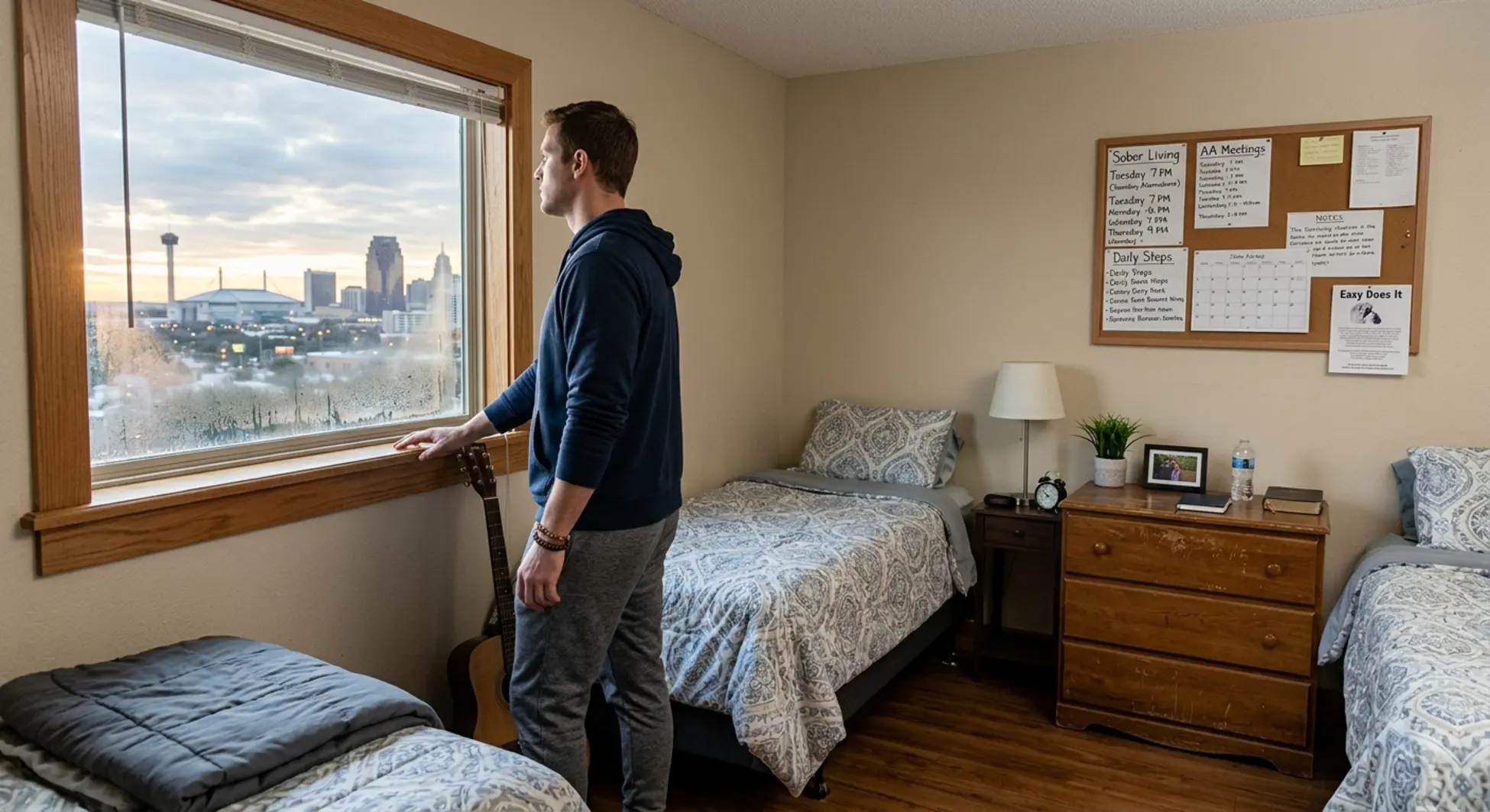
You finished treatment. You walked out the door. And somewhere between the handshakes and the drive home, it hit you — now what? First off, seriously, congratulations. You did the hardest part: you put down the shovel and stopped digging. That takes more guts than most people will ever understand. Now comes the part that actually builds something. Treatment gave you the foundation. Sober living is where you learn to stand on it — where the daily work of staying sober meets the daily work of building a real life. This guide covers everything you need to know about men’s sober living houses in San Antonio: what they cost, what the rules look like, how to choose the right one, and what to watch out for.
San Antonio is a city of over 1.4 million people — and the greater metro tops 2.6 million — with a significant veteran population, a growing recovery community, and real demand for quality transitional housing. The options exist. But not all of them are equal, and making the wrong choice during the most vulnerable stretch of your recovery can cost you far more than money. This guide is built to help you make the right call.
Whether you’re a man finishing treatment and weighing your next step, a family member trying to figure out how to help, or a discharge planner looking for reliable options in the San Antonio area — you’re in the right place. We’re going to be straight with you about costs, rules, what works, and what to avoid. No sales pitch. Just the information you need to make a confident decision.
Key Takeaways
- San Antonio men’s sober living homes typically cost $400–$1,200/month, with additional move-in fees of $300–$800 and drug testing costs of $100–$200/month.
- The first 3–6 months after treatment are the highest-risk window for relapse — structured sober living is specifically designed to close that gap.
- Sober living is not a treatment center: no therapy, no clinical care, no medical services — it’s peer-supported accountability with real structure and real consequences.
- Daily breathalyzer testing, bi-weekly drug screening, a 30-hour weekly work requirement, and daily 12-step meeting attendance are standard in structured programs.
- A 3–6 month sober living stay costs $2,400–$7,500 total — a fraction of the $5,000–$30,000+ cost of relapse and re-treatment.
- Texas does not license sober living homes independently; NARR/TARR certification is the voluntary standard that separates quality homes from the rest.
- Brotherhood — men showing up for each other every day — is what actually changes people, not rules alone.
Why Sober Living Matters: The Gap Between Treatment and Independence
Here’s the reality that treatment centers don’t always have time to fully explain: a 30-, 60-, or 90-day program is a starting point, not a finish line. The clinical work — detox, therapy, stabilization — is essential. But when you walk out of inpatient care and step directly into independent living, you’re often walking straight into every trigger, every old relationship, and every old habit that was waiting patiently for you to come back. The challenge of transitioning from rehab to independent living is one of the most dangerous stretches in a man’s recovery, and it’s where most relapses happen.
Research consistently shows that men who move into structured sober living after treatment have significantly better outcomes than those who discharge directly to independent living. The first 3–6 months post-treatment are the most vulnerable window — the brain is still recalibrating, coping skills are new and untested, and the social infrastructure of recovery (sponsor, home group, sober network) is still being built. Sober living exists to fill that window with structure, accountability, and community instead of silence and isolation.
San Antonio’s growing population and the significant substance use challenges facing Bexar County — where alcohol, methamphetamine, and opioids are the primary drivers of treatment admissions — mean demand for quality recovery housing is rising. The market is growing, but quality varies widely. Knowing what to look for, and what to avoid, is the difference between a sober living experience that changes your life and one that wastes six months of it.
It’s Normal to Feel Scared About What Comes Next
Finishing treatment is a huge accomplishment, but the uncertainty of what comes next is real. Sober living exists because that gap between treatment and independent life is where most people struggle. You’re not alone in feeling nervous about this transition — and that nervousness is actually a sign that you’re taking it seriously.
What Is a Sober Living Home? (And What It’s Not)
A sober living home is a structured, peer-supported recovery residence. That’s the clean definition. What it means in practice: a house full of men in recovery, living under a shared set of rules, holding each other accountable, and building the habits and skills that independent life requires. It is not a treatment center. There is no therapy, no clinical oversight, no medical care. Residents manage their own recovery — with the support of the house structure, a house manager, and the brotherhood around them.
A sober living home is a bridge, not a destination. The typical stay is 3–12 months, with 3–6 months being the sweet spot for most men. You’re not moving in forever. You’re moving in to get stable, get employed, build your sober support network, and develop the financial and life skills to leave on your own terms — not because you ran out of money or got kicked out, but because you’re genuinely ready. That distinction matters.
Sober Living vs. Treatment Centers
Treatment centers provide clinical care: therapy, medical oversight, psychiatric support, detox, and structured programming delivered by licensed professionals. They are the right first step for most people entering recovery. Sober living homes provide the next step — structure, accountability, and peer support — but residents are responsible for their own recovery work. You bring your sponsor. You attend your meetings. You do your steps. The house provides the environment and the accountability; you provide the effort.
Both are necessary. They’re not competing options — they’re sequential ones. If you haven’t been through treatment, sober living is not a substitute. If you have been through treatment, sober living is often the most important decision you make next.
Sober Living vs. Halfway Houses
Many people use “sober living” and “halfway house” interchangeably, but the distinction matters. You can read a full breakdown in our post on sober living vs halfway house in Texas, but here’s the short version: halfway houses are often court-affiliated, step-down programs from intensive residential treatment, or transitional housing tied to specific institutional programs. Sober living homes are voluntary, peer-focused, and built around long-term recovery lifestyle — not court compliance or institutional discharge planning.
Both provide substance-free housing. But sober living emphasizes brotherhood, community, and the long game. The men around you aren’t there because a judge told them to be. They’re there because they chose to be — and that choice makes the culture different.
What Does “Peer-Supported Accountability” Actually Mean?
It means the men living with you notice when you’re off. They notice when you stop going to meetings, when you’re isolating, when your attitude shifts. And in a real sober living home, they say something — not to get you in trouble, but because they’ve been where you are. That’s the brotherhood. It’s not sentimental. It’s functional. It’s other men showing up for each other because they know what’s at stake.
How Much Does Sober Living Cost in San Antonio?
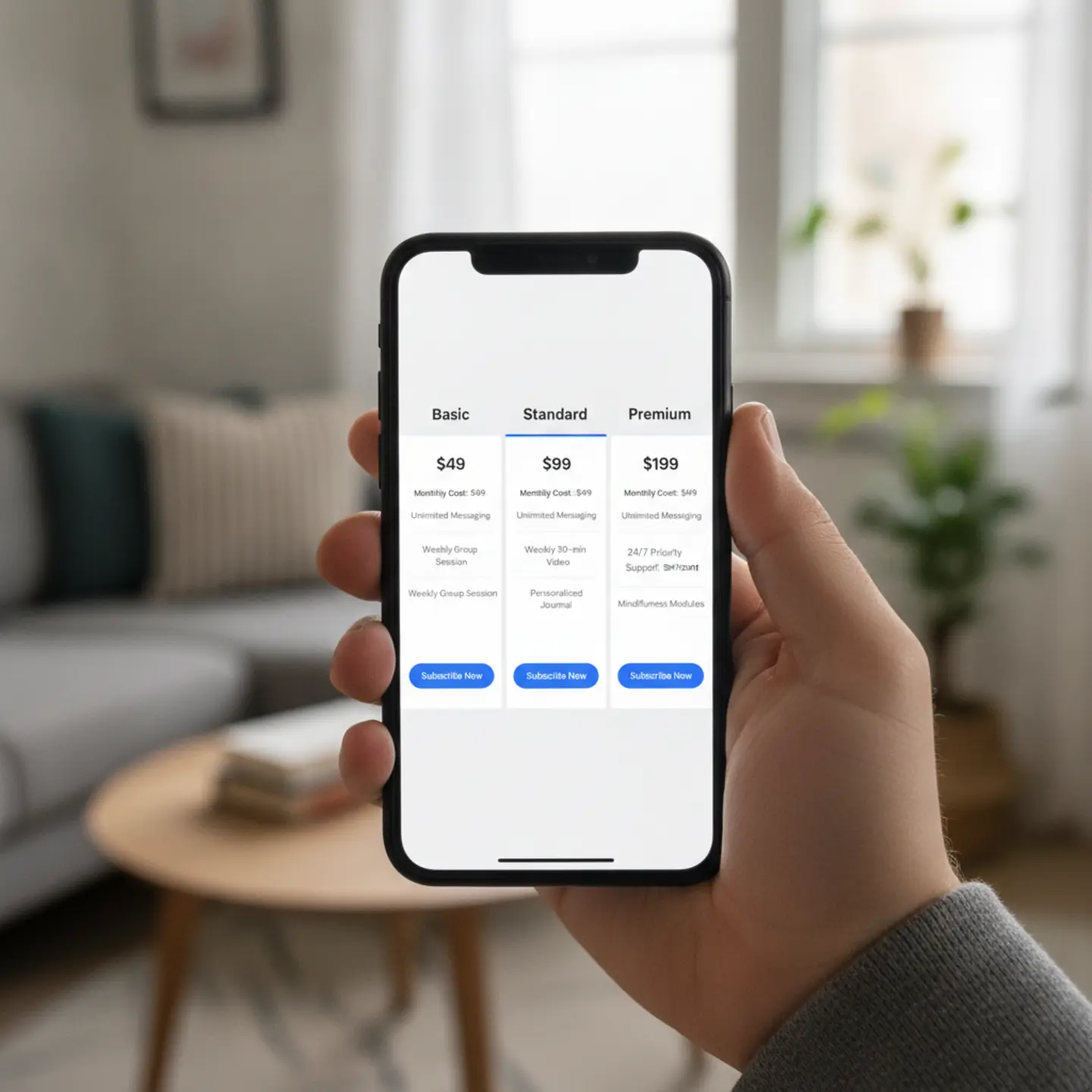
Let’s talk numbers — because cost is one of the first things men and families ask about, and vague answers don’t help anyone. San Antonio is a mid-range market for recovery housing. More affordable than coastal cities, comparable to other Texas metros. Here’s what you can realistically expect to pay in 2026, broken down by tier. For a deeper look at Texas-wide pricing, our post on sober living costs in Texas covers the full picture.
| Tier | Monthly Cost | What’s Typically Included |
|---|---|---|
| Basic Shared-Room | $400–$700/month | Housing, utilities, minimal oversight |
| Mid-Range Structured | $700–$1,200/month | Live-in manager, drug testing, group sessions, work requirement |
| Higher-Cost / Enhanced | $1,200–$2,000+/month | Private rooms, therapeutic support, enhanced programming |
What’s Included in Your Monthly Cost?
At most structured sober living homes, your monthly rent covers housing and utilities — the roof, the electricity, the water. Drug testing, house management, and peer support are typically included as well. What’s usually not included: meals (varies by house — always ask), transportation, phone and internet access, and 12-step literature. Budget for those separately.
Hidden Costs to Budget For
The monthly rent number is not the full picture. Here’s what to factor in when you’re budgeting for a sober living stay:
Full Cost Breakdown — What to Budget Beyond Rent
- Move-in deposit or fee: $300–$800 (at Drew’s, this is a $100 move-in fee plus two weeks of rent upfront)
- Drug testing: $20–$50 per test, often weekly or bi-weekly — budget $100–$200/month
- 12-step literature and workbooks: $50–$100 initially (Big Book, step workbooks)
- Transportation to work and meetings: varies by location and employment
- Phone and internet if not included in rent
- Work gear or attire if your job requires it
Financial Assistance and Payment Options
Cost shouldn’t be the reason someone doesn’t get into sober living. There are real options. SAMHSA block grants can be channeled through Texas state and local health departments for addiction services. Texas HHS recovery support funding sometimes covers transitional housing. Veterans may qualify for VA Supportive Housing (HUD-VASH). Oxford House offers limited loans to eligible members. Local non-profits and faith-based organizations sometimes provide grants or scholarships. And many homes — including structured programs — offer sliding scale pricing or payment plans if you ask. The key word is: ask. Don’t assume the price is fixed. For a full breakdown of financial assistance options available through structured recovery programs, it’s worth a direct conversation with the home you’re considering.
Cost Shouldn’t Be the Barrier Between You and Recovery
If cost is your main concern, that’s completely valid — and it’s exactly why we’ve built our program to be affordable and transparent. We’ll walk you through what everything costs, what’s included, and what options exist for your situation. No pressure, just honest answers.
The Real Cost of Relapse vs. the Cost of Sober Living
Before you decide sober living is too expensive, do the math on the alternative. A 3–6 month sober living stay — factoring in rent, move-in fees, drug testing, and incidentals — runs approximately $2,400 to $7,500 total. That’s the full cost of a structured, supported bridge from treatment to independent life.
Now compare that to the cost of relapse. Re-treatment alone runs $5,000–$30,000+ depending on the level of care required. Add lost wages during the relapse period and re-treatment, potential legal fees if the relapse involves a DUI or other charges, healthcare costs, and the immeasurable impact on family relationships and trust. The math isn’t close. Sober living isn’t an expense — it’s one of the highest-return investments a man in recovery can make.
The Real Cost of Sober Living Is an Investment, Not an Expense
A 3–6 month sober living stay costs $2,400–$7,500 total. Relapse costs $5,000–$30,000+ in re-treatment alone — before you count lost wages, legal fees, and family impact. Research consistently shows that longer stays in structured sober living correlate with better long-term sobriety outcomes and lower recidivism. The investment is clear.
Studies tracked through SAMHSA and NARR outcome research show that men who complete 6 months or more in structured sober living demonstrate significantly more stable recovery, better employment outcomes, and lower rates of return to substance use than those who leave earlier or skip the step entirely. The structure isn’t just about staying sober today — it’s about building the habits and the support network that keep you sober for years.
What to Expect: Daily Life in a San Antonio Sober Living Home
One of the most common fears men have about sober living is that it’s going to feel like a lockdown — like trading one institution for another. It’s not. A structured sober living home is not a prison, not a hospital, and not a halfway house in the punitive sense. You keep your phone. You choose your job. You live like an adult. What you give up is the freedom to self-destruct — and that’s exactly the point.
Here’s what a typical day actually looks like in a structured men’s sober living home in San Antonio. Understanding the full program structure before you commit is important — so let’s walk through it honestly.
The First 30 Days: Probation
The first 30 days are the probationary period — the most structured stretch of your stay. Curfew is 10 PM on weeknights, 11 PM on weekends. No overnight passes. A 20-hour weekly productivity rule applies — you need to be doing something: working, attending school, volunteering, or going to meetings. You’re required to attend 12-step meetings daily plus in-house meetings. You need to find a sponsor and begin working the steps. Daily breathalyzer testing starts on day one, no exceptions.
This isn’t punishment. It’s baseline stabilization. The probationary period exists because the first 30 days are when you’re most vulnerable, most likely to make impulsive decisions, and most in need of external structure while your internal structure is still being built. The men who resist the probationary period the hardest are often the ones who need it most.
After Probation: Building Momentum
After the first 30 days, the structure evolves. Curfews adjust based on your time in the program and demonstrated responsibility. The 30-hour weekly work requirement becomes the standard — employment is now the expectation, not the goal. You gain more autonomy while maintaining the accountability framework that makes sober living work. The focus shifts from “proving yourself” to “building your life.”
There is no set graduation date. You leave when you’re genuinely ready — when you have stable employment, a financial foundation, a sober support network, and demonstrated readiness for independent living. That’s not a box to check; it’s a reality to build. Many men find that the 3–6 month mark is when things click into place. Some need longer. The goal is always the same: leave on your terms, not because you ran out of runway.
The Role of 12-Step Meetings and Peer Support
Daily meeting attendance isn’t optional in a structured sober living home — and it shouldn’t be. Meetings provide community, accountability, and a recovery framework that extends far beyond the walls of the house. Your sponsor, your home group, the men you meet in those rooms — that’s the network that will still be there when you move out. Sober living is temporary. The relationships you build in recovery are not.
In-house meetings complement the 12-step work and build the community within the house itself. Brotherhood means something specific here: it’s the guy who knocks on your door when you haven’t come out all day. It’s the man who drives you to a meeting when your car breaks down. It’s accountability that doesn’t feel like surveillance because it comes from people who actually care whether you make it.
Look — I know what you’re thinking. “I can do this on my own. I don’t need someone checking my breath every morning.” Maybe. But here’s the thing: you’ve tried doing it on your own. Most guys reading this have. The daily breathalyzer isn’t about distrust. It’s about removing the decision entirely. You don’t have to decide whether to drink today — the answer is already built into your morning routine. That’s not a cage. That’s a foundation.
And the guys in the house? They’re not your babysitters. They’re your brothers. There’s a difference. One watches you. The other walks with you.
If you want to know whether you can hold down a job while living in sober living — the answer is not just yes, it’s required. You can read more about how the work requirement works and other common questions on our FAQ page.
Does This Structure Sound Like What You Need?
If the daily structure described above resonates with you — or if you’re wondering whether it’s the right fit — schedule a call with us. We can answer your specific questions, walk you through what a typical week looks like, and help you figure out whether Drew’s is the right next step for you.
Rules, Accountability, and Zero-Tolerance Policies
Transparency about rules is non-negotiable. A legitimate sober living home tells you exactly what the rules are before you move in — not after. Here’s what you can expect in a structured men’s program, and why each rule exists.
Standard House Rules in Structured Sober Living
- Zero tolerance for drugs, alcohol, and banned substances — including Kratom, K2, and CBD
- Daily breathalyzer testing, beginning on day one
- Bi-weekly drug screening for a full panel of substances
- Curfew adherence (10 PM weeknights, 11 PM weekends during probation)
- 30-hour weekly work requirement after the probationary period
- Daily 12-step meeting attendance
- House chores assigned to every resident — no exceptions
- Up by 10 AM Monday–Friday unless at work, class, or volunteer activity
- Respect for house community, house manager, and fellow residents
Rules are enforced consistently and fairly — no exceptions for “good guys,” no special treatment for long-timers. That consistency is the point. Recovery doesn’t have favorites, and neither does the house. When everyone is held to the same standard, the culture of accountability becomes the culture of the house — and that culture is what actually changes people.
What Happens If You Relapse?
Relapse is treated as a serious violation of house rules. Refusing or failing a drug test carries the same consequence as a positive result — immediate dismissal. This isn’t cruelty. It’s the protection of every other man in the house who is working hard to stay sober. One person’s active use in a sober living environment is a direct threat to everyone else’s recovery.
Depending on the home and the circumstances, consequences can range from increased scrutiny and support to mandatory re-entry into treatment or discharge. Some homes may offer a second chance if the resident is willing to re-commit fully and return through treatment. Others have strict no-second-chance policies. The right answer depends on the home’s philosophy and the specific situation — but the house’s primary responsibility is always to the community as a whole. If you relapse, the most important thing you can do is communicate immediately with house management. Honesty in that moment matters.
Zero-Tolerance Means Zero Exceptions
At structured sober living homes, the banned substance list includes more than just drugs and alcohol. Kratom, K2, synthetic cannabinoids, and CBD products are prohibited. Refusing a test is treated identically to failing one. There are no warnings for a first offense. This is not a punitive policy — it is the protection of every man in the house who is fighting for his life.
Top 5 Men’s Sober Living Houses in San Antonio: Compared and Reviewed
San Antonio has a growing recovery housing market, and the options below represent some of the most established men’s sober living programs serving the area. Each has a distinct approach, cost structure, and community focus. We’ve included Drew’s Sober Living in this list and reviewed it with the same honesty we apply to everyone else — because you deserve a real comparison, not a sales pitch.
1. Drew’s Sober Living — Multiple Locations (Chittim House, Evergreen House, Chapel Bend)
Chittim House — North San Antonio (10 beds)
Quiet, residential neighborhood in North San Antonio. Well-suited for men who want proximity to employment corridors and a calmer environment. All 10 beds operate under the same rigorous daily-testing program as every Drew’s location.
Evergreen House — Central San Antonio (8 beds)
Centrally located with easier access to meetings, public transit, and the broader San Antonio recovery community. Eight beds, same program standards. Good fit for men who want to be close to the city center while building their recovery foundation.
Chapel Bend — New Braunfels (9 beds)
For men who want a smaller-city environment with less urban noise and distraction. New Braunfels has a tight-knit recovery community and a lower cost of living. Nine beds, same program. Some men find the change of environment itself is part of what they need.
Total capacity: 27 beds across three locations. Key differentiators: Daily breathalyzer testing from day one, 30-hour weekly work requirement, live-in house managers at every location, financial literacy training built into the program, and consistent enforcement of rules across all three houses. Operated by Drew with family involvement. Resident feedback consistently highlights the effectiveness of the structure and the quality of the brotherhood. You can explore all three locations on the Drew’s Sober Living houses page.
2. Clubhouse Sober Living — San Antonio
Location: 431 Club Drive, San Antonio, TX 78201. Clubhouse Sober Living is a well-established option with a strong 12-step focus. It explicitly positions itself as a semi-controlled environment for men who are independently working a 12-step program — not a boarding house, not a special needs facility. Peer support and a structured, safe environment are the core offering. Limited public reviews make a comprehensive assessment difficult, but the program’s clear positioning and 12-step emphasis are consistent signals of a serious operation.
3. Eudaimonia Recovery Homes — San Antonio
Location: Serves San Antonio (specific house addresses not publicly listed). Eudaimonia is frequently cited as a provider of gender-specific sober living in the San Antonio area. Their phased program structure — with clear steps toward independence — and emphasis on personal growth and community are consistent themes in resident feedback. Some reviews note a need for clearer communication about program intensity and individual support levels. Worth a direct conversation to understand exactly what their current program looks like.
4. Real Deal Sober Living — San Antonio
Location: Multiple locations in San Antonio. Real Deal emphasizes affordability and a structured, disciplined environment with live-in managers. Reviews highlight clean, orderly, furnished houses and staff described as dedicated and compassionate. They also offer LGBTQ transitional housing, indicating a broader scope of support. The “fresh start” framing in resident feedback suggests a program that takes the practical side of rebuilding seriously. A solid option for men who prioritize affordability and a no-nonsense environment.
5. The Next Right Step (NRS) — On-Site Sober Living Dorms Program
Location: San Antonio (on-campus dorms, likely affiliated with an institution). The Next Right Step appears in local recovery directories as a supported sober living dorm program, potentially integrated with another service or institution. Public information is limited, and resident feedback is difficult to verify through public listings. If you’re considering this option, direct contact and thorough vetting are especially important — ask the questions in the next section before committing.
How to Choose the Right Sober Living Home for You
Choosing a sober living home is one of the most consequential decisions you’ll make in early recovery. The wrong environment can undermine everything you built in treatment. The right one can be the foundation for the rest of your life. Here’s how to evaluate your options like someone who knows what they’re looking for. For families going through this process, our guide on choosing sober living in Texas for families covers the family perspective in depth.
Start with transparency. A legitimate home will give you clear, specific answers about costs, rules, program structure, and ownership. If you’re getting vague answers or pressure to commit before you have all the information, that’s a signal. Knowing how to identify a legitimate sober living home before you sign anything is critical — look for transparency, certification, and a clear resident agreement.
Questions to Ask Before Committing
Your Pre-Commitment Checklist
- What is the total cost, including all fees, drug testing, and move-in charges?
- What are the house rules, and what are the specific consequences for violations?
- How often is drug testing done, and what substances are tested for?
- What is the work requirement, and how is it enforced?
- How long is the typical stay, and how is readiness to leave determined?
- Do you coordinate directly with treatment centers and clinical teams?
- What is the house manager’s experience and background in recovery?
- Can I speak with current residents or recent alumni about their experience?
- Is the home NARR/TARR certified, and can you provide documentation?
- What happens if I relapse — what is your specific policy?
Red Flags to Watch For
Not every sober living home operates with integrity. Some operate as predatory businesses that exploit men in vulnerable moments. Here’s what to watch for:
Red Flags That Signal a Sketchy Sober Living Home
Pressure to commit immediately or pay upfront without a clear written agreement. Vague or inconsistent answers about costs, rules, or program structure. No NARR/TARR certification and no explanation of why. Lack of transparency about ownership or management. Consistent negative reviews with themes of safety issues, dishonesty, or poor conditions. A legitimate home will be transparent, patient, and willing to answer every question you have. Trust your gut — if something feels off, it probably is.
Additional red flags: a house manager with no recovery experience or relevant qualifications, no clear communication protocol with treatment centers or families, and any claims of guaranteed sobriety or specific outcomes. Recovery is offered, not guaranteed. Any home that promises otherwise is selling something you should walk away from.
Licensing, Regulation, and Consumer Protections in Texas
Texas does not have a specific state license for sober living homes that operate independently of clinical treatment. This is important to understand, because it means the regulatory floor is lower than you might expect. Licensed treatment facilities — residential treatment centers, detox programs, IOPs — are regulated by the Texas Health and Human Services Commission (HHSC). But a general sober living home that doesn’t provide clinical services? Not subject to the same oversight.
That doesn’t mean there’s no standard. It means the standard is voluntary — and that’s where NARR and TARR come in.
Why Texas Doesn’t License Sober Living Homes (And Why That Matters)
Texas only licenses facilities that provide clinical treatment services. Sober living homes that don’t provide clinical care operate outside that framework — which means quality can vary dramatically. NARR/TARR certification is the voluntary standard that fills that gap. It indicates a home is committed to quality, consumer protection, and ethical operation. Always ask about certification — and if a home claims it, ask for documentation.
NARR and TARR Certification Levels
The National Alliance for Recovery Residences (NARR) sets national standards for recovery housing. The Texas Association of Recovery Residences (TARR) is the state affiliate that certifies and accredits Texas homes based on those standards. There are four levels: Level I is peer-run with minimal structure; Level II is staff-supported with more structure; Level III is professionally operated with significant structure and services — where most structured sober living homes with live-in managers fall; Level IV is treatment-integrated, with clinical services woven into the housing component.
Certification at any level indicates a commitment to quality and consumer protection. You can verify a home’s certification status through the TARR website directly.
How to Verify a Home’s Legitimacy
Ask for proof of NARR/TARR certification if it’s claimed. Check the TARR website for verified certified homes in Texas. Request a copy of the resident agreement and fee structure before you commit to anything. Check Google, Yelp, and recovery forums for consistent complaints or red flags. If you’re a family member doing this research, the Drew’s Sober Living page for families walks through what to look for when evaluating a program for your loved one.
Consumer recourse options if something goes wrong: HHSC complaints are primarily for licensed facilities, but the Texas Deceptive Trade Practices Act (DTPA) gives consumers legal recourse against operators engaging in deceptive practices. Fair Housing Act complaints can be filed with HUD if discrimination is suspected — sober living residents are protected under the Fair Housing Act as individuals with disabilities. Local consumer protection agencies may also offer guidance or mediation.
Sober Living and Employment: Building Financial Stability in Recovery
Work is not a burden in recovery. Work is the foundation. The 30-hour weekly work requirement in structured sober living homes isn’t punishment — it’s the mechanism through which a man goes from “I’m staying sober” to “I’m building a life.” Employment provides income, yes. But it also provides structure, purpose, identity, and self-respect. Those things matter as much as the paycheck. Understanding the role of financial literacy in recovery is central to why structured sober living programs build employment into the program requirements.
Employment Is Not a Burden — It’s the Foundation of Recovery
The 30-hour work requirement isn’t about keeping you busy. Work provides structure, purpose, income, and self-respect — four things that are directly correlated with long-term sobriety. Financial instability is one of the most significant risk factors for relapse. Sober living addresses this directly, on purpose, from day one of your post-probation life in the house.
The 30-Hour Work Requirement: Why It Matters
Thirty hours per week is roughly 6 hours a day, five days a week. That’s enough to earn a meaningful income at entry-level wages in San Antonio — which range from minimum wage up to $15–$18/hour for many positions — while still leaving time for meetings, house responsibilities, and personal recovery work. It’s not designed to exhaust you. It’s designed to fill the hours that idle time would otherwise fill with the wrong things.
Many employers in San Antonio are willing to hire people in recovery. Sober living homes often help with job placement — connecting residents with employers who understand the situation and are willing to give someone a real shot. The work requirement also builds confidence. Most men in early recovery have a complicated relationship with employment — missed shifts, burned bridges, gaps in their resume. Showing up consistently, week after week, rebuilds that confidence from the ground up.
From Paycheck to Independence: A Realistic Timeline
Months 1–2: Secure Employment, Begin Earning
Focus is on finding stable employment and establishing a consistent work routine. Income begins covering personal expenses and contributing toward rent. Financial literacy training begins — budgeting, tracking spending, understanding where money goes.
Months 2–4: Build Savings, Cover Rent Independently
With stable employment established, the focus shifts to covering rent independently and beginning to build savings. Emergency fund goal: one month of expenses. Credit rebuild begins — secured cards, on-time payments, no new debt.
Months 4–6: Establish Financial Stability, Plan for Independence
Emergency fund growing. Credit score improving. Beginning to research independent housing options — what a deposit looks like, what income is required for a lease. Sober support network is established and functioning. Exit planning begins in earnest.
Month 6+: Demonstrated Readiness, Exit on Your Terms
Stable employment, financial foundation, sober network, demonstrated responsibility. Exit from sober living is a graduation, not an eviction. You leave because you’re ready — and you know what that looks like because you built it yourself.
Financial instability is one of the most significant risk factors for relapse. A man who can’t pay rent, can’t buy food, and can’t see a path forward is a man who is one bad day away from using. Sober living addresses this directly — not by handing you money, but by building the skills and the habits that make financial stability possible. That’s the difference between a program that keeps you sober for 90 days and one that builds a foundation for the next 30 years.
Frequently Asked Questions About San Antonio Sober Living for Men
These are the questions men in recovery and their families ask most often. Direct answers, no fluff. You can also find additional answers on the Drew’s Sober Living FAQ page.
How much does sober living cost in San Antonio for men?
Costs in 2026 typically range from $400–$700/month for basic shared-room housing to $700–$1,200/month for more structured programs with live-in managers, drug testing, and formal program requirements. Higher-end homes with private rooms or therapeutic support can run $1,200–$2,000+/month. Beyond monthly rent, budget for a move-in fee or deposit ($300–$800), drug testing ($100–$200/month), and initial 12-step literature ($50–$100). Many homes offer sliding scale pricing or payment plans — always ask directly, because the published rate is often not the only option available.
What are the rules like in a men’s sober living home in San Antonio?
Rules in structured sober living homes focus on maintaining a drug- and alcohol-free environment and building functional adult habits. Expect daily breathalyzer testing from day one, bi-weekly drug screening, curfews (typically 10 PM weeknights and 11 PM weekends during the probationary period), mandatory 12-step meeting attendance, assigned house chores, a morning wake-up requirement, and a 30-hour weekly work requirement after the first 30 days. Zero-tolerance policies apply to drugs, alcohol, and banned substances including Kratom, K2, and CBD — refusing a test carries the same consequence as failing one. Rules are enforced consistently and fairly, with no exceptions for long-timers or “good guys.”
Can I work or go to school while living in a San Antonio sober living home?
Yes — and in structured programs, it’s required. A 30-hour weekly work requirement is standard after the 30-day probationary period. Employment, school, or volunteer work is seen as a cornerstone of recovery, not a distraction from it. Work provides structure, income, purpose, and self-respect — all of which directly support long-term sobriety. During the probationary period, a 20-hour productivity rule applies, which can be met through work, meetings, school, or volunteer activity. Many sober living homes actively help residents with job placement and employer connections.
What’s the difference between a sober living home and a halfway house in San Antonio?
While the terms are often used interchangeably, they represent meaningfully different models. A sober living home is typically voluntary, peer-focused, and built around long-term recovery lifestyle — residents choose to be there and are working their own recovery program. A halfway house more often implies a court-affiliated program, a step-down from intensive residential treatment, or housing tied to institutional discharge planning. Both provide substance-free housing, but sober living emphasizes brotherhood, community, and the long game of building an independent life.
What happens if I relapse while living in a sober living home in San Antonio?
Relapse is treated as a serious violation of house rules in structured sober living homes. Consequences range from increased scrutiny and mandatory re-entry into treatment to immediate discharge from the home, depending on the home’s specific policy and the circumstances. Refusing a drug test carries the same consequence as failing one — there is no distinction. If you relapse, the most important thing you can do is communicate immediately and honestly with house management. Some homes may offer a second chance contingent on re-entering treatment and re-committing fully; others have strict no-second-chance policies. The house’s primary responsibility is always to the recovery of the entire community, not just the individual.
How do I know if a sober living home in San Antonio is legitimate and safe?
Look for transparency in costs, rules, and ownership — a legitimate home will answer every question you have clearly and without pressure. Ask about NARR/TARR certification and request documentation if it’s claimed. Check Google, Yelp, and recovery forums for consistent themes in reviews — both positive and negative. Ask to speak with current residents or recent alumni. Request a copy of the resident agreement before committing to anything. Red flags include pressure to sign or pay immediately, vague or inconsistent answers about program structure, no certification and no explanation, and consistent negative reviews about safety or dishonesty. A home that’s doing things right will be patient, transparent, and willing to earn your trust before you move in.
There’s a moment that happens in sober living — usually somewhere around month two or three — where things shift. It’s no