Key Takeaways
- The first 90 days after treatment are the highest-risk window for relapse — men who enter structured sober living during this period show 2–3 times higher abstinence rates at 6 and 12 months compared to those who return directly home.
- Seven concrete warning signs — including isolation from sober supports, subtle dishonesty, recovery disengagement, financial instability, and a home environment with active triggers — indicate your spouse may need transitional housing, not just meetings.
- A 6-month stay in structured sober living ($4,800–$9,000 at mid-range programs) costs a fraction of untreated relapse, which can run $15,000–$60,000+ per treatment readmission alone, plus lost income, legal fees, and emergency care.
- When vetting a sober living home, always ask for proof of NARR or Texas DSHS certification, a detailed resident handbook, a transparent fee structure, and a clear relapse protocol — and walk away if any of those are missing.
- Trust Drew’s Sober Living for daily-tested, brotherhood-based structured recovery in San Antonio and New Braunfels — visit Drew’s Sober Living to learn how we help families protect their spouse’s recovery and rebuild family stability.
How Do Families Know When Their Spouse Needs Transitional Housing After Rehab?
The first 90 days after treatment are the highest-risk window for relapse, and structured sober living during this period dramatically improves long-term outcomes. If your spouse shows early warning signs—isolation, dishonesty, mood shifts, or lack of engagement in recovery—or if your home environment still contains triggers and active users, transitional housing provides the 24/7 accountability and peer support that meetings alone cannot. The research is clear: men who transition to structured sober living have 2–3 times higher abstinence rates at 6 and 12 months compared to those returning directly home.
Understanding these warning signs and the role of structured recovery housing can mean the difference between sustained sobriety and a painful relapse cycle.
Drews Sober Living
Daily Breathalyzer Testing for Every Resident
Core Service Programs:
- Structured Sober Living Homes for men transitioning from treatment to independent, sober living
- Daily Accountability & Drug Testing for residents and families who need consistent, verifiable structure
- Life-Skills & Employment Readiness for men rebuilding work history, finances, and a sober support network
Why Choose Drews Sober Living:
- ✓ Trusted by customers with a perfect 5.0-star Google rating across 91 verified reviews
- ✓ Daily breathalyzer testing for every resident, plus drug testing every two weeks
- ✓ Four operating houses, 38 beds in San Antonio and New Braunfels, Divine House coming soon
- ✓ Live in house managers who are men in long term recovery themselves
- ✓ Founded in 2023 by Drew, who built every house policy from his own recovery
- ✓ 83% of residents who moved out of the community did so sober
- ✓ Strongly encouraged 30 hour work week plus financial literacy and life skills training
The Post-Treatment Vulnerability Window: Why the First 90 Days Matter Most
Your fear right now is not overprotection. It is pattern recognition. You have watched your spouse up close — you know what struggling looks like before he does. And the science backs you up completely. Research consistently identifies the first 90 days post-discharge from inpatient or IOP treatment as the highest-risk period for relapse. During this window, the brain’s reward system and decision-making centers are still actively healing. Old triggers hit harder. Coping skills that worked in a clinical setting haven’t yet been tested in the real world. The scaffolding of treatment is gone, and what replaces it matters enormously.
This vulnerability doesn’t disappear after 90 days, either. Relapse rates remain elevated through the first 6–12 months of early recovery. Men in this window are simultaneously adjusting to new routines, facing financial pressure, rebuilding relationships, and trying to build coping mechanisms — often for the first time without clinical support. A structured environment with daily accountability provides the scaffolding the brain needs to rewire. Without it, the transition from the controlled environment of treatment to the uncontrolled environment of home is where most relapses begin.
Your Fear Is Not Overprotection — It’s Wisdom
Spouses who recognize early warning signs and push for structured support are not being controlling or distrustful — they’re acting on intimate knowledge of their partner’s vulnerabilities and the home environment. Research shows that family involvement in recovery housing decisions leads to better outcomes. Surveys suggest 50–70% of recovery housing placements are initiated or strongly influenced by a family member. Your instincts are an asset, not a liability.
Seven Warning Signs Your Spouse May Need Structured Transitional Housing
Warning signs don’t always announce themselves loudly. Sometimes it’s a small lie about where he went. Sometimes it’s a week of sleeping until noon. The pattern matters more than any single moment. Here are the seven categories of warning signs that research and clinical experience consistently link to elevated relapse risk in men during early recovery.
Seven Warning Signs to Watch For
- Behavioral shifts: Increased irritability, sudden mood swings, withdrawal from family activities, neglecting hygiene, changes in sleep patterns, secretive behaviors like locking doors or unexplained absences.
- Social withdrawal: Isolating from sober supports, re-establishing contact with active users, forming new secretive friendships, avoiding family events.
- Recovery disengagement: Skipping 12-step meetings, losing interest in recovery activities, lack of a sponsor or a weak sponsor relationship, expressing hopelessness about staying sober.
- Financial instability: Unexplained money issues, frequent requests for cash, job loss or unstable employment, inability to manage basic bills.
- Psychological shifts: Complacency (“I’ve got this”), overconfidence, increased stress or anxiety, depression, romanticizing past use, expressing boredom or feeling overwhelmed.
- Environmental risk: Your home still contains active users, alcohol is present, old using friends visit, or unavoidable triggers like isolation and unstructured time dominate his days.
- Subtle dishonesty: Small lies about whereabouts, vague answers about meetings or work, defensive reactions to normal questions, inconsistent stories.
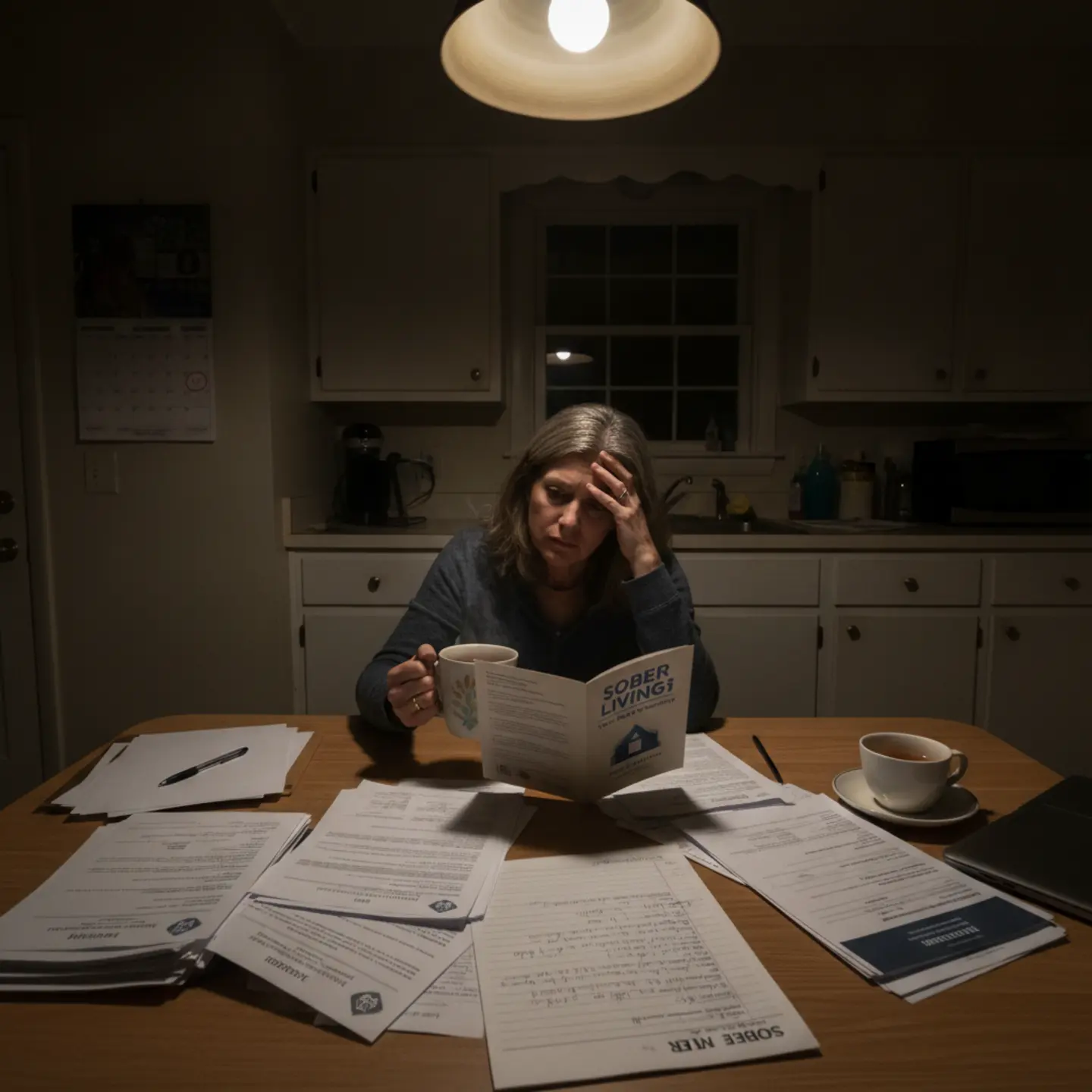
Here’s something worth sitting with: you don’t need to catch him in a lie to act. If you’re reading this article at 11 PM because something feels off, that feeling is data. Spouses are often the first to notice the shift — before the sponsor, before the house manager, before he admits it to himself. Trust what you’re seeing. The goal isn’t to punish him. The goal is to get him into an environment where the structure catches what you can’t.
Why Your Fear Is Valid: The Financial and Emotional Cost of Relapse vs. Sober Living
One of the most common objections families face — sometimes from their spouse, sometimes from their own doubts — is the cost of sober living. It feels like an added expense on top of everything treatment already cost. But the math tells a different story when you put relapse costs on the same page.
Mid-range structured sober living in Texas, like Drew’s Sober Living, runs $800–$1,500 per month. A 6-month stay lands between $4,800 and $9,000. That is real money. But compare it to what untreated relapse actually costs: a single inpatient or residential treatment readmission runs $15,000–$60,000 or more per episode. Emergency medical care for an overdose or withdrawal crisis can reach tens of thousands of dollars. Legal fees from a DUI, public intoxication charge, or related offense add thousands more. And lost employment — even a few months out of work — can cost a family tens of thousands of dollars annually in lost income alone.
Men who stay 6 months or longer in structured sober living show employment rates exceeding 70–80%, which means income stability and reduced financial burden on the family. Insurance rarely covers sober living rent directly, but nonprofit scholarships, faith-based assistance, and Texas HHSC voucher programs exist for families demonstrating financial need. The conversation about cost is worth having — but it needs to include the full picture of what relapse actually costs.
Beyond the finances, the emotional toll on spouses without transitional support is significant. Research documents real “caregiver burden” — chronic stress, anxiety, sleep disturbances, and physical health problems — when a partner returns to an unstructured home environment in early recovery. You are not just protecting his sobriety. You are protecting your own well-being and your family’s stability. For a deeper look at how families navigate these decisions, the family decision guide for choosing sober living in Texas walks through the full evaluation process.
What Structured Sober Living Actually Looks Like (and What It Isn’t)
A lot of men resist sober living because they picture something between a jail and a halfway house — a place where they surrender their phone, their choices, and their dignity. That’s not what structured sober living is. It’s worth being specific about what the daily reality actually looks like, because clarity removes the fear that makes men refuse to go.
Structured sober living is not a treatment center, rehab, or clinical facility. It provides housing and peer-based recovery support — not therapy, not medical care, not clinical services. What it does provide is a safe, sober environment with real accountability built into every day. At a Level III structured home, that means daily breathalyzer testing, drug testing every two weeks, a strongly encouraged 30 hour work week, daily 12-step meeting attendance, and financial literacy training. Residents keep their phones, choose their own employment, and maintain their adult identity.
What Is a NARR Level III Structured Residence?
The National Alliance for Recovery Residences (NARR) classifies recovery homes on a four-level scale. Level III (Structured) homes like Drew’s Sober Living feature robust house rules, regular drug and alcohol screening, peer support services, and staff oversight. This is the level research most consistently links to strong long-term sobriety outcomes — enough structure to create real accountability, without stripping adult autonomy. Families can verify NARR certification at narronline.org.
The probationary period — typically the first 30 days — is stricter: a 10 PM weeknight curfew, a 20-hour productivity requirement, no overnight passes, and required sponsor contact and step work. After probation, curfews adjust based on demonstrated responsibility and time in the program. The focus shifts to building employment, savings, and a sober support network. The goal throughout is responsible independence within a safe, accountable environment — not stripping freedoms or treating residents like inmates. You can read more about how the Drew’s Sober Living program is structured to balance accountability with adult autonomy.
How to Talk to Your Spouse About Transitional Housing Without Damaging Trust
This conversation is one of the hardest you’ll have. Done wrong, it feels like an accusation. Done right, it feels like a lifeline. The framing matters more than the facts you bring to it.
Frame the Conversation Around Support, Not Distrust
Instead of “I don’t trust you,” try “I want to protect your recovery and rebuild our relationship. Sober living is a bridge to help you solidify your sobriety skills in a safe environment.” This reframes the decision as joint, proactive, and loving — not punitive. Use “we” language throughout: “We’re making this decision together for our family’s healing and your best chance at sustained recovery.”
Acknowledge his fear and resistance as normal. Many men worry sober living will feel like jail, or that choosing it signals failure. Emphasize that it’s a bridge, not a destination — a temporary, structured environment to solidify sobriety skills before returning to independent life. Highlight that longer stays (6–12 months) lead to better outcomes than shorter ones, and that rushing home too soon significantly increases relapse risk. That’s not a threat — it’s a fact worth naming together.
Involve him in the research. Tour homes together. Ask questions about house rules and culture. Let him feel agency in the choice. If he resists, ask directly: “What would it take for you to feel safe and supported in early recovery?” Listen for the real concern — cost, autonomy, shame — and address it head-on. The family resources page at Drew’s Sober Living is a good starting point to review together before that conversation.
Not Sure Where to Start? We’re Here to Help You Think It Through.
You don’t have to have all the answers before you reach out. Families call us every day with exactly the uncertainty you’re feeling right now — and we’re glad they do. A conversation costs nothing and can clarify everything.
Vetting a Sober Living Home: Questions to Ask and Red Flags to Watch For
Not all sober living homes are the same. Texas has no specific state licensing requirement for homes that don’t provide clinical treatment services, which means the market includes everything from well-run, certified residences to exploitative operations that prey on vulnerable families. Knowing what to ask — and what to walk away from — protects your spouse and your investment.
Questions to Ask Any Sober Living Operator Before Placement
- Are you NARR certified or Texas DSHS certified? Can you provide proof of your certification level?
- What are your house rules, daily structure, and expectations for residents — curfew, meetings, work requirements?
- What are your drug and alcohol testing policies — frequency, type, and consequences for refusal or failure?
- What is included in the monthly fee, and are there any additional mandatory costs?
- How do you handle relapse, conflict resolution, or residents who are struggling?
- What is your visitation policy, and how do you encourage healthy family involvement?
- What resources do you offer for employment, life skills, or financial literacy?
Concerning answers include evasiveness about fees or rules, unwillingness to provide documentation, promises of “cures,” no clear relapse protocol, and any discouragement of family contact. Poor living conditions, high resident turnover, and pressure to pay immediately in cash are also serious red flags.
Beware of ‘Patient Brokering’ and Insurance Fraud
Some unethical sober living homes receive kickbacks for referring residents to specific treatment centers, labs, or other services. Others claim to offer “free” sober living while billing insurance for unnecessary clinical services. Always verify certifications (NARR, Texas DSHS), ask about financial transparency, and trust your gut if something feels off. Families can verify NARR certification at narronline.org and Texas DSHS-certified residences through the Texas HHSC website. The Texas Attorney General’s Consumer Protection Division handles deceptive trade practices complaints if a home fails to deliver what it promised.
Reliable sources for finding vetted homes include discharge planners at treatment centers, the NARR and Texas Recovery Alliance directories, and local recovery community centers. For a full breakdown of what structured recovery housing costs across Texas and how to compare your options, the San Antonio recovery housing cost guide covers the full range by tier.
Why Drew’s Sober Living Is the Right Choice for San Antonio and New Braunfels Families
Everything covered in this guide — the post-treatment vulnerability window, the warning signs, the accountability structure, the questions to ask — points toward one standard: a home that provides real, daily, verifiable structure operated by people who understand recovery from the inside out. That is exactly what Drew’s Sober Living was built to be.
Drew’s has four operating houses, 38 beds across South Texas — Chittim House in North San Antonio (10 beds), Evergreen House in Central San Antonio (8 beds), and Chapel Bend in New Braunfels (9 beds) — 27 beds total, all running the identical program. Every resident undergoes daily breathalyzer testing, drug testing every two weeks, a strongly encouraged 30 hour work week, daily 12-step meeting attendance, and financial literacy training. This is not a loose collection of suggestions. It is the exact structure that research consistently links to sustained sobriety.
Drew founded DSL from his own recovery journey, which means every house policy was built by someone who has lived the struggle firsthand — not designed by administrators who haven’t. The brotherhood at Drew’s is functional, not sentimental: men who notice when a housemate is slipping and say something, men who help the new guy find a meeting, men who show up for each other because they know what the alternative looks like.
The proof is in the outcomes. Drew’s holds a perfect 5.0-star Google rating across 91 verified reviews — trust earned from residents, families, and treatment center partners across South Texas. And 83% of past residents moved out sober. Not in theory. In real lives, with real jobs, repaired relationships, and the kind of independence that lasts. You can explore all three homes and learn what makes each one the right fit at the Drew’s Sober Living houses overview.
Frequently Asked Questions
My husband just finished rehab, but I’m terrified of him coming home and relapsing. How do I know if he really needs sober living, or if I’m just being overprotective?
Your fear is valid — the first 90 days post-treatment are the highest-risk window for relapse, and that fear is often grounded in real behavioral knowledge. Ask yourself whether your home environment contains triggers, whether your husband has a strong daily accountability plan (meetings, sponsorship, consistent work), and whether he’s actively rebuilding sober supports. If you’re observing early warning signs like isolation, dishonesty, mood shifts, or lack of engagement in recovery — or if your home is not fully sober — structured sober living provides the 24/7 accountability and peer support that meetings alone cannot replicate. Research shows that 50–70% of recovery housing placements are initiated by a family member, and family involvement consistently correlates with better long-term outcomes.
What if my spouse says sober living is too expensive or he’ll just go to meetings from home? How do I explain why this extra step is so important?
Frame it as an investment in long-term stability, not an added expense. While meetings are vital, structured sober living provides something meetings cannot: a safe, sober physical environment free from the triggers and temptations that are often present at home, combined with 24/7 peer accountability. The financial math matters here too — a 6-month stay at a mid-range program runs $4,800–$9,000, while a single treatment readmission after relapse can cost $15,000–$60,000 or more, not counting lost income, legal fees, or emergency medical care. Sober living isn’t the expensive option when you compare it honestly to the cost of relapse.
How long should a man typically stay in structured sober living in Texas? I don’t want him to be there forever, but I also don’t want him to rush back home too soon.
Research strongly suggests that longer lengths of stay in structured sober living lead to better long-term outcomes — many experts recommend a minimum of 6–12 months to allow enough time to build robust recovery capital, establish stable employment, develop healthy coping skills, and practice independent sober living in a supported environment. A stay shorter than 90 days significantly increases relapse risk. The goal isn’t to keep him away from home indefinitely — it’s to give him enough time to build a foundation that holds when he does come home. Men who stay 6 months or longer show employment rates exceeding 70–80%, which changes the financial and relational picture for the whole family.
If my husband goes to sober living, will he be locked down or lose access to his phone and personal freedoms? I’m worried about him feeling like an inmate.
Structured sober living homes are not lockdown programs or jails. Residents keep their personal phones and electronics, choose their own employment, and maintain their adult identity throughout their stay. There are real rules — curfews, daily breathalyzers, meeting requirements, especially during a 30-day probationary period — but these are designed to provide supportive structure, not to strip freedoms. The probationary curfew is 10 PM on weeknights and 11 PM on weekends; after that period, curfews adjust based on demonstrated responsibility and time in the program. The goal is to foster responsible independence within a safe, accountable environment — not to make a man feel punished for choosing recovery.
What makes Drew’s Sober Living different from other sober living homes in San Antonio and New Braunfels?
Drew’s Sober Living was founded by Drew from his own recovery journey, which means every house policy was built by someone who understands the struggle firsthand — not designed at arm’s length. With three structured homes (Chittim House, Evergreen House, and Chapel Bend) across South Texas and 27 beds total, DSL provides consistent, proven accountability: daily breathalyzer testing, drug testing every two weeks, a strongly encouraged 30 hour work week, daily 12-step meeting attendance, and financial literacy training — the same standard in every house, every day. Most importantly, 83% of past residents moved out sober, and Drew’s holds a perfect 5.0-star Google rating across 91 verified reviews, earned from residents, families, and treatment center partners who have seen the results firsthand. Contact Drew’s Sober Living today to schedule a call and discuss your loved one’s path to recovery.
A spouse in San Antonio described the moment she knew something had to change: her husband had been home from treatment for three weeks, and the small things were adding up — a vague answer about where he’d been, a missed meeting he swore he’d attended, a mood that shifted the moment she asked a direct question. She wasn’t sure if she was being paranoid or perceptive. She called Drew’s at 9 PM on a Tuesday.
What she heard on the other end wasn’t a sales pitch. It was a conversation about what she was seeing, what her husband’s home environment looked like, and what structured accountability actually provides that a well-meaning spouse cannot. Her husband moved into Chittim House ten days later. He stayed nine months. He left with a job, a sponsor he talks to daily, and a savings account for the first time in years.
You don’t have to wait until it gets worse to make the call. The right time is when you’re asking the question.
Ready to Protect Your Spouse’s Recovery — and Your Family’s Future?
If the warning signs in this guide sound familiar, or if you’re simply not sure what the right next step looks like, we’re here to help you figure it out. Families call Drew’s every day with exactly the uncertainty you’re feeling right now. We respond within 24 hours, we listen without judgment, and we’ll give you honest answers — not a rehearsed pitch.
Drew’s Sober Living · Men’s Recovery Residences in San Antonio & New Braunfels, TX
Drew’s Sober Living is a structured sober living residence and does not provide clinical treatment, detox, or medical services. This article is for informational purposes only and does not constitute medical advice. Program availability, pricing, and admission requirements are subject to change, and recovery outcomes vary by individual. Please contact us directly for current information.