It’s late. You’ve just finished a 30-day inpatient stay — or your son has, or your brother has — and someone hands you a discharge plan with “sober living” written on it. You open your laptop and start searching. Within ten minutes, you’ve got tabs open for homes that range from $500 a month to $2,500 a month, some with certifications you’ve never heard of, some with no credentials listed at all, and zero clarity on what Texas actually requires any of them to do. The rules sound simple. The reality is anything but. This post is the roadmap that cuts through the noise — covering what Texas law actually says, what voluntary accreditation means, how to spot a legitimate home versus a predatory one, and what you’ll actually pay.
Key Takeaways
- Texas does not require sober living homes to be state-licensed — but voluntary accreditation through TROHN (the NARR affiliate) or Oxford House is increasingly essential for legitimacy and treatment center referrals.
- House Bill 299 (2023) added Chapter 469 to the Texas Health and Safety Code, creating a voluntary accreditation framework for recovery housing administered by HHSC.
- As of 2025, over 400 recovery residences have been certified by TROHN across Texas — out of an estimated 600–700 sober living homes operating statewide.
- Monthly costs range from $500–$900 for peer-run budget homes to $1,500–$2,500+ for professionally staffed program-based residences; insurance does not typically cover sober living housing costs.
- The Fair Housing Act protects individuals in recovery as a disability class — sober living homes cannot discriminate based on recovery status, but can enforce sobriety rules and drug testing.
- The 0–90 day window after treatment is the highest-risk period for relapse; structured sober living during this window dramatically improves long-term outcomes.
- Optimal stay length is 6–12 months — not 30 days — and the cost of a 6-month stay ($5,400–$9,000) is a fraction of the cost of a single relapse and re-treatment cycle.
What Is a Sober Living Home in Texas? (And What It Isn’t)
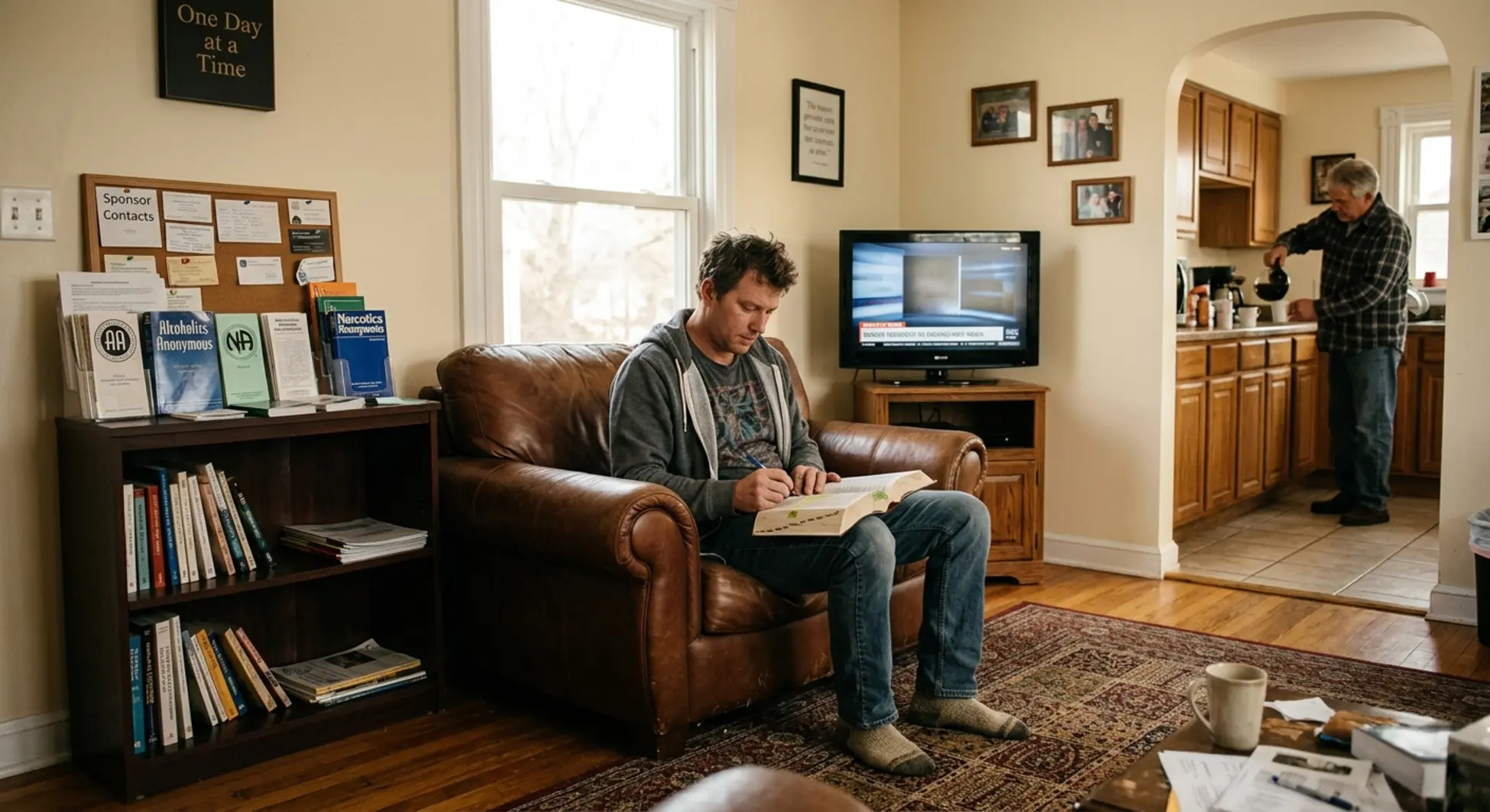
The confusion starts with the name. “Sober living” sounds like it could mean a lot of things — a rehab, a halfway house, a clinical program, a supervised facility. None of those are accurate. A sober living home is non-clinical housing with structure and accountability built in. It is not a treatment center. It does not provide therapy, medical care, or clinical programming. What it provides is a structured environment where men in recovery can rebuild their lives — with rules, peer accountability, and daily expectations — before stepping into fully independent living.
Understanding what makes a legitimate sober living home starts with this distinction. Treatment is the bridge across the river. Sober living is the ground you stand on after you cross it. The two are not interchangeable, and confusing them leads to mismatched expectations — men expecting therapy they won’t receive, or families expecting clinical oversight that isn’t part of the model.
Confused About Sober Living vs. Treatment? You’re Not Alone.
Many people think sober living is a type of treatment center. It’s not. Sober living is housing with structure and accountability — the bridge between clinical treatment and independent life. Understanding this distinction is the first step to finding the right fit.
Licensed Treatment Centers vs. Sober Living Homes
Licensed residential treatment facilities in Texas are regulated by the Texas Department of State Health Services (DSHS). They provide clinical programming, therapy, medical oversight, and structured treatment protocols. They require state licensure to operate and are subject to inspection and compliance requirements. Sober living homes provide none of those clinical services — and that’s intentional. They are housing, not healthcare. The moment a sober living home starts providing clinical services without a DSHS license, it crosses a legal line. Legitimate homes understand this and stay firmly on the housing side of that boundary.
Sober Living vs. Halfway Houses
The terms “sober living” and “halfway house” are often used interchangeably in casual conversation, but they refer to meaningfully different things — especially in the legal and court context. Halfway houses in Texas are frequently connected to the Texas Department of Criminal Justice (TDCJ) or community supervision systems. They serve individuals transitioning from incarceration and often operate under specific legal requirements tied to probation or parole. Sober living homes, by contrast, are typically voluntary, housing-focused environments without direct criminal justice system integration. The distinction matters enormously if you’re navigating court orders — more on that in a later section. For a deeper look at how these two models compare, the post on sober living vs. halfway house in Texas breaks it down in full.
Texas Sober Living Regulations: What’s Required and What’s Voluntary
Here’s the regulatory reality in Texas as of 2026: sober living homes are not required to be licensed by the state to operate. A person can legally open a sober living home in Texas without any state certification, inspection, or oversight — as long as they’re providing housing, not clinical treatment. That’s both the freedom and the risk of the current landscape. It means the market has legitimate, accountable operators and predatory ones operating side by side, with no mandatory licensing to separate them.
What Texas has done is create a voluntary accreditation pathway. House Bill 299, passed during the 88th Legislative Session in 2023, added Chapter 469 to the Texas Health and Safety Code. This legislation directed the Texas Health and Human Services Commission (HHSC) to develop rules for voluntary accreditation of recovery housing. The framework is administered in partnership with TROHN — the Texas Recovery Oriented Housing Network — which serves as the state affiliate of the National Alliance for Recovery Residences (NARR).
By 2025, TROHN had certified over 400 recovery residences across Texas, covering all four NARR levels of support. That’s a significant number — but it still represents a fraction of the estimated 600–700 sober living homes operating statewide. The gap between certified and uncertified homes is where families and residents need to do their homework. Understanding what a structured, accountable program looks like is the starting point for that evaluation.
House Bill 299 and Voluntary Accreditation
Chapter 469 of the Texas Health and Safety Code is the governing framework for recovery housing accreditation in Texas. The law is explicit: accreditation is voluntary, not mandatory. HHSC oversees the accreditation framework; TROHN administers NARR certification on the ground. What makes voluntary accreditation increasingly important — even without a mandate — is that treatment centers and discharge planners have largely adopted TROHN certification as a baseline requirement for referrals. State funding programs also increasingly favor certified homes. So while a home isn’t legally required to be certified, operating without certification is becoming a meaningful competitive and credibility disadvantage.
A 2025 Texas Tribune report noted that compliance with these voluntary accreditation standards has been challenging, suggesting the market is still in a period of transition. Future legislative sessions may bring stricter requirements. For now, the voluntary framework is what exists — and knowing how to use it to evaluate homes is essential.
The Four NARR Levels of Support
NARR certification organizes recovery residences into four levels based on the intensity of support and oversight provided. Level 1 (Peer-Run) is the Oxford House model — democratically governed by residents, self-supporting, with minimal professional oversight. Affordable and effective for men who are stable and self-motivated. Level 2 (Monitored) is peer-run with external oversight — some professional involvement in governance and accountability without full-time staff. Level 3 (Supervised) is staff-managed with clinical coordination — professional house managers, structured programming, and coordination with treatment providers. Level 4 (Service Provider) is integrated with clinical treatment — the highest level of structure and professional involvement, often functioning in close partnership with licensed treatment facilities.
Most men coming out of inpatient treatment are best served by Level 2 or Level 3 homes — enough structure to maintain accountability without the clinical intensity of Level 4. The right level depends on individual readiness, support network, and the specific challenges each person faces in early recovery.
Fair Housing and Resident Rights in Texas Sober Living
Federal law provides meaningful protections for individuals in recovery — protections that apply to sober living homes regardless of whether those homes are state-certified. The Fair Housing Act (FHA) classifies individuals with a history of substance use disorder as a protected disability class. This means sober living homes cannot discriminate against residents or applicants based on their recovery status. They cannot refuse to rent to someone because of their history with addiction, and they may be required to provide reasonable accommodations under the FHA.
What the FHA does not require is that homes permit active drug or alcohol use. A home can maintain a strict sobriety policy, conduct regular drug testing, and discharge residents who relapse — all without violating the FHA. The protection is against discrimination based on recovery status, not a mandate to allow substance use on the premises. Knowing what to ask a sober living home before moving in — including how they handle discrimination complaints and what their written policies say — is one of the most important steps families can take.
Protected Class Status and Discrimination
The Americans with Disabilities Act (ADA) also applies, though more directly to public accommodations and employment than to housing. For housing specifically, the FHA is the primary federal protection. Together, these laws mean that individuals in recovery cannot be denied housing based on their disability status, and homes must engage in a good-faith interactive process if a resident requests a reasonable accommodation.
Reasonable accommodations might include things like adjusting curfew for a resident who works a night shift, or allowing a resident to take prescribed medication (including MAT — more on this below) under a doctor’s supervision. What constitutes “reasonable” is fact-specific and depends on whether the accommodation creates undue hardship for the operator.
Consumer Recourse and Complaint Processes
If a resident believes their rights have been violated, Texas and federal law provide several avenues for recourse. DSHS handles complaints against licensed treatment facilities (not sober living homes, which are unlicensed housing). HHSC handles issues related to accreditation standard violations at certified homes. TROHN maintains a grievance process for residents with complaints about certified operators. HUD handles Fair Housing Act violations — discrimination based on disability or recovery status. The Texas Deceptive Trade Practices Act (DTPA) provides consumer recourse for fraud, misrepresentation, or deceptive practices by a sober living operator. Local code enforcement handles safety violations, building code issues, or zoning problems.
Evaluating Sober Living Homes and Don’t Know Where to Start?
If you’re trying to understand what questions to ask and what answers should sound like, it helps to see a transparent, accountable operation in action. Drew’s Sober Living provides a clear overview of how a legitimate structured home operates — from testing protocols to house rules to what’s included in the monthly cost.
Sober Living Costs in Texas: What You’ll Actually Pay
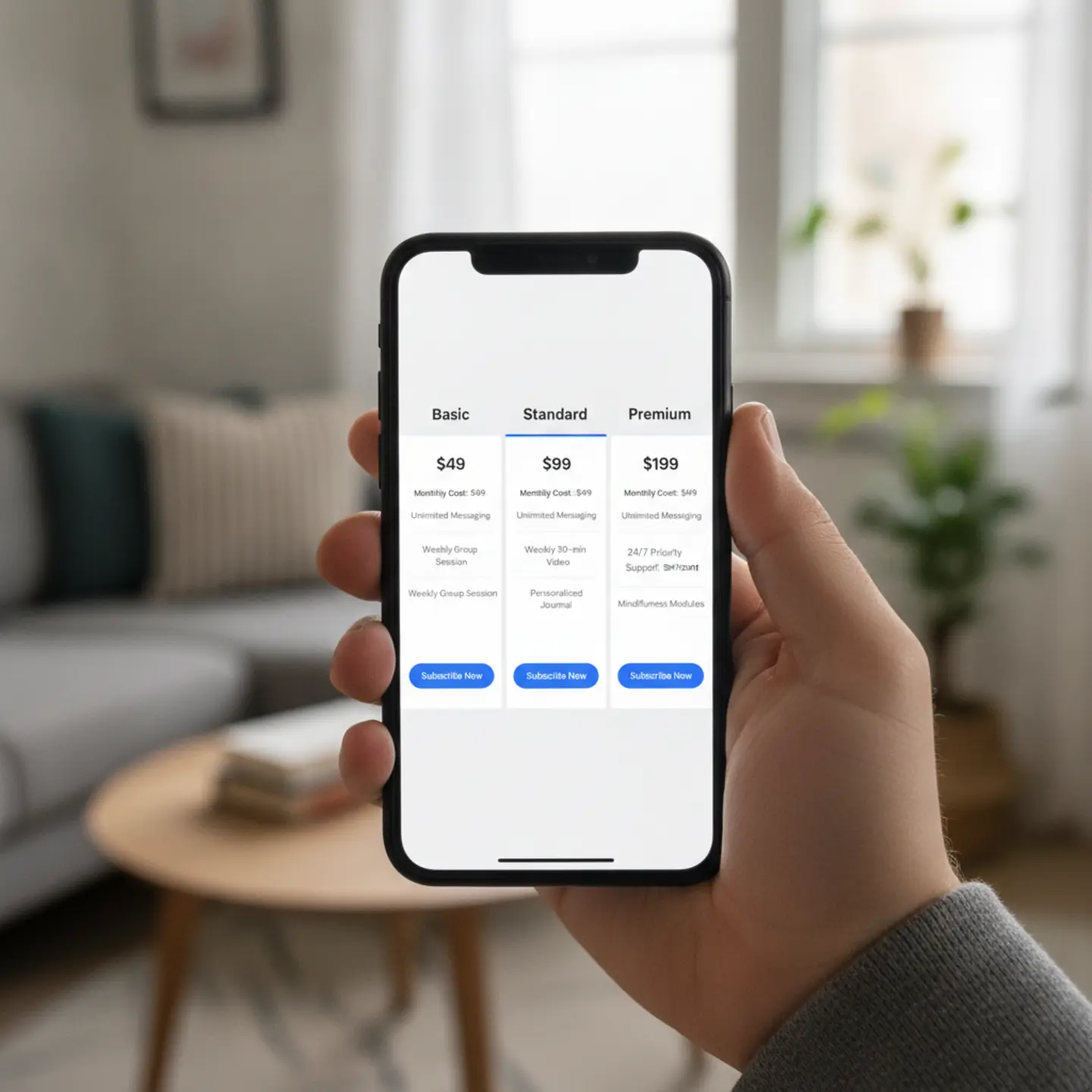
Cost is one of the first questions families ask — and one of the least transparently answered in this market. The honest range in Texas in 2026 runs from about $500 a month on the low end to $2,500 or more on the high end, with most structured, accountable homes landing in the $900–$1,500 range. What you pay determines what you get, but the relationship isn’t always linear — some mid-range homes deliver more accountability and structure than homes charging twice as much.
For a detailed breakdown of what drives cost variation in the Texas market, the post on sober living costs in Texas covers the full picture.
Why Insurance Doesn’t Cover Sober Living Housing
Insurance covers medical and clinical treatment, not housing. Sober living is classified as housing — not treatment — so Medicaid and private insurance don’t pay for rent. However, some programs offer financial assistance through state grants, nonprofits, or county programs. Always ask about these options before assuming you’re on your own.
What’s Included at Different Price Points
Understanding what you’re buying at each price point helps you evaluate whether a home is priced fairly or overcharging for minimal services. Budget tier ($500–$900/month) covers shared living, utilities, and basic structure — peer-run, minimal professional oversight, residents responsible for food, transportation, and most personal expenses. The Oxford House model is the primary example at this tier. Mid-range tier ($900–$1,500/month) includes drug testing (breathalyzer and urine screening), house meetings, some structured programming, and on-site or on-call management — this is where most structured accountability-based homes operate. Higher-end tier ($1,500–$2,500+/month) covers comprehensive services including meals, transportation, life skills training, vocational support, and professional staff, often integrated with clinical treatment providers at NARR Level 3 or 4.
For a transparent look at what’s included in a structured mid-range program, Drew’s Sober Living operates in the mid-range tier with daily breathalyzer testing, drug testing every two weeks, financial literacy training, and a strongly encouraged 30 hour work week built into the program cost.
Hidden Costs and Financial Assistance
Beyond monthly rent, budget for these common add-on costs: move-in fees (often $100–$300, sometimes equal to one week’s rent); drug testing fees passed on to residents; program materials or workshop fees; transportation costs to work, meetings, or treatment appointments; and the initial employment gap — budget for living expenses before the first paycheck.
Financial assistance options in Texas include HHSC’s Be Well Texas vouchers, Project HOMES grants, SAMHSA-funded programs through the Texas Targeted Opioid Response (TTOR), and county-level assistance in Bexar and Comal counties. Nonprofit and faith-based organizations in the San Antonio area also offer subsidies for men in early recovery. These programs don’t advertise themselves loudly — you have to ask.
How to Identify a Legitimate Sober Living Home vs. a Predatory One
This is where the stakes get real. Because Texas doesn’t require licensure, the barrier to opening a sober living home is low — which means the market includes operators who are genuinely committed to resident outcomes and operators who are running a business with little regard for either. Knowing the difference before you sign anything or hand over a move-in fee is not optional.
It’s okay to ask hard questions before moving in. You’re about to commit months of your life and real money to a place that will shape your early recovery. Asking detailed questions about policies, testing, staffing, and discharge criteria is not rude — it’s smart. Legitimate homes welcome these questions and provide clear, documented answers. Homes that get defensive or vague when you ask about certification? That tells you everything.
Green Flags: Signs of a Quality Home
When evaluating questions to ask before choosing a sober living home, look for these positive indicators: certified by TROHN/NARR or chartered by Oxford House, with documentation available on request; clear, written house rules and a residency agreement you can review before committing; consistent, documented drug and alcohol testing with clear consequences for violations; transparent pricing with no surprise fees, everything in writing; trained staff with clear roles and qualifications; active coordination with treatment providers and willingness to communicate with clinical teams; resident input in governance (for peer-run homes); and decisions communicated within a reasonable timeframe — not weeks of silence.
Red Flags: Warning Signs of Predatory or Unsafe Homes
Red Flag: Homes That Avoid Talking About Certification
If a sober living home claims to be “accredited” or “certified” but can’t provide documentation from TROHN, Oxford House, or another recognized body, that’s a major red flag. Legitimate homes are transparent about their credentials and can produce documentation immediately. Vague claims of certification without proof are a warning sign of an operator who either isn’t certified or doesn’t understand what certification actually means.
Watch for these warning signs before committing to any home: no certification or chartering, with vague or evasive answers about credentials; verbal-only rules with no written residency agreement; inconsistent or absent drug testing — or testing that seems performative rather than enforced; vague or inflated pricing with hidden fees that appear after move-in; untrained or absent management with no one clearly responsible for the house; pressure to move in immediately without time to review policies or tour the property; referral practices that look like patient brokering — large payments for resident referrals; unsafe living conditions masked by marketing language; and inability to provide proof of certification when asked directly.
Patient brokering is illegal in Texas under Health & Safety Code Chapter 164. It prohibits paying kickbacks or remuneration for patient referrals to treatment or recovery services. If a home seems to be receiving large payments for steering residents toward specific treatment providers — or if a treatment center seems to be steering you toward a specific sober living home in exchange for money — that’s a serious red flag that warrants investigation.
Top Sober Living Homes in Texas: Compared and Reviewed
Texas has multiple legitimate operators serving different models, price points, and populations. No single model is right for every man in recovery — the right fit depends on where you are in your recovery, what level of structure you need, and what your practical circumstances look like. Here’s an honest look at the primary models operating in the Texas market.
Drew’s Sober Living — San Antonio & New Braunfels
Chittim House — North San Antonio (10 beds)
Quiet, residential North San Antonio neighborhood. Well-suited for men who benefit from a calmer environment with easy access to employment corridors and 12-step meetings throughout the area.
Evergreen House — Central San Antonio (8 beds)
Closer to the city center, with access to a broader range of employment, transportation, and services. A good fit for men who are actively job-searching or working in the central San Antonio area.
Chapel Bend — New Braunfels (9 beds)
Smaller-city feel with the structure and accountability of the full Drew’s program. New Braunfels offers a different recovery environment from San Antonio — less urban intensity, strong community ties, and growing employment opportunities.
Drew’s Sober Living homes in San Antonio and New Braunfels operate a consistent program across all three houses: daily breathalyzer testing from day one, drug screening every two weeks, a strongly encouraged 30 hour work week, encouraged 12 step meetings, and financial literacy training. Total capacity is 27 beds. The model is structured men’s recovery residence — not clinical treatment, not a halfway house in the legal sense. Drew evaluates court-referred cases individually and coordinates directly with treatment center clinical teams throughout a resident’s stay. Applications are accepted during the final weeks of treatment, and decisions are made within 24 hours of application.
Oxford House Model — Peer-Run, Affordable Options
Oxford House operates on a peer-run, democratically governed model that is chartered by Oxford House Inc. and meets NARR Level 1 standards. Multiple Oxford Houses operate across Texas, including in the San Antonio metro area. The model is self-supporting — residents collectively manage the house finances, make governance decisions, and hold each other accountable without professional staff. This makes Oxford Houses among the most affordable options in the market ($500–$900/month typical) and effective for men who are stable, self-motivated, and ready for peer-led accountability. The trade-off is minimal professional oversight — there’s no house manager to call at 2am, no structured programming, and no clinical coordination built into the model.
NARR-Certified Level 3 & 4 Homes — Professionally Staffed
NARR Level 3 (Supervised) and Level 4 (Service Provider) homes offer the highest levels of professional structure and clinical coordination in the recovery housing spectrum. These homes are staff-managed, often with 24/7 coverage, and frequently integrated with licensed treatment providers. Programming is comprehensive — life skills training, vocational support, clinical coordination, and structured daily schedules. Cost reflects the overhead: $1,200–$2,500+ per month is typical. These homes are best suited for men who need more intensive support, have co-occurring disorders requiring clinical coordination, or are transitioning from a higher level of care. Higher concentration of these homes exists in major Texas metros including San Antonio, Houston, Dallas, and Austin.
The Critical First 90 Days: Why Sober Living Matters Most Right After Treatment
The 0–90 day window after leaving treatment is the most dangerous period in early recovery. Brain chemistry is still stabilizing. Coping skills are new and untested in real-world conditions. Social networks may still include people who use. Employment and financial stability are often nonexistent. Isolation and boredom — two of the most reliable relapse triggers — are at their peak. Men who transition directly from inpatient treatment to independent living without structured support have significantly higher relapse rates during this window than those who move into structured sober living.
This is not a scare tactic. It’s the operational reality that makes structured sober living and daily accountability the most cost-effective intervention available during this window. The daily breathalyzer, the required 12-step meeting, the work requirement, the curfew — these aren’t punishments. They’re the scaffolding that holds a new life in place while the foundation cures.
Why the First 90 Days Are So Critical
Several converging factors make the first 90 days uniquely dangerous. Neurological instability: brain chemistry is still recalibrating after substance use, and mood swings, cravings, and impaired decision-making are common even after leaving treatment. Untested coping skills: treatment teaches coping strategies in a controlled environment, and the first time those skills are tested by a real job rejection, family conflict, or financial crisis is when they either hold or fail. Social network risk: old using friends don’t disappear the day you leave treatment, and without a new sober peer group, the path of least resistance leads back to familiar people and places. Financial and employment instability: no income, no routine, and no structure are a dangerous combination in early recovery. Isolation: men in early recovery who are isolated — no job, no meetings, no accountability — are at dramatically elevated relapse risk.
The ROI of Sober Living vs. Relapse Costs
The financial case for sober living is straightforward when you put the numbers side by side:
| Expense | Estimated Cost |
|---|---|
| 6-month mid-range sober living stay | $5,400–$9,000 |
| Single ER visit for overdose | $5,000–$15,000 |
| 30-day inpatient re-treatment | $10,000–$30,000+ |
| DUI legal fees and fines | $5,000–$25,000+ |
| Lost wages during relapse/re-treatment | $5,000–$20,000+ |
A six-month sober living stay costs less than a single ER visit plus one month of re-treatment. The math is not subtle. Sober living is not an expense — it’s an investment in avoiding costs that are far larger and far more devastating.
Employment, Financial Stability, and Recovery: Why Sober Living Homes Emphasize Work
A man cannot stay sober if he cannot pay rent. That’s not a metaphor — it’s a practical reality that quality sober living homes are built around. Financial instability is one of the most reliable relapse triggers in early recovery. Debt, eviction threats, and desperation don’t create conditions for sobriety. They create conditions for crisis decision-making, and crisis decision-making in early recovery often ends in relapse.
This is why financial literacy and employment support in sober living aren’t extras — they’re core program components at accountable homes. Drew’s requires a 30-hour weekly work commitment after the probationary period and includes financial literacy training (budgeting, savings, credit rebuild) as a standard part of the program. These aren’t optional enrichment activities. They’re requirements, because the data on long-term recovery outcomes is clear: men who secure stable employment within 90 days of entering sober living have significantly better long-term outcomes than those who don’t.
Work as Recovery: More Than Just Income
Employment does something that no amount of therapy or meetings can fully replicate: it gives a man an identity beyond “being in recovery.” Work provides daily structure and accountability that doesn’t depend on anyone else enforcing it. It builds self-esteem through concrete, measurable achievement. It creates workplace relationships and social connection that reduce isolation. It generates income that creates agency and dignity — the ability to pay your own way, make your own choices, and build something.
The strongly encouraged 30 hour work week isn’t punitive. It’s the recognition that you can’t build a new life from your bed at 2:00 PM every afternoon. Structure alone changes nothing. Showing up to a job, a meeting, a chore, every day, for months — that changes someone.
Financial Literacy: The Overlooked Recovery Tool
Most men leaving treatment have damaged credit, no savings, and no clear understanding of how to manage money. These aren’t character flaws — they’re the predictable financial consequences of active addiction. Addressing them is part of recovery, not separate from it. Budgeting reduces financial stress. Credit rebuild opens doors to housing, employment, and independence that are otherwise closed. Savings create a buffer between a bad week and a crisis. Financial literacy training teaches men to build the material foundation that long-term sobriety requires.
Length of Stay in Sober Living: How Long Is Long Enough?
Insurance typically covers 30 days of inpatient treatment. Thirty days is what the system is built around. And thirty days is not enough — not for the neurological recovery that takes 6–12 weeks minimum, not for the coping skill development that requires real-world testing, not for the employment stability that takes 3–6 months to establish. The gap between what insurance covers and what recovery actually requires is where most relapses happen.
Research consistently shows that stays of 6–12 months in structured sober living yield significantly better long-term outcomes than stays of 3 months or less. This isn’t a marketing claim — it’s the consensus finding from recovery housing outcome research. A blueprint for recovery that’s built on a 30-day foundation is a blueprint built on sand.
Why 30 Days Is Not Enough
The case against the 30-day model isn’t complicated. Brain chemistry stabilization takes 6–12 weeks minimum after stopping substance use. Coping skills learned in treatment need real-world testing and refinement, and 30 days doesn’t provide that. Employment stability typically requires 3–6 months to establish from scratch. Sober social networks take time to build — they don’t appear on day 31. And relapse risk remains elevated through months 3–6 for most men in early recovery.
The 6–12 Month Sweet Spot
Six to twelve months in structured sober living allows time for neurological recovery and habit formation, opportunity to secure stable employment and build financial stability, genuine peer relationships and a real sober support network, and a gradual transition to independence rather than an abrupt discharge into the same environment that preceded treatment.
Drew’s operates on a 3–12 month model with no predetermined graduation date. Residents exit when they demonstrate stability — stable employment, stable finances, a sober support network, and demonstrated readiness for independent living. The goal is never to keep residents longer than they need — it’s to make sure they leave ready.
Medication-Assisted Treatment (MAT) and Sober Living: What You Need to Know
Medication-Assisted Treatment — Suboxone, methadone, naltrexone — is a legitimate, FDA-approved medical treatment for opioid use disorder. It reduces cravings, prevents withdrawal, and stabilizes brain chemistry during the early recovery period. It is not a substitute for sobriety. It is a tool that enables sobriety for many men who would otherwise relapse during the neurologically vulnerable early months of recovery.
The intersection of MAT and sober living is one of the most complex areas in recovery housing policy. Sober living home policies on MAT and medical treatment vary widely — some homes prohibit MAT entirely, others work with residents on MAT provided they follow all other house rules, and some have no clear policy at all. Before committing to any home, clarify their MAT policy in writing.
MAT as a Medical Treatment, Not a Relapse
The research on MAT is unambiguous: Suboxone and methadone, when used as prescribed under medical supervision, are effective treatments for opioid use disorder. They reduce overdose deaths, improve treatment retention, and enable men to function in recovery in ways that would otherwise be impossible during early neurological recovery. Many accredited NARR/TROHN-certified homes have updated their policies to be MAT-compatible, recognizing that the evidence supports MAT as a legitimate medical treatment rather than an active relapse.
Navigating MAT Policies in Sober Living
If you or your loved one is on MAT, here’s what to do before choosing a home:
MAT Policy Checklist — Before You Move In
- Ask directly: “What is your written policy on residents taking prescribed MAT?”
- Request the written policy — do not rely on verbal assurances that can change
- Clarify whether MAT is permitted, required, or prohibited at this specific home
- Understand how MAT interacts with the home’s drug testing protocols (some tests flag buprenorphine)
- Ensure your treatment team and the sober living home are aligned on your MAT plan before move-in
- Understand that denying admission solely based on MAT use may raise Fair Housing Act concerns — but policies vary and legal recourse is complex
The legal landscape around MAT and sober living is evolving. Denying admission solely because a resident is on prescribed MAT could raise Fair Housing Act or ADA concerns, since MAT is a legitimate medical treatment for a disability. However, this is a complex, fact-specific analysis — not a simple bright-line rule. The practical advice is straightforward: ask upfront, get it in writing, and make sure your treatment team is part of the conversation.
Court-Ordered Sober Living in Texas: What Residents and Families Should Know
Texas courts can and do order sober living as a condition of probation, deferred adjudication, or sentencing. But court-ordered sober living is not the same as voluntary placement, and the specific requirements vary significantly by court, county, and judge. Before assuming that any sober living home will satisfy a court order, clarity from the referring court or probation officer is essential.
For information on court-ordered sober living and how Drew’s evaluates court-referred cases, the short answer is that Drew’s evaluates each court-referred application individually. The program meets most Texas court-ordered sober living requirements, but confirmation from the court or probation officer is always the right first step.
Sober Living vs. Halfway House in the Legal System
This is where the distinction between sober living and halfway houses becomes legally significant. Halfway houses in the Texas criminal justice context are often TDCJ-connected or probation-integrated facilities with specific legal requirements for residents. A standard sober living home — even a well-run, certified one — is not automatically a substitute for a court-mandated halfway house placement. Courts may order sober living specifically, or they may order halfway house placement — these are different requirements. If the court order says “halfway house,” a sober living home does not automatically satisfy that requirement. Clarity from the court or probation officer is not optional.
Compliance and Consequences
For men under court-ordered sober living, the stakes are higher than for voluntary residents. Positive drug tests, rule violations, or unauthorized departures from the home are not just house matters — they may be reportable to the court and can result in probation violations and incarceration. Probation officers may conduct home visits or require regular check-ins. Understanding the specific conditions of the court order — what’s required, what triggers reporting, and what the consequences of violation are — is essential before moving in. This conversation should happen with your attorney and probation officer before selecting a home.
Frequently Asked Questions
Is sober living housing licensed by the state in Texas?
No. As of 2026, sober living homes (recovery residences) are not required to be licensed by the state of Texas to operate as housing. This is a critical distinction from licensed residential treatment facilities, which require DSHS licensure. However, House Bill 299 (2023) added Chapter 469 to the Texas Health and Safety Code, directing HHSC to create rules for voluntary accreditation through organizations like TROHN (the NARR affiliate) or Oxford House Inc. Voluntary accreditation is increasingly important for treatment center referrals and access to state funding — homes without it operate legally but without formal accountability mechanisms.
What rights do residents have in a Texas sober living home?
Residents are protected under the federal Fair Housing Act (FHA) as individuals with a disability — substance use disorder history qualifies as a protected disability class. This prohibits discrimination in housing based on recovery status and may require reasonable accommodations from operators. Residents also have rights to safety, privacy within house rules, and fair treatment under the terms of their residency agreement. If rights are violated, recourse is available through HUD (for Fair Housing violations), the Texas Deceptive Trade Practices Act (DTPA) for fraud or misrepresentation, TROHN’s grievance process for certified homes, or local code enforcement for safety and zoning issues.
Can a sober living home force a resident to leave if they relapse?
Yes. Relapse is a violation of house rules in virtually every sober living home, and residents can be discharged for a positive drug or alcohol test. Legitimate homes have clear, written policies in their residency agreement that outline the relapse and discharge process — including what triggers discharge, how it is communicated, and what the timeline looks like. Homes that handle this consistently and according to written policy are operating appropriately; homes that apply these rules inconsistently or without documentation are a red flag. Always review the relapse and discharge policy before moving in.
How can I tell a legitimate sober living home from a predatory one in Texas?
Start with certification: look for homes certified by TROHN/NARR or chartered by Oxford House, and ask for documentation — not just a verbal claim. Legitimate homes have clear written house rules, a residency agreement you can review before committing, consistent documented drug testing, transparent pricing with no hidden fees, and trained staff with clear roles. Red flags include vague or verbal-only policies, pressure to move in immediately, inability to provide proof of certification, inconsistent testing, and referral practices that look like patient brokering (which is illegal in Texas under Health & Safety Code Chapter 164).
Does sober living count as a halfway house for court purposes in Texas?
Generally, no. Halfway houses in the Texas criminal justice context are often TDCJ-connected or probation-integrated facilities with specific legal requirements. A standard sober living home — even a certified, well-run one — is not automatically a substitute for a court-mandated halfway house placement unless the court has specifically ordered sober living or has approved the specific home as satisfying the court’s requirements. If your court order specifies halfway house placement, clarify with your attorney and probation officer whether a sober living home satisfies that requirement before moving in.
Can a sober living home in Texas deny residents who are on Medication-Assisted Treatment (MAT) like Suboxone or Methadone?
This is a complex and evolving area. Suboxone and methadone are FDA-approved medications for opioid use disorder — they are legitimate medical treatments, not active drug use. Denying admission solely based on MAT use could raise Fair Housing Act or ADA concerns, since MAT treats a recognized disability. However, sober living homes can set and enforce sobriety rules, and the legal analysis is fact-specific rather than a simple bright-line rule. Many NARR/TROHN-certified homes are increasingly MAT-compatible, provided residents follow all other house rules and testing protocols. Always ask about MAT policy upfront, get it in writing, and ensure your treatment team is aligned with the home’s approach before move-in.
Recovery doesn’t happen on a schedule. It doesn’t happen because you completed a 30-day program or because someone handed you a discharge plan with a list of phone numbers. It happens because, day after day, you showed up — to the meeting, to the job, to the house chore, to the breathalyzer, to the hard conversation with your sponsor. That’s what structured sober living is built to support: the daily accumulation of small wins that add up to a life that’s actually yours.
The regulations and standards covered in this post exist because accountability matters — and because the difference between a legitimate home and a predatory one can be the difference between a man who makes it and a man who doesn’t. Texas has work to do on the regulatory side. In the meantime, the tools to evaluate homes, understand your rights, and make an informed decision are in your hands.
The bridge between treatment and independent life is real. So is the brotherhood on the other side of it.
Ready to Talk About Whether Drew’s Is the Right Fit?
Understanding Texas sober living regulations is the first step. If you’re ready to explore a structured, accountable recovery home in San Antonio or New Braunfels, Drew’s Sober Living is here to answer your questions honestly and help you figure out whether our program fits where you are in your recovery. No pressure. No sales pitch. Just a real conversation about what comes next.
Drew’s Sober Living · Men’s Recovery Residences in San Antonio & New Braunfels, TX