You’ve just completed 30 days of inpatient treatment in San Antonio. Your counselor is asking where you plan to go next. You know you’re not ready to go back to your old apartment, your old neighborhood, or the life that brought you here. You need a sober living home — but now you’re facing a question you hadn’t fully thought through: should you move into a male-only house, where every resident shares your experience as a man navigating recovery, or a co-ed environment that more closely mirrors the world you’ll eventually return to?
It sounds like a minor logistical detail. It isn’t. The environment you choose for your first 90 to 180 days post-treatment will shape your peer relationships, your daily accountability, your exposure to relapse triggers, and your ability to build the routines that make sobriety stick. Getting this decision right matters — and it’s worth taking the time to understand what you’re actually choosing between.
This guide breaks down both models honestly: what each one looks like in practice, what the research says, how costs compare in the San Antonio market, and how to evaluate which environment is the right fit for where you are in your recovery right now.
Key Takeaways
- Male-only and co-ed recovery homes both offer legitimate paths to sobriety — the difference lies in peer dynamics, accountability structures, and how each environment handles relapse triggers.
- The first 90 days post-treatment carry the highest relapse risk, making your housing environment one of the most consequential decisions you’ll make in early recovery.
- Male-only homes in San Antonio like Drew’s Sober Living range from $200–$275/week; the broader market runs $400–$5,000/month depending on amenities and structure.
- Texas does not require state licensure for sober living homes, but TROHN certification (the state’s NARR affiliate) is a strong indicator of quality and is required for homes receiving state funding.
- Financial assistance is available through Be Well Texas, HUD-VASH for veterans, The Bridge Program, and sliding-scale fees — always ask directly before assuming you can’t afford a home.
- The best housing model is the one that matches your trauma history, recovery stage, and social support needs — not the one that sounds most impressive on paper.
Why the Male-Only vs. Co-Ed Decision Matters in Early Recovery
Recovery housing is the bridge between the controlled environment of inpatient treatment and the full autonomy of independent living. It’s not a halfway measure — it’s a deliberate, structured step that gives you time to build the habits, relationships, and coping mechanisms that make sobriety sustainable outside of a clinical setting.
The stakes are high. Research consistently shows that the first 90 days after leaving treatment represent the period of highest relapse risk. Your brain is still recalibrating. Your old social networks may still be active. The stressors that contributed to your substance use — financial pressure, family conflict, employment instability — haven’t disappeared. What has changed is your access to support, and the quality of that support depends heavily on where you live and who surrounds you.
San Antonio’s recovery housing market has grown significantly in recent years. The city’s population is projected to reach approximately 2.525 million in 2026, and that growth has driven demand for behavioral health services, including recovery residences. More options mean more choice — but also more complexity. A man leaving treatment today has access to male-only structured programs, co-ed peer-run homes, clinical step-down facilities, and everything in between. Knowing the difference between these models isn’t just helpful; it’s essential to making a decision that actually serves your recovery.
Gender-specific and co-ed environments create fundamentally different peer dynamics. In a male-only home, every resident is navigating the same gender-specific pressures: the shame that often accompanies male addiction, the loss of provider identity, the particular ways men tend to isolate or deflect rather than process. In a co-ed home, the social environment is broader and more varied — closer to the real world, but also more complex to navigate when you’re still building your emotional foundation.
This decision also affects outcomes beyond sobriety. It shapes your employment trajectory, your social reintegration, and your long-term housing stability. Men who find the right recovery housing environment are more likely to maintain employment, avoid legal issues, and achieve stable independent housing at 12 months. Getting this choice right is worth the effort of understanding what you’re actually choosing between. Structured recovery programs designed for men approach this environment intentionally — and the difference is felt in the daily experience of living there.
Look — I get why this decision feels heavy. You just spent 30 days in a treatment bed, and now somebody’s asking you to make another major housing decision while you’re still figuring out how to sleep without medication. That’s a lot. But here’s the thing: this decision matters precisely because you’re still building the foundation. The men who do well in early recovery aren’t the ones who picked the perfect program on paper. They’re the ones who picked the environment that matched where they actually were — not where they wished they were. Be honest with yourself, and the right answer becomes clearer.
Understanding Male-Only Recovery Housing in San Antonio
Male-only sober living homes are built on a specific premise: that men in recovery face a distinct set of challenges, and that addressing those challenges is more effective in an environment designed specifically around them. That premise has real substance behind it.
The typical male resident entering recovery housing has experienced some combination of job loss, family estrangement, legal consequences, financial collapse, and the particular shame that comes from feeling like you’ve failed at the roles society assigns to men. These aren’t just emotional hurdles — they’re active relapse triggers. A male-only environment creates space to address them directly, without the added complexity of managing mixed-gender social dynamics while you’re still learning to manage yourself.
Drew’s Sober Living’s structured male-focused program in San Antonio and New Braunfels exemplifies this model: daily breathalyzer testing, biweekly drug screening, encouraged 12 step meeting attendance, work requirements, financial literacy training, and live-in house managers who provide consistent oversight. These aren’t arbitrary rules — they’re a framework designed to replace the chaos of active addiction with the structure and routine that early recovery requires.
Research supports the general principle. Studies on gender-specific recovery housing suggest that these environments can improve treatment outcomes by addressing unique male-specific stressors and fostering deeper peer accountability. The California sober living studies, which included residents from gender-specific homes, found that longer stays in structured environments correlated with better housing stability and reduced legal issues — regardless of gender composition.
One honest limitation worth acknowledging: male-only environments, by design, don’t expose residents to the kind of mixed-gender social situations they’ll eventually navigate in the real world. For some men, that’s exactly what they need in early recovery. For others, it may mean they need additional preparation before transitioning to independent living.
Typical Daily Structure in Male-Only Homes
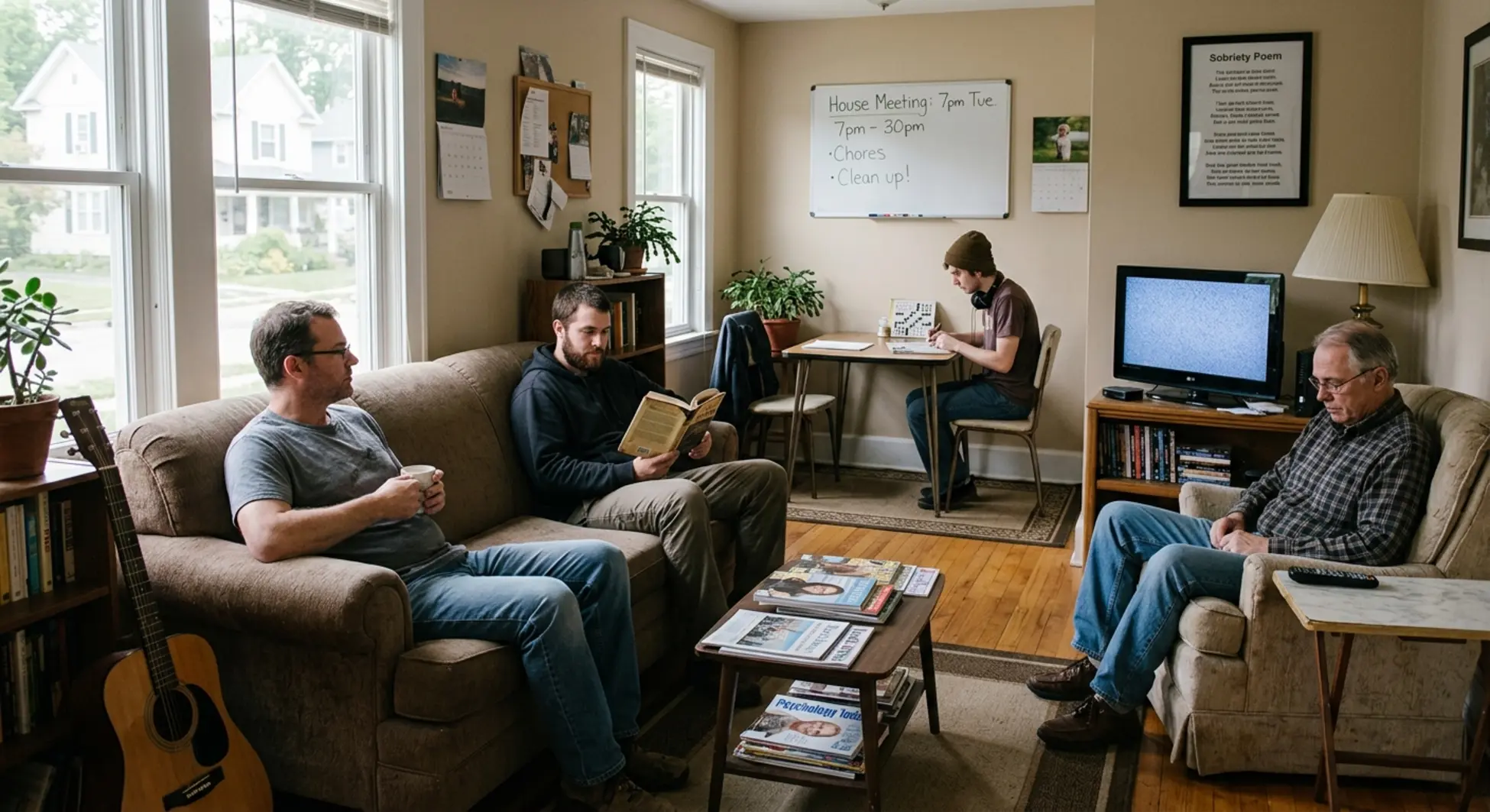
The daily rhythm of a male-only sober living home is designed to eliminate the unstructured time that often precedes relapse. At Drew’s Sober Living locations in San Antonio, a typical day includes morning breathalyzer testing, attendance at 12-step or other recovery meetings (often daily or multiple times weekly), work requirements or structured job-seeking activities, assigned house chores, shared meals, and curfews enforced by live-in house managers.
Biweekly drug screening adds a layer of accountability that goes beyond self-reporting. Knowing that testing is consistent and non-negotiable removes the internal debate about whether to use — the answer is always no, because the consequences are immediate and certain. This kind of external accountability is particularly valuable in early recovery, before internal motivation is fully established.
Group meals and peer accountability meetings create the community element that distinguishes sober living from simply renting a room. Men eat together, check in with each other, and hold each other accountable in ways that a clinical setting can’t fully replicate. This is where the real work of recovery often happens — not in formal sessions, but in the daily friction and support of shared living.
The Peer Accountability Model in Male-Only Settings
The peer accountability model is one of the most powerful features of male-only recovery housing — and one of the hardest to replicate in other settings. When every person in the house is a man navigating similar life circumstances, the social dynamics shift. Shame decreases. Defensiveness drops. The pressure to perform or posture — which can be intense in mixed-gender environments — gives way to something more honest.
Men who’ve experienced job loss, family estrangement, or legal consequences as a result of their addiction often find it easier to discuss these experiences with other men who’ve been through the same thing. The shared context creates a shortcut to trust that takes much longer to build in more diverse social environments.
Peer-led accountability also builds intrinsic motivation over time. When you’re accountable to people you respect — people who are fighting the same fight — the motivation to stay sober becomes less about following rules and more about not letting your community down. That shift from external to internal motivation is one of the key markers of sustainable recovery. You can review the frequently asked questions about the program to understand how this model works in practice.
Understanding Co-Ed Recovery Housing in San Antonio
Co-ed recovery housing operates on a different philosophy: that recovery happens in the real world, and the real world is mixed-gender. Rather than creating a protected environment that filters out certain social complexities, co-ed homes ask residents to practice navigating those complexities within a structured, supportive setting.
The argument for this model is straightforward. Eventually, every person in recovery has to function in a world that includes people of all genders — at work, in relationships, in social settings. If you spend your entire early recovery in a gender-isolated environment, you may find the transition to independent living more jarring than it needs to be. Co-ed housing offers a middle ground: the structure and accountability of a recovery residence, with the social diversity of the world you’re preparing to re-enter.
San Antonio’s broader recovery housing market includes co-ed options, though they’re less prominently documented than male-only alternatives. The range of recovery housing certification standards in Texas applies equally to co-ed and gender-specific facilities — both models can meet TROHN certification requirements, and both can operate at high or low levels of quality depending on the operator.
Structure and Boundary Management in Co-Ed Homes
The structural challenge of co-ed recovery housing is managing interpersonal boundaries in an environment where residents are emotionally vulnerable and socially hungry. Reputable co-ed homes address this directly with clear, written policies on romantic relationships, physical contact, and interpersonal boundaries — policies that are enforced consistently by staff.
Separate sleeping areas are standard, and common space rules typically prohibit behavior that could escalate into romantic or sexual dynamics. Staff oversight in co-ed settings tends to be more intensive than in male-only homes, precisely because the potential for boundary violations is higher. This isn’t a criticism of the model — it’s an acknowledgment that it requires more active management to maintain a safe recovery environment.
Group activities in co-ed settings can accelerate social skill development in ways that gender-specific environments can’t fully replicate. Learning to communicate, set limits, and maintain sobriety in the presence of people you might be attracted to — or who remind you of past relationships — is genuinely valuable preparation for independent living. The challenge is that these dynamics can also be destabilizing for residents who aren’t yet ready to manage them.
Who Benefits Most from Co-Ed Recovery Housing
Co-ed housing tends to be a better fit for residents who already have some recovery stability — men who’ve moved past the most acute phase of early recovery and are ready to practice real-world social skills in a structured setting. It’s also a natural fit for people with strong existing cross-gender friendships or family support networks, where gender-isolated housing might feel artificially restrictive.
Individuals whose trauma history doesn’t involve gender-specific triggers may find co-ed environments equally supportive without the added complexity. And for those who’ve struggled with isolation — who tend to withdraw from social connection rather than seek it — the broader social environment of a co-ed home can provide the human connection that recovery requires.
The honest caveat: co-ed housing requires more self-management of interpersonal boundaries than male-only housing. If you’re in the first 30 to 60 days of recovery, still building your emotional regulation skills, and your trauma history includes relationship-related triggers, a co-ed environment may introduce complexity before you’re ready to handle it well. That’s not a permanent disqualification — it’s a timing question.
What Research Actually Says About Gender-Specific vs. Co-Ed Outcomes
The honest answer is that direct comparative outcome data between male-only and co-ed recovery housing models is limited. What research does tell us is that gender-specific recovery housing can improve treatment outcomes by addressing unique challenges men face — including trauma history, societal pressure, and the particular shame patterns associated with male addiction. Studies also consistently show that longer stays in structured environments, regardless of gender composition, correlate with better housing stability and reduced legal issues. Clinical frameworks from SAMHSA and NARR treat both models as valid, with the choice depending on individual circumstances.
If the Male-Focused Model Sounds Like What You Need
Drew’s Sober Living offers exactly this model in San Antonio and New Braunfels — daily accountability, mandatory meetings, work requirements, and live-in house management. If you’re drawn to the peer accountability and structure described above, the next step is a 15-minute conversation to see if it’s the right fit.
Pricing and Costs: Male-Only vs. Co-Ed Sober Living in San Antonio
Cost is a real factor in choosing recovery housing — and it deserves honest, transparent treatment. The good news for men seeking recovery housing in San Antonio is that the market is relatively affordable compared to Texas’s larger urban centers and national averages. The less good news is that the sticker price rarely tells the full story.
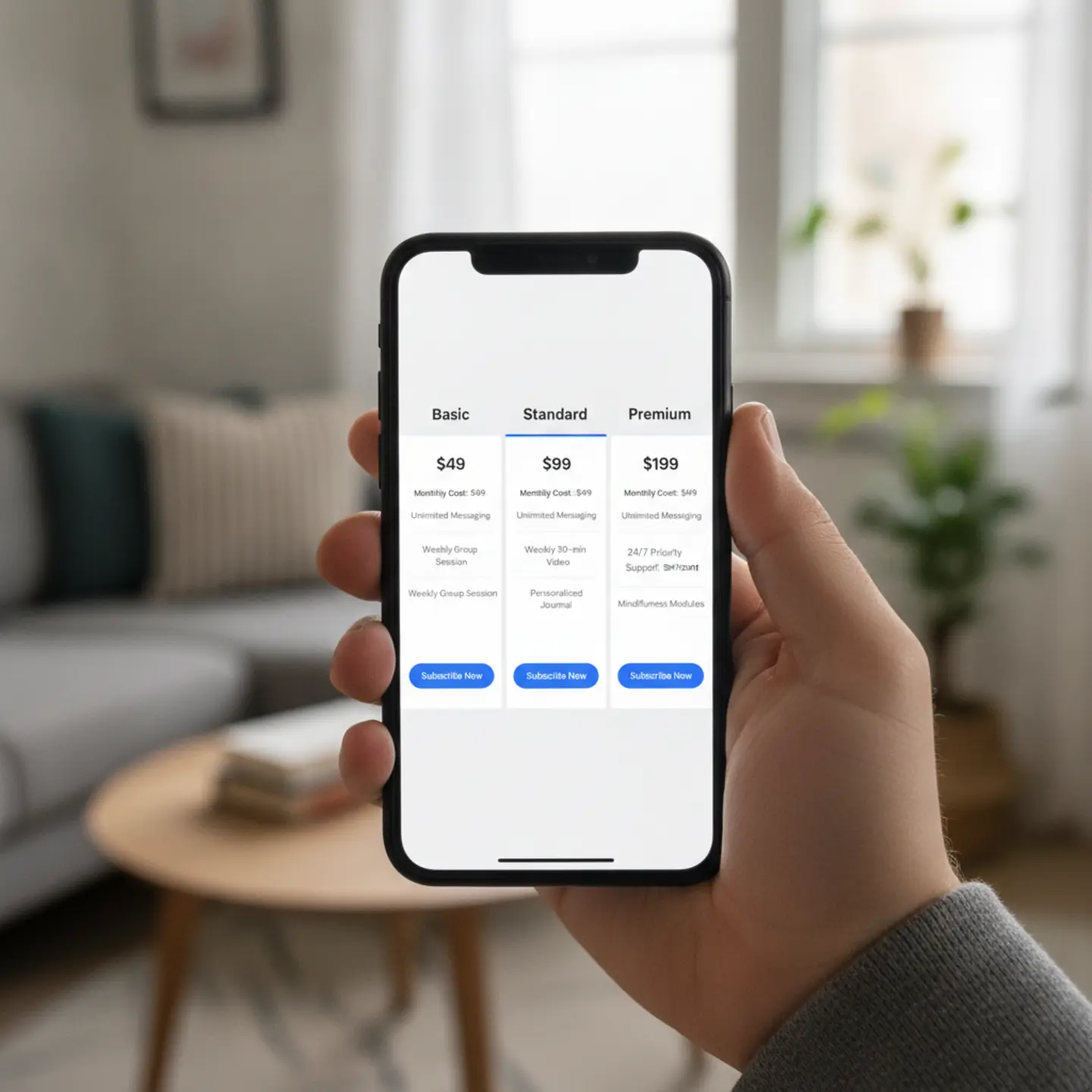
For male-only structured sober living programs in San Antonio, Drew’s Sober Living charges $200–$275 per week, which works out to approximately $800–$1,100 per month. This is notably below the urban Texas average for accountability-based structured programs, making it one of the more accessible options in the market. Eudaimonia Homes, which operates 11 locations across San Antonio, offers male-only options ranging from $550 to $1,800 per month depending on location and room type — shared versus private rooms account for much of that range.
Co-ed housing costs in San Antonio aren’t as well-documented, but the broader market runs from approximately $400 to $5,000 per month depending on amenities, staffing levels, clinical programming, and location. For context, national data shows shared rooms averaging $450–$800 per month and private rooms ranging from $1,000–$2,500 per month — San Antonio’s lower cost of living generally keeps local pricing toward the lower end of those ranges.
The key cost drivers across both models are consistent: staffing ratios, included services, TROHN certification status, proximity to treatment centers, room type, and amenities like furnished rooms, laundry, and transportation access. A home with live-in house managers and daily accountability programming will cost more than a peer-run model with minimal oversight — and for many men in early recovery, that additional cost is worth it.
Funding and Financial Assistance Options
If the monthly cost feels out of reach, there are real assistance options available in San Antonio — and most people don’t know about all of them. Be Well Texas offers HHSC-subsidized vouchers for young adults with substance use disorders — one of the most accessible state-funded options for eligible residents. HUD-VASH provides housing assistance and case management specifically for veterans experiencing homelessness; Bexar County has over 156,000 veterans, and this program is significantly underutilized relative to the eligible population. Operation Homefront‘s San Antonio program serves those treated at Joint Base San Antonio (JBSA) and Audie Murphy VA Hospital — a critical resource given the city’s large military community. The Bridge Program assists with move-in costs and rent for approved sober living homes, and may provide grocery gift cards and bus passes to reduce ancillary expenses. Medicaid sometimes covers associated services when sober living is part of a treatment program; Texas’s Medicaid 1115 waiver programs may cover housing-related services in certain circumstances. And many providers offer sliding-scale fees and scholarships that aren’t advertised — always ask directly, because the worst answer is no.
If you’re a veteran or active-duty service member, the combination of HUD-VASH and Operation Homefront can significantly reduce your out-of-pocket costs. The resources available to families supporting a loved one in recovery also include guidance on navigating these funding options.
True Cost of a 90-Day to 6-Month Stay
Here’s what a realistic 6-month stay actually costs when you factor in everything. Housing runs $4,800–$6,600 across six months at $800–$1,100/month. Drug testing fees can add $600–$2,400 if testing is billed separately at $50–$200 per test biweekly, though structured programs typically include this in the monthly rate. Transportation costs add $100–$300. Personal expenses and care items run $200–$500. Move-in fees at most homes add $100 or more, often non-refundable. Realistic total: $5,500–$7,800 for a 6-month stay at a structured program where testing fees are separate. At programs where testing is included in the monthly rate, the lower end of that range is achievable.
That number sounds significant — and it is. But compare it to the cost of a relapse: emergency room visits, potential incarceration, lost employment, and re-entry into inpatient treatment. The financial case for investing in quality recovery housing is strong, and most men who complete a 6-month stay find employment during that period that partially or fully offsets the cost.
Budget Beyond the Monthly Rent
Most residents underestimate the true cost of sober living. Beyond monthly rent, budget for drug testing fees ($50–$200 per test), deposits, application fees, transportation, and personal care items. Some homes charge move-in fees ($100+) that are not refundable deposits. Ask your provider for a complete, itemized cost breakdown before committing — and get it in writing. A home that’s transparent about costs upfront is a home that respects its residents.
Regulatory Landscape: How Texas Protects Recovery Housing Residents
Texas does not mandate state licensure for sober living homes. That’s an important fact to understand before you start your search — it means that anyone can technically open a recovery residence without meeting any minimum standards, unless they’re receiving state funding. This doesn’t mean all unregulated homes are bad, but it does mean you need to do your own due diligence.
The key certification to look for is TROHN — the Texas Recovery Oriented Housing Network, which is the state affiliate of NARR (National Alliance for Recovery Residences). TROHN is authorized by the Texas Health and Human Services Commission (HHSC) to certify recovery residences under Texas Health & Safety Code Chapter 469. Texas House Bill 299, passed in 2023, mandates that any home receiving state funds, grants, or contracts must be accredited by TROHN or have an Oxford House charter. That requirement has meaningfully raised the floor for quality among state-funded providers.
What TROHN Certification Actually Means
Homes certified by TROHN have met standards across six domains: Administrative Operations, Physical Environment, Recovery Support, Resident Empowerment, Ethical and Legal Compliance, and Community Integration. NARR’s four certification levels (I–IV) reflect increasing degrees of structure and support — Level I is peer-run, Level IV is service-intensive. This certification isn’t mandatory unless the home receives state funding, but it’s a strong indicator of legitimacy and quality regardless.
Reputable operators also carry general liability insurance — a minimum of $1 million in coverage is recommended — as well as property insurance. If a home can’t tell you what insurance they carry, that’s a red flag.
Residents have real consumer protections under Texas law. The Fair Housing Act and Americans with Disabilities Act both protect individuals in recovery from discrimination, treating them as disabled under federal law. If you experience illegal operation or substandard conditions, you can file complaints with TROHN, through the HHSC complaint process, or under the Texas Deceptive Trade Practices Act.
How to Verify a Recovery Home’s Legitimacy in San Antonio
Your Pre-Commitment Verification Checklist
- Check TROHN certification or Oxford House charter status — verify directly through TROHN’s directory or the HHSC website
- Review house policies in writing — rules, procedures, relapse policy, and resident rights should all be documented
- Ask about staff qualifications — are house managers in recovery themselves, what training do they have, what’s the staff-to-resident ratio
- Verify insurance coverage — ask what liability insurance the operator carries and for how much
- Check affiliations with local treatment centers, behavioral health providers, or community organizations
- Talk to current residents if possible — their experience is the most honest indicator of what daily life is actually like
Key Decision Factors: Choosing Between Male-Only and Co-Ed
Now that you understand what each model looks like in practice, the question becomes: which one is right for you, right now? There’s no universal answer — but there is a framework that can help you think it through honestly.
Your trauma history and relapse triggers. This is the most important factor. If your addiction was intertwined with relationship dynamics, romantic entanglement, or gender-specific trauma, a male-only environment removes a significant category of relapse triggers during the period when you’re most vulnerable. If your triggers are primarily situational or substance-specific rather than relationship-based, co-ed housing may not present the same risks.
Your social support network. If you have strong cross-gender friendships or family relationships that will be part of your recovery support system, co-ed housing may feel more natural and connected to your actual life. If you’re largely isolated and need to build a support network from scratch, the concentrated peer community of a male-only home may be more valuable.
Your recovery stage. The first 30 to 60 days after treatment are when the case for male-only structure is strongest. You’re still building the neurological and emotional foundations of sobriety. The more variables you can reduce in your environment during this period, the better. As you move into months three through six, the case for co-ed exposure to real-world social dynamics becomes stronger.
Your employment and financial situation. Male-only homes like Drew’s emphasize work requirements and financial literacy training — components that directly address the employment instability that often accompanies addiction. If rebuilding your financial foundation is a priority, a program that structures this into daily life may be more valuable than one that leaves it to you.
Your comfort with structure and oversight. Male-only homes typically operate with more intensive daily accountability — breathalyzer testing, curfews, mandatory meetings. If you’ve struggled with authority or feel that heavy structure will create resentment rather than stability, a co-ed home with more autonomy might be a better fit. Be honest with yourself about this one — resentment is a real relapse risk.
Your long-term goals. If you’re planning to transition to independent living within six months, co-ed housing may offer better preparation for the social dynamics you’ll navigate. If you need extended structure — 12 months or more — male-only housing may provide a more sustainable foundation for that longer journey. You can read more about building a blueprint for recovery that aligns housing choice with long-term goals.
Top Recovery Housing Providers in San Antonio
San Antonio’s recovery housing market has grown meaningfully over the past several years. Eudaimonia Homes’ expansion into the city in 2022 added significant capacity, and providers like Drew’s Sober Living have established a strong presence in both San Antonio and the growing New Braunfels market. Here’s an honest look at the documented options:
Drew’s Sober Living — Male-Only, Structured Accountability Model
Service area: San Antonio and New Braunfels — Chittim House (North San Antonio, 10 beds), Evergreen House (Central San Antonio, 8 beds), and Chapel Bend (New Braunfels, 9 beds). 27 total beds. Pricing: $200–$275/week ($800–$1,100/month), plus $100 non-refundable move-in fee. Key features: Daily breathalyzer testing, biweekly drug screening, mandatory 12-step meetings, work requirements, financial literacy training, live-in house managers, structured phases. Best for: Men seeking intensive structure, daily accountability, and peer support from other men in similar life stages — particularly those in the first 90–180 days of recovery.
Eudaimonia Homes — Male-Only, Flexible Pricing
Service area: 11 locations across San Antonio. Pricing: $550–$1,800/month depending on location and room type (shared vs. private). Key features: Structured phases, house management, peer support, flexible room options across multiple neighborhoods. Best for: Men seeking male-only recovery with flexibility in pricing tiers and location preferences across the San Antonio metro area.
San Antonio’s Broader Market — Co-Ed and Additional Options
Pricing: $400–$5,000/month depending on amenities, structure, and location. Models: Mix of co-ed and gender-specific options; peer-run to clinically supervised. Some homes focus on peer-run models, others on clinical step-down programming, some on transitional housing with minimal oversight. Best for: Residents seeking co-ed environments, those with specific amenity or neighborhood preferences, or those with higher budgets for more intensive clinical programming.
10 Questions to Ask Every Home Before Committing
- Are you TROHN-certified or Oxford House chartered?
- What’s your complete cost breakdown including all fees, deposits, and testing costs?
- What’s your relapse policy — do you work with residents or immediately discharge?
- Can I speak with current residents before moving in?
- What’s your staff-to-resident ratio, and are house managers in recovery themselves?
- How do you handle medication-assisted treatment (MAT)?
- What’s your policy on romantic relationships (if co-ed)?
- Do you provide support with employment or education?
- What’s your average length of stay?
- What happens if I can’t afford the full month’s rent?
Frequently Asked Questions
What are the main differences between male-only and co-ed sober living homes?
Male-only homes create a peer environment specifically tailored to men’s recovery challenges — the shame patterns, trauma histories, and social dynamics that tend to be distinct in male addiction. This can foster stronger peer accountability and reduce distractions related to romantic relationships, which are a documented relapse trigger in early recovery. Co-ed homes provide a mixed-gender community that more closely mirrors real-world social environments, offering broader social support but requiring more robust policies to manage interpersonal dynamics. The choice ultimately depends on your individual comfort level, trauma history, and where you are in your recovery journey — both models are legitimate and can be highly effective when matched to the right resident.
Is male-only sober living more effective for men in recovery?
Research suggests that gender-specific recovery housing can improve treatment outcomes by addressing the unique challenges men face in recovery — including specific trauma patterns, societal pressure around masculinity, and the particular shame dynamics that often accompany male addiction. The peer accountability that develops among men navigating similar life circumstances can be deeper and more direct than what emerges in mixed-gender settings. However, effectiveness is highly individual. Co-ed environments can be equally beneficial for men whose trauma history doesn’t involve gender-specific triggers, or who have strong cross-gender support networks that a male-only environment would isolate them from. The research doesn’t declare a universal winner; it supports matching the environment to the individual.
What are the costs of male-only vs. co-ed sober living in San Antonio?
Male-only options in San Antonio range from $200–$275 per week ($800–$1,100 per month) at providers like Drew’s Sober Living, which is notably below the urban Texas average for structured accountability programs. Eudaimonia Homes offers male-only options from $550–$1,800 per month depending on location and room type. Co-ed housing costs in San Antonio aren’t as well-documented, but the broader market runs $400–$5,000 per month depending on amenities, staffing, and clinical programming. Financial assistance is available through Be Well Texas, HUD-VASH for veterans, The Bridge Program, and provider scholarships — always ask about assistance options before assuming a home is out of reach.
How do I verify if a San Antonio sober living home is legitimate?
Start by asking whether the home is certified by TROHN (the state affiliate of NARR) or has an Oxford House charter. You can verify this through TROHN’s directory or the HHSC website. Beyond certification, review the home’s written policies on house rules, relapse procedures, and resident rights — a legitimate home will have these documented and will share them willingly. Ask about insurance coverage (minimum $1 million general liability is recommended), staff qualifications, and the operator’s history. If a home is evasive about any of these questions, that evasiveness is itself important information.
What happens if I relapse while living in a recovery home?
Relapse policies vary significantly between homes, and this is one of the most important questions to ask before you move in. Some homes treat relapse as part of the recovery process and work with residents to stabilize and continue their program; others have immediate discharge policies that prioritize the safety of the broader house community. Homes with clinical oversight or case management tend to be more flexible; peer-run homes often have stricter policies because a single relapse can destabilize the entire house dynamic. At Drew’s, the zero-tolerance policy applies to drugs, alcohol, and banned substances including Kratom, K2, and CBD — refusing or failing a test results in immediate discharge, with the option to reapply after a designated waiting period. Ask this question explicitly and get the answer in writing wherever you go.
Can I get financial assistance to pay for recovery housing in San Antonio?
Yes — and more assistance is available than most people realize. The Be Well Texas program offers HHSC-subsidized vouchers for young adults with substance use disorders. HUD-VASH provides housing assistance and case management for veterans experiencing homelessness, and Bexar County’s veteran population of over 156,000 means this program is particularly relevant locally. Operation Homefront serves those treated at JBSA and Audie Murphy VA Hospital. The Bridge Program assists with move-in costs and rent for approved sober living homes, and may provide grocery gift cards and bus passes. Many providers also offer sliding-scale fees or scholarships that aren’t advertised — always ask directly, because the worst answer you’ll get is no.
Here’s the truth nobody tells you in treatment: the right sober living home isn’t the one with the nicest brochure or the lowest sticker price. It’s the one where, at month three, you wake up on a Tuesday and realize the structure that felt suffocating on day one is actually the scaffolding that’s been holding up the rest of your life.
For some men, that scaffolding is a male-only house full of brothers who’ve been exactly where you are. For others, it’s a co-ed environment that asks you to practice navigating the real world while you still have a safety net. Neither one is universally better. Both can save your life when matched to the right person.
You already did the hardest part by getting through treatment. Now comes the part that builds something. Pick the environment that fits where you actually are — not where you wish you were — and the work you do in it will carry you the rest of the way.
You’ve Done the Research. Now Take the Next Step.
Choosing the right recovery housing is one of the most important decisions you’ll make in early recovery — and you’ve just done the work to understand what that choice actually involves. If you’re a man in early recovery in San Antonio or New Braunfels, Drew’s Sober Living offers a structured, male-focused program with transparent pricing, daily accountability, and a team that understands what this transition actually requires. No pressure, no sales pitch — just an honest conversation about whether we’re the right fit for your recovery.
Drew’s Sober Living · Men’s Recovery Residences in San Antonio & New Braunfels, TX