Key Takeaways
- OTC stimulant addiction is clinically recognized as Stimulant Use Disorder under the DSM-5 — meeting just 2 of 11 criteria within a 12-month period qualifies as a clinical diagnosis, regardless of whether the substance is legal or prescription.
- The defining line between heavy use and addiction is loss of control: using more than intended, inability to cut back despite trying, intense cravings, and continuing use despite clear negative consequences to health, relationships, or work.
- Men in early sobriety face a heightened risk of substituting OTC stimulants — caffeine pills, energy shots, pseudoephedrine — for their primary substance, which can quickly become a new dependency and a direct relapse trigger.
- Chronic OTC stimulant misuse carries serious medical consequences including hypertension, arrhythmias, anxiety disorders, chronic insomnia, and cognitive decline — these are not harmless substances simply because they’re sold without a prescription.
- Trust Drew’s Sober Living for daily accountability, proven structure, and a brotherhood that interrupts stimulant cycles — visit Drew’s Sober Living to take the first step toward lasting recovery.
How Do I Know If I’m Addicted to OTC Stimulants?
OTC stimulant addiction is real, clinically recognized, and more common than most people realize. If you’re using pseudoephedrine, caffeine pills, energy shots, or diet pills in larger amounts than intended, struggling to cut back, experiencing strong cravings, or continuing use despite negative health or life consequences, you likely meet the clinical criteria for stimulant use disorder. The key difference between heavy use and addiction is loss of control — and that’s what this checklist helps you identify.
Understanding the warning signs is the first step toward recovery, and this guide walks you through the DSM-5 diagnostic criteria, physical and behavioral red flags, and what to do next.
Drews Sober Living
Every Resident Drug-Tested Every Single Day
Core Service Programs:
- Structured Sober Living Homes for men transitioning from treatment to independent, sober living
- Daily Accountability & Drug Testing for residents and families who need consistent, verifiable structure
- Life-Skills & Employment Readiness for men rebuilding work history, finances, and a sober support network
Why Choose Drews Sober Living:
- ✓ Trusted by customers with a perfect 5.0-star Google rating across 88 verified reviews
- ✓ Every resident drug-and-alcohol tested every single day — same standard, every house
- ✓ Three structured men’s recovery homes in San Antonio and New Braunfels — 27 beds total
- ✓ Live-in house managers who are men in long-term recovery themselves
- ✓ Founded in 2023 by Drew, who built every house policy from his own recovery
- ✓ 83% of residents who moved out of the program did so sober
- ✓ 30-hour weekly work requirement plus financial literacy and life-skills training
The DSM-5 Stimulant Use Disorder Checklist: Do You Meet the Clinical Criteria?
Here’s something that surprises a lot of people: the same clinical framework used to diagnose methamphetamine addiction applies equally to pseudoephedrine, caffeine pills, and energy shots. The DSM-5 — the diagnostic manual used by every licensed clinician in the country — requires just two of eleven criteria to be met within a 12-month period for a diagnosis of Stimulant Use Disorder. Two. That’s a lower bar than most people expect, and it exists because the disorder is about the pattern of use, not the prestige of the substance.
You’re Not Alone — and You’re Not Weak
OTC stimulant addiction is clinically recognized and increasingly common, especially among men in demanding jobs, students, and those in early recovery. Recognizing the problem is the hardest and most important step.
The 11 DSM-5 Criteria Applied to OTC Stimulants
Go through this list honestly. Check off any that have applied to your OTC stimulant use in the past year:
- Using more than intended. “I only meant to take one caffeine pill, but I’m taking three or four daily.”
- Persistent desire or unsuccessful efforts to cut down. “I’ve tried to quit energy drinks a dozen times.”
- Excessive time spent obtaining, using, or recovering. Planning your day around when to take pills, managing crashes, stocking up before trips.
- Intense cravings. A physical and mental urge to use, especially during fatigue or stress.
- Failure to fulfill major role obligations. Missing work, poor performance, neglecting family responsibilities.
- Continued use despite social or interpersonal problems. Your partner notices your mood swings; friends comment on erratic behavior.
- Giving up important activities. Hobbies, social events, exercise — replaced by stimulant use or crash recovery.
- Recurrent use in physically hazardous situations. Driving while experiencing stimulant-induced anxiety or tremors.
- Continued use despite knowing it causes persistent physical or psychological problems. High blood pressure, anxiety, insomnia — and you keep using anyway.
- Tolerance. “I used to feel energized by one energy shot. Now I need three to feel anything.”
- Withdrawal. Severe fatigue, depression, vivid nightmares, and increased appetite when you stop.
If two or more of those apply to you, you’re not just a heavy user. You meet the clinical threshold for Stimulant Use Disorder. That’s not a judgment — it’s a diagnosis that opens the door to real help.
If you’re reading this list and feeling a knot in your stomach, that’s not weakness — that’s clarity. Most men who end up dependent on OTC stimulants didn’t set out to get addicted. They started taking caffeine pills to get through a brutal work schedule, or grabbed pseudoephedrine for a cold and noticed it helped them focus. One reasonable choice at a time, and then one day the substance is running the show. Recognizing that is genuinely hard. It’s also the only way forward.
Physical Warning Signs: What Your Body Is Telling You
Your body keeps score even when your mind is rationalizing. Chronic OTC stimulant misuse produces a recognizable cluster of physical symptoms — many of which get dismissed as stress, poor sleep, or just “getting older.” They’re not. They’re your cardiovascular and nervous systems signaling that something is wrong.
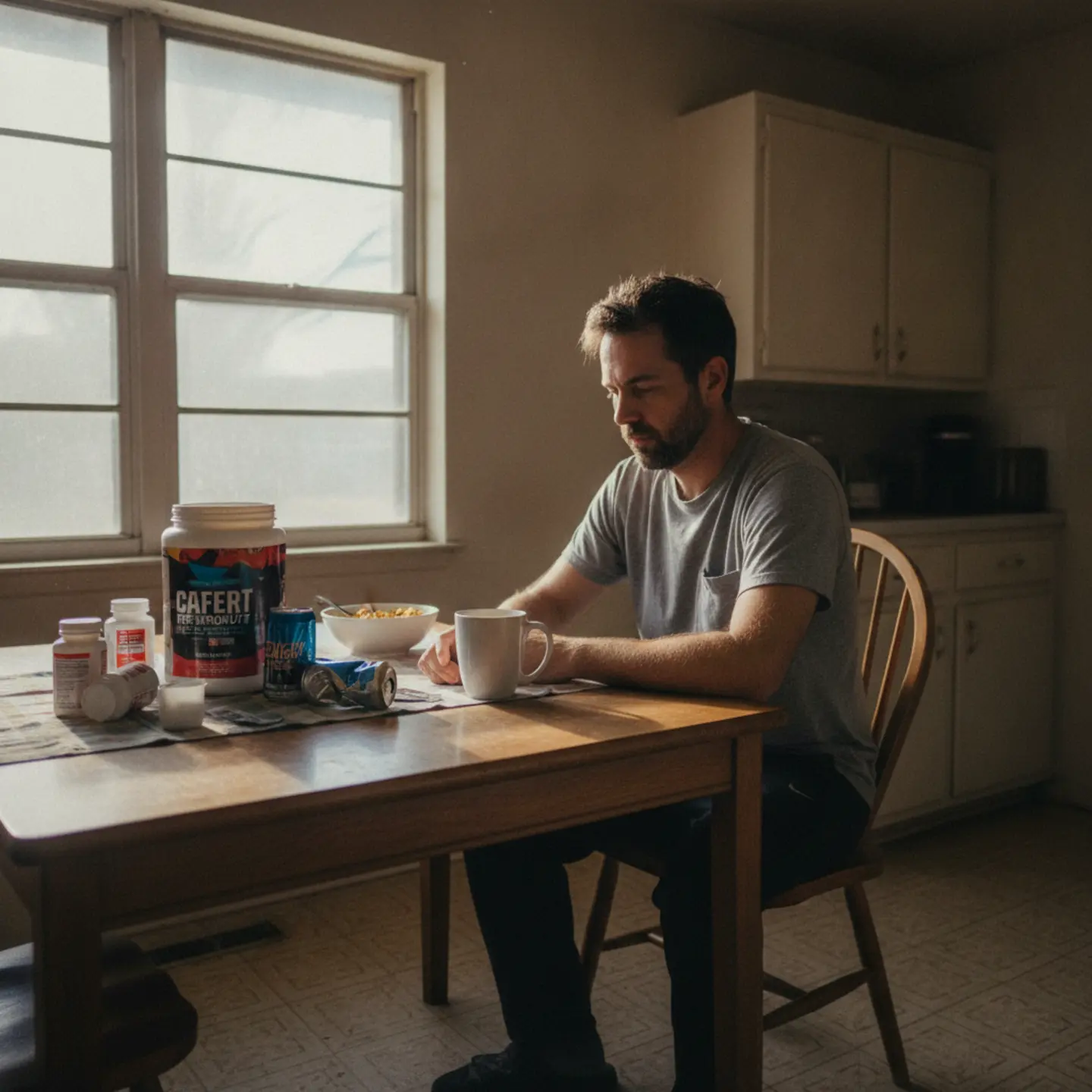
Watch for elevated resting heart rate, palpitations, chest tightness, and persistently high blood pressure. Stimulants constrict blood vessels and push your heart to work harder — over months and years, that adds up to real cardiovascular damage. Sleep disruption is nearly universal: severe insomnia during active use, followed by crushing hypersomnia during crashes. Tremors, jitteriness, frequent headaches, nausea, and acid reflux round out the picture. Appetite suppression — especially with diet pills or high-dose caffeine — can lead to meaningful weight loss and nutritional deficiencies that compound the problem.
The Stimulant Cycle: Crash and Escalation
The most insidious feature of OTC stimulant dependency is the cycle itself. The high phase delivers energy, focus, and a false sense of productivity. The crash that follows brings severe fatigue, depression, anhedonia — the inability to feel pleasure — and brain fog that can last hours. To avoid the crash, you take more stimulants. That raises your tolerance, which means you need even more to achieve the same effect. The cycle is self-reinforcing and often invisible to the person inside it until it’s become severe. By the time most men recognize the problem, they’re not using stimulants to feel good — they’re using them to feel normal.
What Is Stimulant Tolerance, Exactly?
Tolerance develops when your brain adapts to the presence of a stimulant by downregulating its own dopamine and norepinephrine production. Over time, the same dose produces less effect, so you increase the dose — which accelerates the adaptation. This is a neurological process, not a character flaw. It happens with caffeine pills, pseudoephedrine, and energy shots just as it does with prescription stimulants.
Behavioral Red Flags: How OTC Stimulant Addiction Shows Up in Daily Life
Behavioral signs are often the ones that are easiest to rationalize and hardest to see clearly. If any of these patterns sound familiar, take them seriously:
- Hiding or minimizing your use to family, friends, or healthcare providers
- Lying about how much you’re using or how often
- Prioritizing stimulant acquisition over other financial needs
- Multiple failed attempts to quit or cut back
- Continuing use despite knowing it’s causing health problems
- Using stimulants to manage emotions — anxiety, depression, boredom, stress — rather than for their stated purpose
- Erratic mood swings or irritability, especially during crashes
- Isolating from friends or family who express concern
- Defensive or angry reactions when someone questions your use
That last one is worth pausing on. Defensiveness about use is one of the clearest behavioral signals that something has shifted. When a substance stops being a tool and starts being something you protect, that’s worth paying attention to. For men in early recovery who are already familiar with the early warning signs of relapse, these behavioral patterns will look familiar — because they are.
OTC Stimulant Addiction in Recovery Contexts: A Special Risk
This section is specifically for men who are already in recovery from alcohol or other drugs — because the risk here is real and often underestimated. Substitution behavior is one of the most common patterns in early sobriety. A man puts down alcohol or illicit drugs and, within weeks, finds himself leaning heavily on caffeine pills, energy shots, or pseudoephedrine to manage fatigue, cravings, or emotional discomfort. It feels safer because it’s legal. It’s sold at every gas station. Nobody’s going to arrest you for buying a 5-Hour Energy.
The Substitution Trap in Early Recovery
Men in early sobriety often turn to OTC stimulants as a “legal” alternative to manage cravings or fatigue. This substitution behavior can quickly become a new addiction and is a major relapse risk. Structured recovery environments monitor and restrict OTC stimulant use for this critical reason.
But OTC stimulants activate the same reward pathways in the brain as the original substance. The dependency that develops is neurologically real, even if the substance is technically legal. And once that stimulant cycle takes hold — the highs, the crashes, the escalation — it creates emotional volatility and sleep disruption that are among the most reliable relapse triggers for any substance. Structured recovery environments like Drew’s Sober Living’s program explicitly monitor and restrict OTC stimulant use because the men who built those policies have seen this pattern up close.
Health Risks of Chronic OTC Stimulant Misuse
Let’s be direct about what’s at stake medically. These are not harmless substances simply because they don’t require a prescription. Chronic misuse of OTC stimulants carries documented risks across multiple body systems:
- Cardiovascular: Hypertension, arrhythmias, tachycardia, and elevated risk of heart attack and stroke — especially in men with pre-existing cardiac conditions
- Mental health: Anxiety disorders affect approximately 40–60% of people with stimulant use disorder; depression affects roughly 30–50%; stimulant-induced psychosis can occur in severe cases
- Sleep: Chronic insomnia during active use; hypersomnia during crashes; disrupted sleep architecture that persists into early recovery
- Neurological: Difficulty concentrating, memory problems, and cognitive decline with long-term high-dose use
- Gastrointestinal: Ulcers, acid reflux, chronic nausea
- Nutritional: Appetite suppression leading to malnutrition and weakened immune function
The financial toll compounds the physical one. A heavy daily habit can run $150–$600 or more per month in direct product costs alone — before accounting for ER visits, lost wages, or the cost of treating co-occurring anxiety and insomnia. Over 12–24 months, the total burden of untreated OTC stimulant addiction can easily reach $10,000 to $50,000 or more.
Next Steps: How to Get Help for OTC Stimulant Addiction
If you’ve read this far and recognized yourself in these criteria, here’s what to do next. Recovery from OTC stimulant dependency is entirely possible — and the path forward is clearer than it might feel right now.
Be Honest With Your Doctor
When you talk to your doctor about your stimulant use, be specific about what you’re taking, how much, and how often. They need the full picture to assess your health and refer you to the right treatment. This conversation is confidential and judgment-free.
Talk to your doctor first. Be specific about what you’re using, how much, and how often. A physician can assess your cardiovascular health, rule out complications, and refer you to appropriate treatment. Seek addiction counseling with a licensed professional who has experience in stimulant use disorder — they’ll help you understand your triggers and build real coping strategies. Consider an Intensive Outpatient Program (IOP) if your dependency is moderate to severe; structured therapy several hours a day provides the scaffolding that willpower alone can’t.
For men who lack a supportive home environment or need sustained accountability beyond therapy sessions, structured sober living fills the gap that outpatient alone cannot. The accountability is 24/7. The environment is substance-free. And the peer support comes from men who understand exactly what you’re going through. One important note: Texas Medicaid and CHIP cover substance use disorder treatment based on clinical diagnosis — not on whether the substance was OTC, prescription, or illicit. If you meet the DSM-5 criteria, you’re eligible for covered treatment. You can also explore the San Antonio recovery housing cost guide to understand what financial options look like in this market.
Recognizing the Signs Is the Hardest Part — What Comes Next Doesn’t Have to Be
If you’ve identified with two or more of the DSM-5 criteria in this checklist, you don’t have to figure out the next step alone. Drew’s Sober Living works directly with men in early recovery and coordinates with treatment centers across San Antonio and New Braunfels to make the transition as seamless as possible.
Why Drew’s Sober Living Is the Right Choice for Men in San Antonio and New Braunfels
OTC stimulant dependency doesn’t get better in an environment where the substance is still accessible and the old routines are still in place. That’s the core problem with relying on outpatient treatment alone — you leave the session, go back to the same house, the same gas station on the corner, the same 2 AM crash that sends you reaching for another pill. Structure has to be environmental, not just internal.
Drew’s Sober Living holds a perfect 5.0-star Google rating across 88 verified reviews, with 83% of past residents moving out sober. Those numbers reflect something real: three structured men’s recovery homes across San Antonio and New Braunfels — Chittim House, Evergreen House, and Chapel Bend — with 27 beds total and the same daily accountability standard at every location. Every resident is drug-and-alcohol tested every single day. There’s no hiding, no escalation, no rationalizing “just one more.” The stimulant cycle gets interrupted on day one.
Founded in 2023 by Drew from his own recovery experience, the program runs a 30-hour weekly work requirement, daily 12-step meeting attendance, financial literacy training, and house responsibilities — because recovery isn’t a feeling, it’s a practice. The brotherhood of men living through the same process provides the kind of peer accountability that no outpatient session can replicate. Other residents notice when you’re slipping. They say something. That matters more than most people expect. Affordable pricing of $500–$2,500 per month depending on location, and direct coordination with treatment centers, ensures the transition from rehab to long-term recovery is a bridge — not a gap.
Schedule a call with Drew today to discuss whether sober living is the right next step for your recovery.
Frequently Asked Questions
Am I addicted to caffeine pills, or am I just tired all the time?
The line between heavy use and addiction is marked by loss of control. If you consistently use caffeine pills in larger amounts than intended, spend significant time obtaining or recovering from them, experience strong cravings, or continue use despite negative consequences — health issues, relationship strain, financial pressure — you likely meet the criteria for Stimulant Use Disorder. Chronic fatigue can itself be a symptom of dependency or withdrawal, meaning your body has become dependent on the stimulant just to reach baseline function. If you’re unsure, that uncertainty is worth exploring with a professional rather than waiting until the pattern becomes undeniable.
What are the physical withdrawal symptoms from stopping pseudoephedrine or ephedrine?
Withdrawal from pseudoephedrine or ephedrine after prolonged high-dose use typically includes severe fatigue, excessive sleepiness (hypersomnia), intense cravings, depression, irritability, difficulty concentrating, and increased appetite. These symptoms are primarily psychological and neurological rather than the acute physical withdrawal associated with opiates or alcohol — but that doesn’t mean they’re mild. The depression and crushing fatigue can be intense enough to trigger relapse if you’re not in a supportive environment. Withdrawal symptoms can last days to weeks, and the post-acute phase of low energy and flat mood can persist longer.
How do I know if my energy pill use has crossed the line into addiction?
Run through the DSM-5 criteria: Do you use more than intended? Struggle to cut down despite wanting to? Spend significant mental energy thinking about or recovering from use? Have strong cravings? Continue using despite negative impacts on your job, relationships, or health? If two or more of those apply over a 12-month period, your use has crossed the clinical threshold into addiction. Trust your gut on this one — if you’re asking the question, it’s worth sitting down with a counselor or your doctor and being honest about what’s actually happening.
Can I recover from OTC stimulant addiction and still function without them?
Yes, absolutely. Recovery from OTC stimulant dependency means finding healthier, sustainable ways to manage energy and productivity — and most men report feeling significantly better within weeks to months once they’re through the acute withdrawal phase. Initially, you’ll likely experience fatigue and low motivation during the crash period. Structured recovery environments help establish healthy sleep routines, proper nutrition, and coping skills that allow your brain to restore its natural dopamine regulation. The energy you feel after that restoration is real — not borrowed from tomorrow.
What makes Drew’s Sober Living different from other recovery options for OTC stimulant addiction?
Drew’s Sober Living bridges the critical gap between treatment and independent life with daily accountability — breathalyzer and drug testing every single day — structured routine including a 30-hour weekly work requirement, daily 12-step meeting attendance, and house responsibilities, plus a brotherhood of men committed to sobriety who notice when you’re slipping and say something. Unlike outpatient-only treatment, sober living provides 24/7 accountability and a substance-free environment that directly interrupts stimulant cycles and prevents the substitution patterns that derail early recovery. With a perfect 5.0-star rating across 88 verified reviews and 83% of past residents moving out sober, Drew’s has proven that structure and brotherhood work. Schedule a call with Drew today to find out whether sober living is the right fit for where you are in your recovery.
Most men who end up dependent on OTC stimulants didn’t see it coming. They were just trying to get through the day — a demanding job, a brutal schedule, early recovery fatigue that felt impossible to push through without something to take the edge off. One caffeine pill became three. Three became a handful of energy shots. And somewhere in that escalation, the substance stopped being a tool and started being a requirement.
The path from there to clarity isn’t complicated, but it does require honesty — with yourself, with a doctor, and with the people around you. Recognizing the pattern is the hardest part. Everything that comes after — the counseling, the structure, the accountability, the brotherhood — is built on that one honest moment of seeing things clearly.
You don’t have to do it alone. And you don’t have to stay stuck in the cycle.
Ready to Break the OTC Stimulant Cycle for Good?
If this checklist helped you see your situation more clearly, the next move is a conversation — no pressure, no commitment required. Drew’s Sober Living works with men at every stage of recognition, from “I think I might have a problem” to “I’m ready to move in next week.” Reach out and find out what structured recovery actually looks like.
Drew’s Sober Living · Men’s Recovery Residences in San Antonio & New Braunfels, TX
Drew’s Sober Living is a structured sober living residence and does not provide clinical treatment, detox, or medical services. This article is for informational purposes only and does not constitute medical advice. Program availability, pricing, and admission requirements are subject to change, and recovery outcomes vary by individual. Please contact us directly for current information.