Key Takeaways
- Convenience stores in San Antonio and New Braunfels stock legal products — DXM cough syrup, kratom shots ($7–$25 each), Delta-8 THC, diphenhydramine sleep aids, and high-caffeine energy drinks — that can trigger full relapse just as powerfully as alcohol or illicit drugs.
- The first 90 days of sobriety are the highest-risk window for relapse (40–60% of people relapse within the first year), driven by prefrontal cortex impairment and Post-Acute Withdrawal Syndrome — not personal weakness.
- Kratom is currently legal and widely sold in Texas convenience stores, but it contains opioid-like alkaloids, causes physical dependence, and is explicitly zero-tolerance at Drew’s Sober Living regardless of its legal status.
- Impulse spending at convenience stores ($15–$30 per week, or $60–$120 per month) directly undermines financial recovery goals and creates a stress-relapse feedback loop that structured financial literacy training is designed to break.
- Trust Drew’s Sober Living for daily drug testing, zero-tolerance enforcement, and a brotherhood that holds you accountable — visit Drew’s Sober Living to take the next step in your recovery.
What OTC Products Are Actually Relapse Triggers in Early Recovery?
Convenience stores are stocked with legal products — cough syrup, sleep aids, kratom, energy drinks, even mouthwash — that can trigger a full relapse just as easily as alcohol or drugs. These aren’t accidents. They’re accessible, affordable, and often marketed in ways that appeal directly to someone in early recovery seeking relief or a quick fix. Understanding which products pose the highest risk and why is the first step to walking past them.
Let’s break down the most dangerous OTC triggers you’ll encounter in San Antonio and New Braunfels convenience stores, what they actually do to your brain and recovery, and concrete strategies to avoid them.
Drews Sober Living
Every Resident Drug-Tested Every Single Day
Core Service Programs:
- Structured Sober Living Homes for men transitioning from treatment to independent, sober living
- Daily Accountability & Drug Testing for residents and families who need consistent, verifiable structure
- Life-Skills & Employment Readiness for men rebuilding work history, finances, and a sober support network
Why Choose Drews Sober Living:
- ✓ Trusted by customers with a perfect 5.0-star Google rating across 88 verified reviews
- ✓ Every resident drug-and-alcohol tested every single day — same standard, every house
- ✓ Three structured men’s recovery homes in San Antonio and New Braunfels — 27 beds total
- ✓ Live-in house managers who are men in long-term recovery themselves
- ✓ Founded in 2023 by Drew, who built every house policy from his own recovery
- ✓ 83% of residents who moved out of the program did so sober
- ✓ 30-hour weekly work requirement plus financial literacy and life-skills training
The Convenience Store Landscape in San Antonio and New Braunfels: Why Proximity Matters
San Antonio and New Braunfels are car-dependent cities. That’s not a complaint — it’s just the reality of how South Texas is built. Major intersections come with gas stations. Residential neighborhoods are anchored by Stripes, 7-Eleven, or Valero. If you’re commuting to work, running errands, or grabbing lunch, you’re going to pass these stores — probably multiple times a day. Unlike a walkable urban neighborhood where you might duck into a grocery store by habit, here the convenience store is the default stop.
That matters enormously in early recovery. These stores aren’t passive environments. They’re engineered for impulse purchases. High-margin psychoactive products — kratom shots, energy drinks, OTC medications — are placed at eye level and near the register for a reason. The individual price points ($7–$25 per item) feel manageable in the moment. And for someone on a tight recovery budget who’s already stressed, that “manageable” price is exactly the trap.
You’re Not Weak for Struggling With This
Convenience store triggers are designed to pull you in — they’re engineered for impulse purchases, placed at eye level, and marketed directly to people seeking relief. Your brain in early recovery is neurobiologically vulnerable to these cues. Recognizing the trap is the first step to walking past it.
The Five Categories of OTC Relapse Triggers: What They Do and Why They’re Dangerous
Not all convenience store products carry the same risk, but the ones that do are worth knowing by name. Here’s what’s actually on those shelves and what each category can do to your recovery.
Psychoactive OTC Medications: The Dissociatives and Sedatives
DXM (dextromethorphan), found in cough syrups like Robitussin DM, produces dissociative effects similar to PCP or ketamine at high doses. It’s on open shelves in Texas with zero age restriction and no purchase limit. Diphenhydramine — the active ingredient in Benadryl and most OTC sleep aids — causes delirium, hallucinations, and cardiac arrhythmias at high doses, and psychological dependence can develop quickly. Loperamide (Imodium) is perhaps the most dangerous on this list: at extreme doses it crosses the blood-brain barrier and activates opioid receptors, causing severe cardiac arrhythmias and sudden death. The FDA has documented this risk repeatedly. It’s frequently misused by people trying to self-treat opioid withdrawal — which means it’s most dangerous for exactly the population that’s most likely to reach for it.
Pseudoephedrine-containing cold medicines (Sudafed) are stimulants sold behind the counter under federal CMEA regulations — ID and logbook required — but they can still trigger cravings in anyone with a stimulant use history.
Legal Gray-Zone Substances: The ‘Safer’ Alternatives That Aren’t
Kratom is widely available in San Antonio and New Braunfels convenience stores as shots, capsules, and powder, marketed for “energy,” “focus,” or “relaxation.” It contains opioid-like alkaloids (mitragynine and 7-hydroxymitragynine) that bind to opioid receptors. It causes physical dependence with withdrawal symptoms nearly identical to opioid withdrawal. For anyone with opioid use disorder history, kratom isn’t a safer alternative — it’s a bridge back. Delta-8 THC and other hemp-derived cannabinoids are intoxicating, unregulated, and exist in a legal gray area. They directly trigger relapse for anyone with cannabis use disorder. CBD, while non-intoxicating, can be a psychological trigger for cannabis use disorder and may contain trace THC — purity is unregulated and unreliable.
The Addiction Transfer Trap
Misusing a legal OTC product can erode your commitment to total abstinence and reintroduce the mindset of seeking an external chemical solution to internal problems. Many OTC products activate the same reward pathways as your primary substance, rekindling cravings and making a full relapse far more likely. This isn’t a “safer” alternative — it’s a bridge back to your primary drug.
Alcohol-Adjacent Products and Stimulants
Kombucha, non-alcoholic beer, mouthwash, cooking wine, and vanilla extract all contain alcohol or taste and smell like it. Even if the alcohol content is technically low, the taste, ritual, and smell activate powerful psychological associations — the same neural pathways that drove drinking behavior. High-caffeine energy drinks marketed with mood and performance claims can mimic stimulant effects and trigger cravings in anyone with a stimulant use history. And the ritual of cracking open something that feels like a “fix” can blur the line of abstinence in ways that matter, especially in the first 90 days. Nicotine products — cigarettes, vapes, chewing tobacco — are explicitly zero-tolerance at Drew’s Sober Living and reinforce the addictive behavioral loop regardless of their legal status.
Wondering How Drew’s Handles OTC and Legal Substance Policies?
Drew’s Sober Living tests every resident daily — including specialized screening for kratom and Delta-8 — and enforces zero-tolerance consistently across all three houses. If you have questions about what’s permitted and how the program works, we’re straightforward about it.
Why the First 90 Days Are the Most Dangerous: The Neurobiology of Early Recovery
Here’s something worth saying clearly: if you’re struggling with urges in early recovery, that’s not a character flaw. It’s neurobiology. The prefrontal cortex — the part of your brain responsible for impulse control and decision-making — is genuinely impaired by prolonged substance use and takes months to recover. You are, in a real and measurable way, working with a brain that isn’t yet fully back online for the hardest decisions you’ll face.
Post-Acute Withdrawal Syndrome (PAWS) compounds this during the first 3–12 months. Mood swings, anxiety, sleep disturbances, and cognitive fog aren’t signs that you’re failing — they’re documented symptoms of a brain healing from chemical dependency. Meanwhile, neural pathways associated with substance use are deeply ingrained. Even subtle environmental cues — a convenience store sign, a specific street, a familiar smell — can activate powerful cravings through classical conditioning, bypassing rational thought entirely. According to NIDA and SAMHSA, 40–60% of people relapse within the first year, with the first 90 days carrying the highest risk. That’s not a moral statistic. It’s a medical one.
You’re not alone in this. Every man who’s walked through the door at Drew’s has felt that pull — the one where your feet are already turning toward the gas station before your brain even registers what’s happening. The difference between the guys who make it and the guys who don’t usually isn’t willpower. It’s structure, accountability, and having people around who notice before you do.
That’s what the brotherhood is actually for. Not group hugs. Not inspirational posters. Other men who’ve been exactly where you are, watching your back when your own brain is working against you.
The Financial Trap: How Convenience Store Impulse Purchases Undermine Recovery
Recovery isn’t just about staying sober — it’s about building a life that makes sobriety worth keeping. That means money has to be part of the conversation. Frequent convenience store visits add up fast: $15–$30 per week in impulse purchases equals $60–$120 per month. For someone on a tight recovery budget, that’s not a rounding error — that’s rent money, transportation money, or the savings that eventually buys you your independence.
Kratom shots at $7–$25 each are several times more expensive per unit than online alternatives, but the convenience store charges a premium for immediacy and impulse. That’s the business model. And the financial damage doesn’t stop at the purchase price. Consistent impulse spending erodes your ability to save the two months of rent typically required to transition to independent living. It delays the financial independence that’s a cornerstone of long-term recovery. Worse, financial stress from impulse spending increases anxiety and feelings of failure — which are themselves significant relapse triggers. The loop closes on itself.
DSL’s financial literacy training exists precisely to interrupt this pattern — teaching budgeting, savings, and credit rebuild so residents can build toward real independence rather than burning their recovery budget on quick fixes.
Red Flags: How to Spot OTC Misuse in Yourself and Your Housemates
Early detection matters. The sooner someone catches a slide — in themselves or a housemate — the easier it is to course-correct before a full relapse happens. Here’s what to watch for:
Warning Signs of OTC or Legal Substance Misuse
- Unexplained mood swings, increased irritability, anxiety, depression, lethargy, or hyperactivity not typical for that person
- Sleep disturbances — insomnia, excessive sleepiness, or unusual patterns — or physical signs like dilated/constricted pupils, slurred speech, or uncoordinated movements
- Increased secrecy, isolation, or evasiveness about activities, purchases, or whereabouts
- Unexplained money problems, frequent ATM visits, borrowing money, or inability to account for spending
- Excessive convenience store visits, especially returning with energy drinks, kratom products, or OTC medications in unusual quantities
- Possession of kratom or Delta-8 packaging, or empty bottles of cough syrup or antihistamines in unusual quantities
- Neglect of responsibilities — missing work, meetings, chores, or personal hygiene — or defensiveness when questioned
- Failed or positive drug screens, especially on specialized kratom or Delta-8 panels
If you’re seeing these signs in a housemate, say something. That’s what brotherhood means in practice — not waiting until someone’s already gone to wonder if you should have spoken up. Talk to your house manager. Contact your sponsor. The conversation is uncomfortable for about five minutes; a relapse is uncomfortable for much longer.
Practical Strategies to Avoid Convenience Store Triggers: What Actually Works
Awareness is the foundation, but awareness alone doesn’t keep you out of the gas station at 10 PM. Here are concrete, evidence-based strategies that actually work when the urge hits.
Environmental restructuring is the most direct tool: plan your snacks and drinks at larger grocery stores so you have less reason to stop at convenience stores. Keep healthy options in your car — water, fruit, nuts, granola bars. Remove the excuse before the craving creates one. When you do need to stop for gas, pay at the pump and stay in the car.
Cognitive restructuring means challenging the thoughts that rationalize using. “It’s legal.” “Just one won’t hurt.” “I’m not even using my real drug.” These thoughts feel reasonable in the moment because your brain is still healing. Write out your reasons for staying sober. Keep them somewhere you can read them fast when the rationalizing starts.
The 15-Minute Rule
When a craving or urge to stop at a convenience store hits, commit to waiting 15–30 minutes before acting on it. Call your sponsor, take a walk, listen to a podcast, or practice deep breathing. Most cravings peak and then subside. By delaying, you give your prefrontal cortex time to catch up and make a conscious choice instead of an impulsive one.
Urge surfing is a mindfulness technique worth learning: instead of fighting the craving or immediately acting on it, you observe it. Acknowledge it without judgment. Watch its intensity rise and then — because it always does — fall. You’re riding the wave rather than drowning in it. This isn’t mystical; it’s documented in clinical relapse prevention research and it works.
Sponsor and support network engagement is the non-negotiable. Regularly communicate about urges before they become actions. Attend your daily 12-step meetings. Be honest about what you’re feeling, including the embarrassing stuff — the craving for a kratom shot, the temptation to grab a six-pack of non-alcoholic beer because “it’s basically nothing.” Your sponsor has heard it. Your housemates have felt it. You’re not the first, and you won’t be the last.
For more evidence-based strategies on managing cravings in early recovery, the clinically proven methods for reducing relapse risk covered in DSL’s recovery resources go deeper on what the research actually shows.
Why Drew’s Sober Living Is the Right Choice for Men in Early Recovery in South Texas
Everything in this guide — the OTC risks, the neurobiological vulnerability of early recovery, the financial trap, the red flags — points to the same conclusion: the first year of sobriety is not the time to go it alone in an environment that’s actively working against you. You need structure that’s specific, consistent, and enforced by people who understand what you’re up against.
Drew’s Sober Living holds a perfect 5.0-star Google rating across 88 verified reviews — not because it’s easy, but because it works. DSL’s daily breathalyzer testing and bi-weekly drug screening include specialized panels for kratom and Delta-8, catching the exact legal gray-zone substances that convenience stores are pushing. The zero-tolerance policy isn’t a suggestion. It’s the same standard, every house, every day — Chittim House in North San Antonio, Evergreen House in Central San Antonio, and Chapel Bend in New Braunfels.
The financial literacy training directly addresses the impulse-spending trap this guide describes — budgeting, savings, and credit rebuild so residents can afford independence without relying on quick fixes. And 83% of past residents moved out sober, which is what DSL’s bridge model — 3 to 12 months of real structure, not 30 days — actually produces. Founded in 2023 by Drew, who built every house policy from his own recovery, this isn’t a corporate program. It’s a brotherhood built by someone who’s been exactly where you are.
Schedule a call with Drew today — and take the next real step in your recovery.
Frequently Asked Questions
Is it okay to drink kombucha or non-alcoholic beer in early recovery if it has less than 0.5% alcohol?
While kombucha and non-alcoholic beers contain very low alcohol content, many addiction experts and 12-step communities strongly recommend avoiding them in early recovery. The taste, smell, and ritual of consuming these beverages can act as powerful psychological triggers, re-activating cravings and increasing the risk of returning to full-strength alcohol. The brain in early recovery is highly susceptible to these cues — even trace sensory associations can activate deeply ingrained neural pathways. For true abstinence, it’s best to avoid anything that mimics the experience of drinking, especially in the first 90 days.
Will kratom or Delta-8 THC show up on a standard drug test at my sober living house?
Standard 5-panel or 10-panel drug tests typically do not detect kratom or Delta-8 THC. However, specialized tests are available and can detect these substances — and many structured sober living residences use them specifically for this reason. More importantly, using any mood-altering substance, even a legal one, violates the spirit and the rules of abstinence-based recovery. The test result is secondary to the fact that you’ve reintroduced a psychoactive substance and compromised your sobriety. Zero-tolerance means zero-tolerance, regardless of what a standard panel does or doesn’t catch.
What should I do if I accidentally consume a product with alcohol, like vanilla extract in food or a kombucha that fermented more than expected?
The most important step is immediate honesty and communication. Contact your sponsor or a trusted support person right away, and report it to your sober living staff. Reflect on what happened and identify any steps or triggers that led to the accidental consumption so you can prevent a recurrence. An accidental trace exposure is a learning opportunity, not necessarily a full relapse — but transparency is non-negotiable. Concealing it erodes trust and removes the support system that protects your sobriety. The people around you are there to help, not to punish you for an honest mistake.
How can I avoid the urge to grab a quick fix at convenience stores when they’re everywhere in San Antonio?
The car-centric culture of San Antonio makes convenience stores constant touchpoints, so proactive strategies are essential. Plan your snacks and drinks from larger grocery stores and keep healthy options in your car so you have less reason to stop. Practice urge surfing — acknowledge the craving, but commit to waiting 15–30 minutes before acting on it. Use that window to call your sponsor, take a walk, or practice deep breathing. Most cravings peak and then subside on their own. Keeping your “why” visible — a note in your wallet, a contact in your phone — gives your prefrontal cortex something to grab onto when the impulse hits.
What makes Drew’s Sober Living different from other recovery residences in South Texas?
Drew’s Sober Living combines daily breathalyzer testing, bi-weekly drug screening — including specialized tests for kratom and Delta-8 — and a zero-tolerance policy that specifically addresses the OTC and legal gray-zone triggers discussed in this guide. With a perfect 5.0-star Google rating across 88 verified reviews and 83% of past residents moving out sober, DSL’s bridge model — 3 to 12 months of structure, accountability, and brotherhood — actually works for long-term recovery. Financial literacy training ensures residents build the skills to avoid impulse spending traps and achieve real independence. Schedule a call with Drew today to discuss how DSL can support your recovery journey.
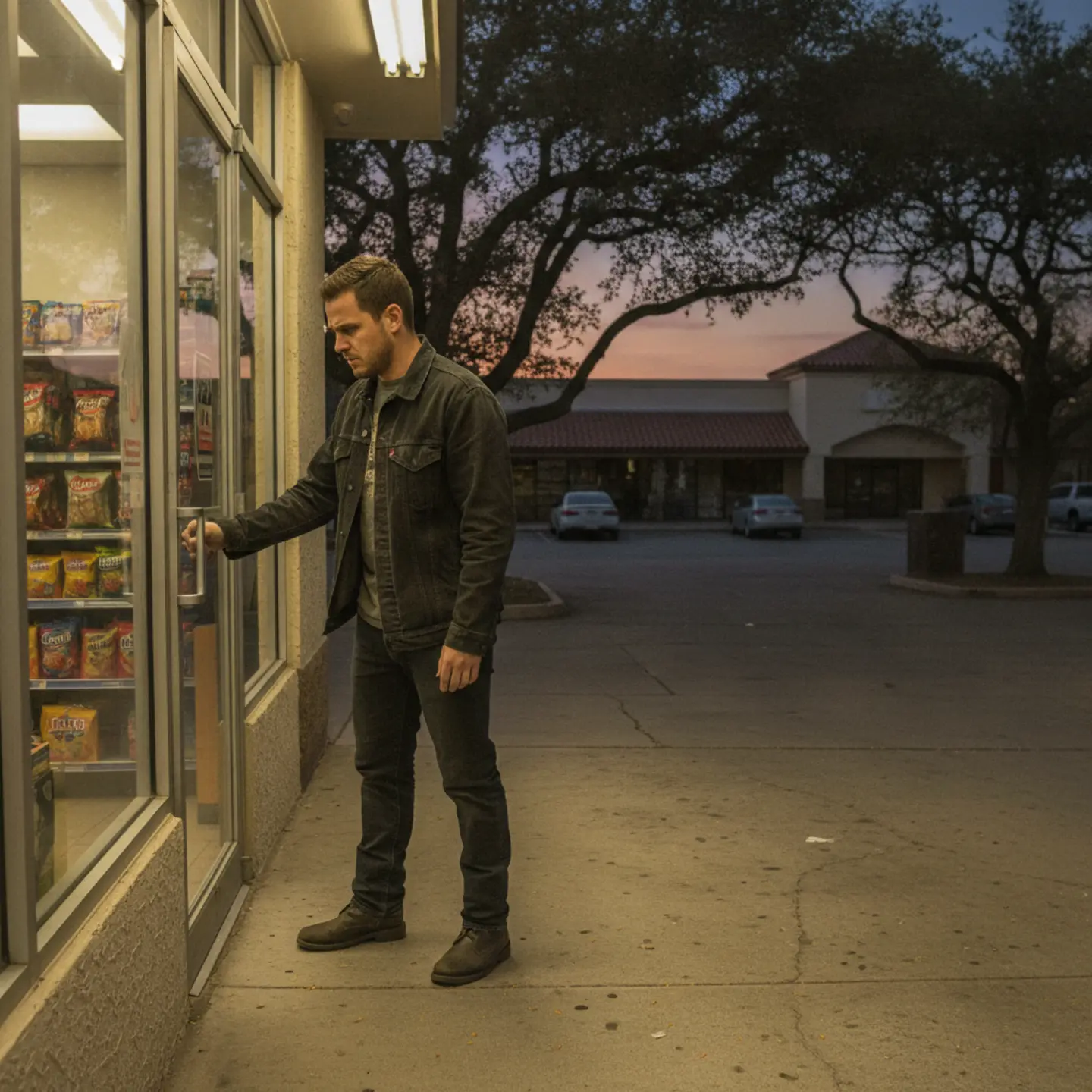
The guy who almost didn’t make it past his first week at DSL told Drew later that it wasn’t the drug test that stopped him. It was knowing someone would notice. He’d been driving past the same Stripes every day on the way home from work, and every day the kratom shots were right there at eye level by the register. One evening he sat in the parking lot for eleven minutes. Then he called his sponsor instead of going in.
He said afterward: “I didn’t have some big spiritual moment. I just didn’t want to have to tell my housemates.” That’s the brotherhood working exactly the way it’s supposed to — not as a rule, but as a reason.
That’s what recovery actually looks like in South Texas. Not perfect. Not easy. But real, and not alone.
Ready to Build Real Recovery in San Antonio or New Braunfels?
If you’re in early recovery and the convenience store triggers, the financial pressure, and the daily grind of staying sober feel like too much to manage alone — that’s exactly what Drew’s Sober Living is built for. Daily testing, financial literacy training, and a brotherhood that shows up. You don’t have to figure this out by yourself.
Drew’s Sober Living · Men’s Recovery Residences in San Antonio & New Braunfels, TX
Drew’s Sober Living is a structured sober living residence and does not provide clinical treatment, detox, or medical services. This article is for informational purposes only and does not constitute medical advice. Program availability, pricing, and admission requirements are subject to change, and recovery outcomes vary by individual. Please contact us directly for current information.