Key Takeaways
- Moving from your first call to your spouse’s move-in can happen within 24–72 hours if a bed is open — but you need to call multiple facilities, have $2,500–$4,000 liquid, and have documentation ready before you dial.
- San Antonio has approximately 92 recovery residences and 14 Oxford Houses, but quality, structured men’s beds are undersupplied relative to demand — Bexar County recorded a historic 509 drug overdose deaths in 2023, driving intense pressure on available housing.
- Mid-range structured programs cost $800–$1,500/month; a realistic 90-day budget including hidden costs (food, transportation, supplies) runs $4,000–$6,000 — and almost no sober living home accepts insurance for room and board.
- TARR certification is the clearest quality signal in Texas: since HB 299 took effect in September 2023, state-funded programs must be TARR-certified or Oxford House chartered — always ask for proof before paying anything.
- Trust Drew’s Sober Living for daily-tested accountability, a structured brotherhood, and 83% of past residents moving out sober — visit Drew’s Sober Living to explore immediate placement options for your spouse.
How Can I Get My Spouse Into a Sober Living Home in San Antonio Quickly?
You can realistically move from your first call to your spouse’s move-in within 24–72 hours if a bed is available at a structured program like Drew’s Sober Living. The key is knowing which homes have open beds, understanding the true costs upfront, and being prepared with documentation. San Antonio has approximately 92 recovery residences and 14 Oxford Houses, but finding one with immediate availability and the right fit requires strategic calls and clear expectations.
Here’s exactly what you need to know to navigate the San Antonio recovery housing market and get your spouse into a safe, structured environment fast.
Drews Sober Living
Every Resident Drug-Tested Every Single Day
Core Service Programs:
- Structured Sober Living Homes for men transitioning from treatment to independent, sober living
- Daily Accountability & Drug Testing for residents and families who need consistent, verifiable structure
- Life-Skills & Employment Readiness for men rebuilding work history, finances, and a sober support network
Why Choose Drews Sober Living:
- ✓ Trusted by customers with a perfect 5.0-star Google rating across 88 verified reviews
- ✓ Every resident drug-and-alcohol tested every single day — same standard, every house
- ✓ Three structured men’s recovery homes in San Antonio and New Braunfels — 27 beds total
- ✓ Live-in house managers who are men in long-term recovery themselves
- ✓ Founded in 2023 by Drew, who built every house policy from his own recovery
- ✓ 83% of residents who moved out of the program did so sober
- ✓ 30-hour weekly work requirement plus financial literacy and life-skills training
What “No Waiting List” Actually Means in San Antonio Recovery Housing
If you’ve been searching at midnight and landing on pages that promise “open beds now,” take a breath before you get your hopes up. “No waiting list” in San Antonio’s recovery housing market almost never means a bed is sitting empty waiting for your husband to walk through the door. What it actually means is that the facility has a fast intake process — and that when a bed opens, they can move quickly.
Open beds happen for three reasons: a resident completed his program and moved on, a resident was discharged for a rule violation (like a failed test), or a planned departure created space. In a well-run structured program, that cycle is predictable enough that the admissions team can often give you a realistic timeline — sometimes 24 hours, sometimes a week. The key is calling early, being prepared, and not stopping after the first “no.”
You’re Not Alone in This Panic
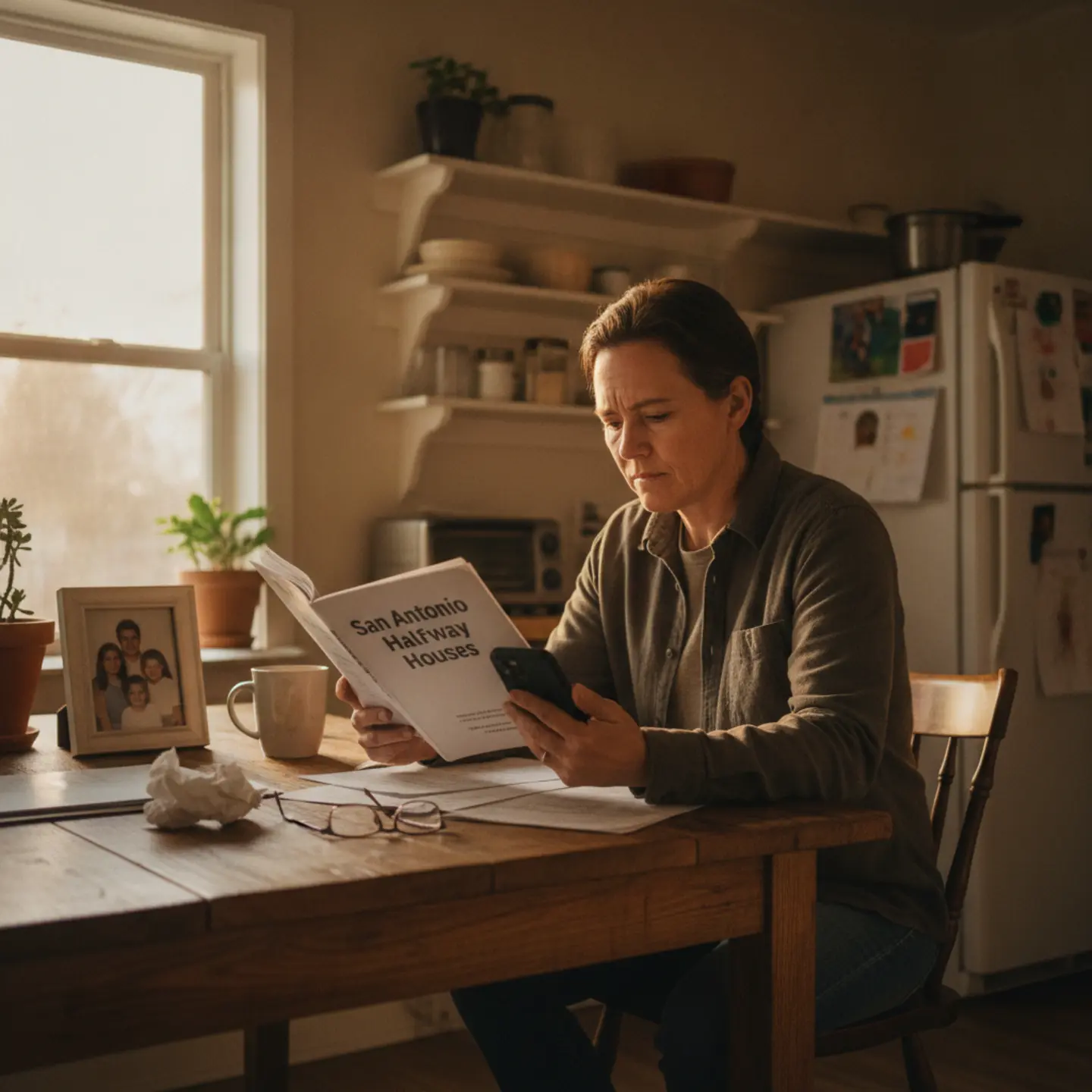
Spouses searching for recovery housing at 2am are doing one of the hardest things — taking action to save a relationship and a life. The urgency you feel is real, and the resources exist. Thousands of families in San Antonio have walked this path and found a way through.
Eligibility for most structured men’s programs is straightforward: male, 18 or older, and genuinely willing to commit to sobriety and house rules. That last part matters more than most spouses realize. A sober living home is voluntary — your husband has to want to be there, or the placement won’t hold. The fastest programs are those with clear, rigorous intake processes designed to move responsibly, not recklessly. Expect to make multiple calls. One “no” does not mean no options exist.
The Real Costs: Budget Beyond First Month’s Rent
One of the most common mistakes families make is budgeting only for the first month’s rent and then getting blindsided at intake. Here’s the honest picture so you’re not caught short when it matters most.
Mid-range structured programs — the kind with daily testing, live-in managers, and employment requirements — typically run $800–$1,500 per month. On top of that, expect move-in fees, deposits, and upfront costs ranging from $200 to $1,000 beyond the first month’s rent. Almost no sober living home accepts Medicaid, Medicare, or private insurance for room and board. Housing is self-pay because sober living is supportive housing, not clinical treatment — insurance covers medical services, not rent. For a full breakdown of what recovery housing costs across Texas, the San Antonio recovery housing cost guide is worth reading before you make your first call.
Hidden costs add up fast: transportation to daily 12-step meetings and work ($50–$150/month), groceries if meals aren’t included ($200–$400/month), a phone plan, work clothing, personal supplies. A realistic 90-day budget for a structured program lands between $4,000 and $6,000. Before you dial anyone, have at least $2,500–$4,000 liquid and accessible. That’s what gives you options.
Financial Assistance Programs in Texas
If funds are tight, these resources are worth a call. Texas HHSC distributes SAMHSA block grant funds through local mental health authorities like the Center for Health Care Services in San Antonio — they may have subsidized beds for low-income individuals. Bexar County’s indigent care programs and Haven for Hope provide emergency housing assistance for those in crisis. Oxford Houses offer an interest-free loan program to cover move-in costs, which makes them one of the most accessible low-barrier options in the city. The Bridge — Sober Living Community Placement Program (listed on findhelp.org for Bexar County) provides security deposits, the first two weeks of rent, and grocery cards specifically for men exiting rehab or incarceration.
Regulatory Framework: TARR Certification and What It Means for Your Family
Texas does not require sober living homes to be state-licensed unless they provide clinical treatment services. That means the market ranges from excellent, accountable programs to homes with no oversight whatsoever. Your job as a spouse is to tell the difference fast.
TARR — the Texas Association of Recovery Residences — is the state affiliate of the national NARR standard. TARR certification is voluntary, but since HB 299 took effect in September 2023, it carries real weight: recovery homes must be TARR-certified or Oxford House chartered to receive state funding, grants, or state-funded referrals. Certification means the home has been reviewed against national standards covering administrative practices, physical environment, recovery support services, and community relations. You can verify certification status directly on the TARR website, or simply ask the facility for proof of their current certification. If they can’t produce it, that’s your answer.
What Does TARR Certification Actually Guarantee?
TARR certification means a home has met NARR’s national standards across four domains: administrative and operational practices (resident rights, grievance procedures), physical environment (safety and cleanliness), recovery support services (peer mentorship, 12-step connection, life skills), and good neighbor practices. It is not a guarantee of outcomes, but it is the strongest consumer protection signal available in the Texas sober living market. Always ask for proof of current certification — not just a verbal claim.
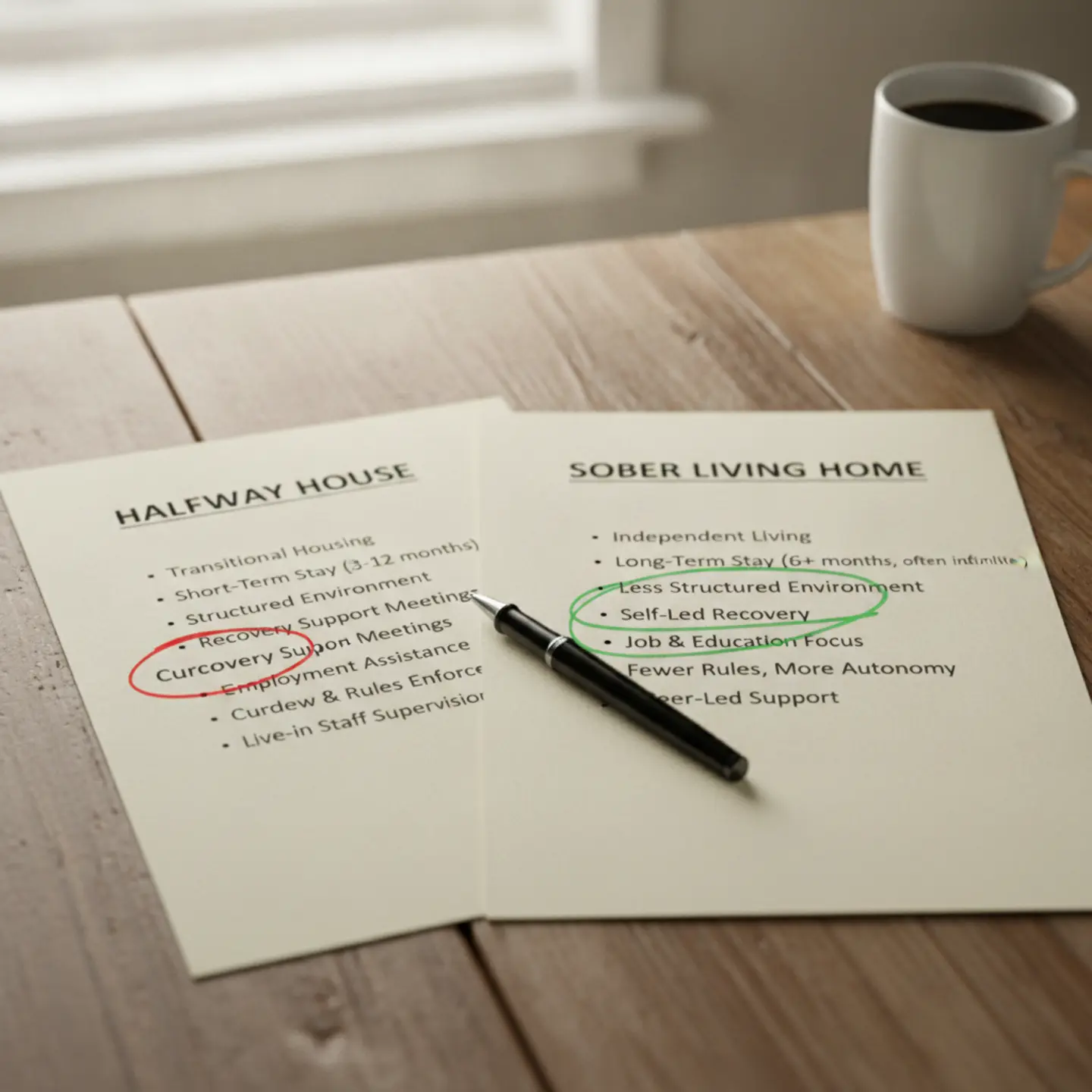
It’s also worth understanding what sober living homes are not. TDCJ Residential Reentry Centers — what most people picture when they hear “halfway house” — serve only parolees and probationers under court order. They are not available for voluntary admission. If your husband is not justice-involved, those facilities are simply not an option, regardless of what a Google search might suggest.
Finding Open Beds Fast: Where to Call and What to Ask
Start with the most targeted resources, not the broadest ones. SAMHSA’s National Helpline (1-800-662-HELP) and 211 Texas are useful for generating a list of contacts, but neither has real-time bed availability data. You’ll still need to call each facility individually. For Oxford Houses specifically, oxfordvacancies.com shows current open beds in San Antonio and lets you apply directly — that’s the fastest route into the Oxford House network.
For structured programs like Drew’s Sober Living, the smartest move is to apply during the final weeks of your husband’s inpatient treatment — not after discharge. That gives the program time to process the application, confirm eligibility, and have a bed lined up so the transition is seamless rather than frantic. The admissions process at Drew’s is designed exactly for this: intake decisions within 24 hours of application, move-in possible within 72 hours if a bed is available.
Red Flags When Evaluating a Sober Living Home
Avoid homes that cannot provide proof of TARR certification, refuse to give you written house rules, have no on-site staff, or make vague promises about outcomes. Legitimate programs are transparent about costs, testing protocols, and relapse policies from the first call. If a home is evasive or pressures you to pay before answering your questions, move on — there are better options.
When you do get someone on the phone, ask these questions before discussing payment: Is the home TARR-certified? What are the exact weekly and monthly costs, including all fees? What is the drug testing protocol? Who lives on-site, and what are their qualifications? What is the intake timeline if a bed is available? What happens if a resident relapses? Request written copies of house rules, policies, and grievance procedures before committing to anything.
The Critical 72-Hour Window: Why Timing Matters More Than You Think
The urgency you feel right now is not panic — it’s accurate. The first 72 hours after discharge from inpatient treatment is the most vulnerable period in early recovery. Acute cravings, the absence of the clinical structure your husband has been living inside, and exposure to old environments and people all converge at once. National research puts relapse risk in the first 30 days post-discharge at 40–60%, climbing to as high as 70% within 90 days for men who don’t enter structured aftercare.
Men discharged from San Antonio’s treatment centers without pre-arranged housing often return to the same environments that fueled their use — or worse, to homelessness or active-use situations. Bexar County recorded 509 drug overdose deaths in 2023, a historic high, with 179 opioid-related deaths in 2024 alone. That context is why structured recovery housing isn’t a nice-to-have after treatment — it’s the bridge that determines whether treatment sticks.
Prepare These Documents Before Your First Call
Have your spouse’s recent discharge papers (if coming from treatment), proof of income or savings for move-in costs, and a list of any court-ordered requirements ready before you call. This speeds up the intake conversation and signals to programs that you’re organized and serious — which often leads to faster placement decisions.
The research on length of stay is equally clear. A minimum of 90 days builds initial stability. Stays of 6 to 12 months correlate with nearly 80% sustained abstinence rates in structured environments. That’s not a sales pitch — it’s what the data shows. Three to six months is the sweet spot for most men in early recovery, and the goal of any good sober living program is to make that time count, not just fill it.
San Antonio’s Recovery Housing Landscape: What’s Available in 2026
San Antonio is a city of 2.76 million people with 37 medical detox programs and 40 inpatient residential treatment programs generating a continuous flow of men who need transitional housing. The demand is real and ongoing. The supply of quality, structured men’s residences has not kept pace.
Your options fall into a few distinct categories. Oxford Houses (14 in San Antonio) are peer-governed, self-supporting, and affordable at roughly $500–$900/month — but they have no professional staff on-site, and accountability comes entirely from peers. That works well for men with significant recovery time who are ready for independence. It’s a harder fit for someone in the first 90 days who needs external structure.
Faith-based options like the San Antonio Rescue Mission, the Salvation Army, and Iron Sharpens Iron often have lower barriers to entry and more frequent bed turnover. They typically integrate faith-based program components — ask directly what participation looks like before assuming it’s a fit. For a side-by-side comparison of Oxford Houses and structured sober living programs, the Oxford Houses vs. sober living homes breakdown covers the key differences in cost, rules, and structure.
You’re going to find a lot of options when you search. Some will look polished online and turn out to be a house with a mattress on the floor and no one checking in. Others will sound strict and feel intimidating — and those might be exactly what your husband needs right now. Don’t let a slick website or a low price tag make the decision for you. Ask the hard questions. The right program will answer every one of them without flinching.
And if a home can’t tell you their TARR certification status, their exact costs, and their relapse policy in the first five minutes of a call? That’s your answer. Keep dialing.
Why Drew’s Sober Living Is the Right Choice for San Antonio Spouses Seeking Fast Placement
Drew’s Sober Living operates three structured men’s recovery homes — Chittim House in North San Antonio, Evergreen House in Central San Antonio, and Chapel Bend in New Braunfels — with 27 beds total. Drew founded the program in 2023 from his own recovery, which means every house policy was built by someone who knows what actually works, not what looks good on paper.
The accountability structure is what sets Drew’s apart in the San Antonio market. Daily breathalyzer testing starts on day one — not after a probationary grace period, not when staff remembers to check. Every resident, every day, same standard across all three houses. Bi-weekly drug screening backs that up. This is the kind of verifiable structure that research shows actually reduces relapse risk during the critical 72-hour to 90-day window. Families who need to know their husband is being held accountable — not just trusted — can verify that through the drug testing program details.
Beyond testing, the program requires a 30-hour weekly work requirement, financial literacy training, and daily 12-step meeting attendance. These aren’t rules for the sake of rules — they’re the building blocks of a life that can sustain sobriety after a man leaves the house. The goal is long-term recovery, not short-term abstinence. With a perfect 5.0-star Google rating across 88 verified reviews and 83% of past residents moving out sober, the outcomes speak for themselves. Families who want to understand what the full program looks like can explore the resources Drew’s has built specifically for families.
Frequently Asked Questions
How do I get my husband to agree to go to sober living if he doesn’t want to?
You cannot legally compel an adult into a voluntary sober living home — and attempting to force it rarely produces lasting results. The most effective approach is setting clear, consistent boundaries around what you will and won’t accept, expressing the consequences of continued substance use, and offering genuine support for his recovery rather than ultimatums alone. A professional interventionist or a counselor from a local treatment center can often reach someone in a way that family pressure cannot — their guidance is worth pursuing before you assume all doors are closed.
What happens if my husband leaves sober living against advice?
If your husband leaves a sober living home against advice, he will be immediately discharged from the program — voluntary settings cannot physically prevent a resident from walking out. The home is obligated to contact his designated emergency contacts (you, if he has signed a Release of Information) to inform you of his departure, and may offer to connect him with resources for higher-level care such as detox or inpatient treatment. It’s worth having a plan in place before move-in: know which detox or treatment program you’d call next, and have emergency funds set aside for re-entry into care if needed.
Does staying in a sober living home count toward court-ordered treatment requirements in Texas?
A sober living home is not a licensed treatment facility, so residing there alone does not typically satisfy a court-ordered treatment requirement. However, many Texas courts and probation officers will approve a structured sober living home as a mandatory residence condition when the resident is simultaneously engaged in court-ordered outpatient treatment — such as an Intensive Outpatient Program or regular licensed counseling — from a separate licensed provider. Drew’s Sober Living can communicate directly with court and probation teams regarding a resident’s compliance and participation in the program’s structured requirements.
What do I do if my husband relapses while in a sober living home?
If your husband relapses while in a structured sober living home, the facility’s zero-tolerance policy will result in immediate discharge to protect the sobriety of other residents — this is non-negotiable and applies equally to everyone. The home will typically notify you if you have an active Release of Information on file, and may provide referrals to immediate detox or higher-level clinical care. The most important thing you can do before move-in is discuss this scenario openly with the program and have a clear plan — including emergency funds and a specific treatment program identified — so that a relapse doesn’t become a crisis without a next step.
What makes Drew’s Sober Living different from other sober living homes in San Antonio?
Drew’s Sober Living combines daily-tested accountability — breathalyzer testing from day one and bi-weekly drug screening — with structured employment requirements, financial literacy training, and a brotherhood model built on peer support and consistency, not just a list of rules. With 27 beds across three homes, intake decisions within 24 hours, a perfect 5.0-star Google rating across 88 verified reviews, and 83% of past residents moving out sober, Drew’s delivers the rapid placement and proven structure that spouses searching for immediate options need most. Contact Drew’s Sober Living today to discuss your spouse’s placement and get answers to your specific questions.
The call most spouses make to a sober living home isn’t made from a calm place. It’s made from a car in a parking lot, or a kitchen at 2am, or a hospital waiting room. You’re scared, you’re exhausted, and you’re trying to do something concrete in a situation that has felt completely out of your control for a long time.
Here’s what’s true: making that call is the right move. Having the financial picture clear, the questions ready, and the documents in hand before you dial — that’s what turns a desperate search into a real plan. San Antonio has options. The market is competitive, but structured beds exist, and families find them every week.
You don’t have to figure this out alone. The brotherhood your husband needs starts with one call. So does your peace of mind.
Ready to Find Your Spouse an Open Bed in San Antonio?
You’ve done the research. Now it’s time to make the call that matters. Drew’s Sober Living offers structured, daily-tested men’s recovery housing across San Antonio and New Braunfels — with intake decisions within 24 hours and move-in possible within 72 hours when a bed is available. Reach out today and let’s talk through what your husband needs and whether we’re the right fit.
Drew’s Sober Living · Men’s Recovery Residences in San Antonio & New Braunfels, TX
*Drew’s Sober Living is a structured sober living residence and does not provide clinical treatment, detox, or medical services. This article is for informational purposes only and does not constitute medical advice. Program availability, pricing, and admission requirements are subject to change, and recovery outcomes vary by individual. Please contact us directly for current information.