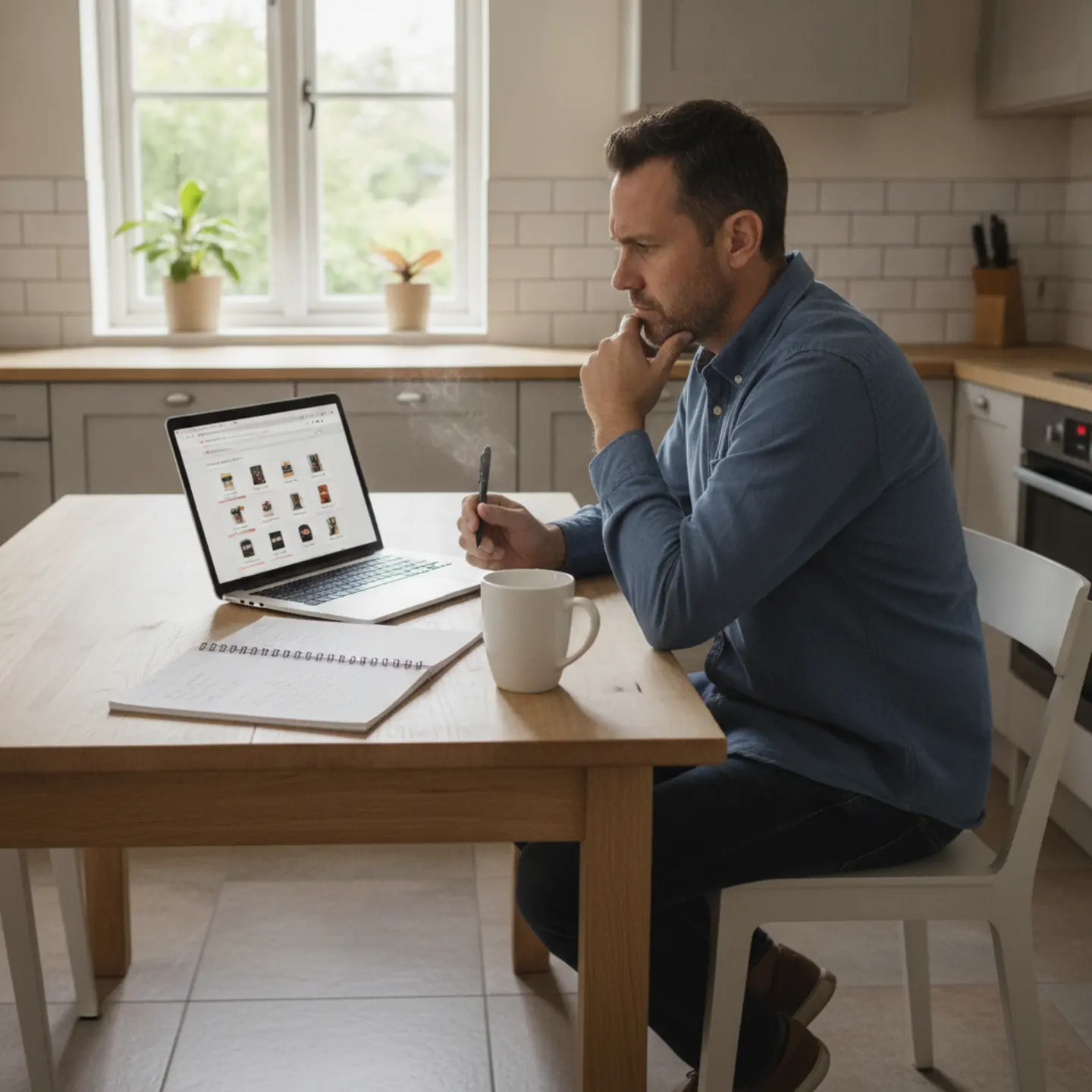
Key Takeaways
- The best online addiction counselling platforms for 2026 — Monument, Workit Health, Amwell, Hazelden Betty Ford, and local Texas-licensed therapists — combine licensed professionals, evidence-based treatment, and flexible scheduling to make recovery support more accessible than ever.
- Only 10–12% of men in Texas with a substance use disorder received specialty treatment in 2023, but telehealth is closing that gap: an estimated 30–40% of all addiction treatment episodes now involve a virtual component.
- Pricing ranges from $30–$100/month for peer-support-only plans to $500–$1,500+/month for full MAT coordination and psychiatry — most major insurance plans, Texas Medicaid (STAR), and TRICARE now cover telehealth addiction counselling with in-network providers.
- Always verify your online counsellor holds an active Texas license (LCDC, LPC, LCSW, or LMFT) through the appropriate state licensing board — never rely on unlicensed coaches, AI-only platforms, or providers without a clear HIPAA compliance statement.
- Trust Drew’s Sober Living for structured men’s recovery housing, daily accountability, and a brotherhood built for lasting change — visit Drew’s Sober Living to learn how our San Antonio and New Braunfels homes complement professional online counselling.
What Are the Best Online Addiction Counselling Platforms for 2026?
The most trusted online addiction counselling platforms in 2026 combine licensed therapists, flexible scheduling, and evidence-based treatment — with Monument, Workit Health, Amwell, Hazelden Betty Ford, and local Texas-licensed counsellors leading the field. Each platform offers distinct strengths, from specialized medication-assisted treatment (MAT) to affordable peer support, making professional addiction recovery support more accessible than ever. Choosing the right platform depends on your specific needs, insurance coverage, and recovery goals.
This guide reviews five of the most respected online addiction counselling platforms, breaks down pricing and regulatory requirements, and helps you understand how professional virtual therapy integrates with your recovery journey.
Drews Sober Living
Daily Breathalyzer Testing for Every Resident
Core Service Programs:
- Structured Sober Living Homes for men transitioning from treatment to independent, sober living
- Daily Accountability & Drug Testing for residents and families who need consistent, verifiable structure
- Life-Skills & Employment Readiness for men rebuilding work history, finances, and a sober support network
Why Choose Drews Sober Living:
- ✓ Trusted by customers with a perfect 5.0-star Google rating across 91 verified reviews
- ✓ Daily breathalyzer testing for every resident, plus drug testing every two weeks
- ✓ Four operating houses, 38 beds in San Antonio and New Braunfels, Divine House coming soon
- ✓ Live in house managers who are men in long term recovery themselves
- ✓ Founded in 2023 by Drew, who built every house policy from his own recovery
- ✓ 83% of residents who moved out of the community did so sober
- ✓ Strongly encouraged 30 hour work week plus financial literacy and life skills training
Why Online Addiction Counselling Matters in 2026
For men in South Texas — whether you’re finishing treatment, living in a structured sober home, or trying to hold it together while working full-time — getting to a therapist’s office three times a week is often not realistic. Transportation, scheduling, stigma, and cost stack up fast. That’s exactly where online addiction counselling has become a genuine game-changer.
Peer-reviewed research and meta-analyses from 2022 through 2025 consistently show that telehealth-delivered addiction counselling produces outcomes comparable to in-person therapy — including reduced substance use, improved mental health, and stronger treatment retention. This isn’t a workaround anymore. It’s a proven, evidence-based modality. And for men in structured recovery environments like sober living, virtual counselling adds the professional clinical layer — processing underlying issues, building coping skills, addressing triggers — that complements daily accountability and peer brotherhood.
The numbers in Texas make the case clearly. An estimated 1.4 million adult Texans needed treatment for illicit drug or alcohol use in 2023, but only 10–12% of men with a substance use disorder actually received specialty treatment that year. Online platforms are closing that gap — and for men in San Antonio and New Braunfels specifically, where in-person specialist availability can be limited, virtual care is often the most direct path to consistent professional support. If you’re curious how sober living compares to outpatient aftercare as part of a broader recovery plan, that’s worth understanding before you choose a platform.
You’re Not Alone in This Decision
Choosing online counselling is a smart, practical step. Many men in early recovery use virtual therapy to process their journey, develop coping skills, and address underlying issues — all while maintaining the structure and accountability of sober living or daily life.
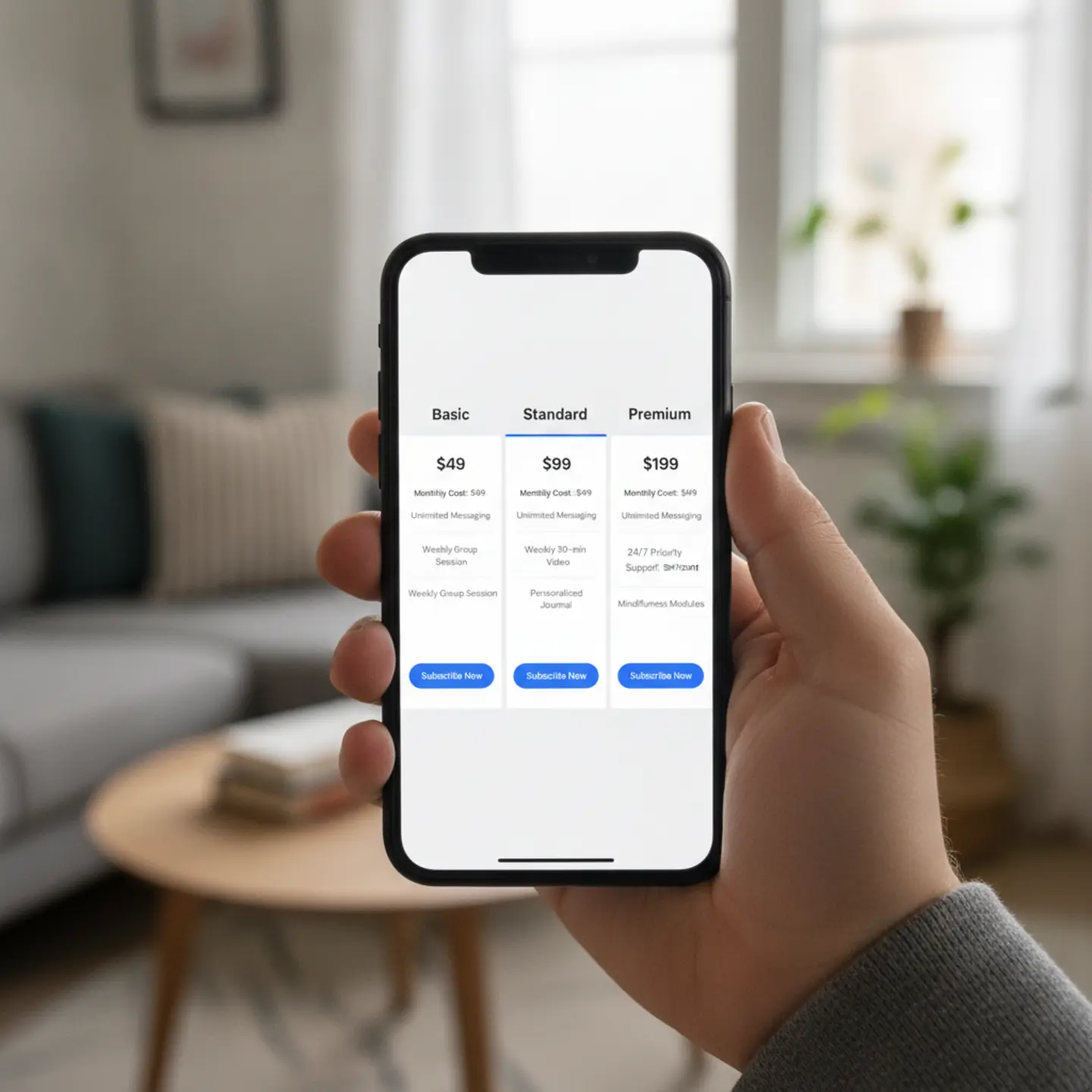
Understanding Pricing and Costs for Online Addiction Counselling
Cost is one of the first things men ask about when exploring online counselling — and rightfully so. Recovery already puts financial pressure on you, and the last thing you need is a surprise bill. Here’s how the pricing landscape actually breaks down in 2026.
| Tier | What’s Included | Monthly Cost | Best For |
|---|---|---|---|
| Entry-Level | Peer support groups, digital tools, educational content | $30–$100 | Supplemental community support |
| Mid-Range | 1–4 individual therapy sessions + unlimited messaging | $250–$600 | Consistent weekly individual therapy |
| Premium | MAT coordination, psychiatry, intensive clinical support | $500–$1,500+ | Complex needs, medication management |
| Per-Session | Single sessions, no subscription required | $80–$200/session | Flexibility, but costlier long-term |
For most men in early recovery, the mid-range subscription model offers the best value — predictable monthly costs, consistent access to a licensed therapist, and messaging support between sessions. Per-session pricing feels flexible, but weekly sessions over six months can run $1,920–$4,800 out of pocket, compared to $1,500–$3,600 for a subscription covering the same period.
Most major insurance plans, Texas Medicaid (STAR), and TRICARE now cover telehealth addiction counselling with in-network providers. Sliding-scale options and state-funded programs through SAMHSA and Texas HHSC also exist for eligible individuals — contact the SAMHSA National Helpline (1-800-662-HELP) to explore what’s available to you. Watch for hidden costs: cancellation fees, psychiatric evaluation add-ons ($150–$400 per session), and medication management charges are frequently excluded from base subscriptions.
Maximize Your Insurance Coverage
Before enrolling in any platform, contact your insurance provider to confirm coverage for telehealth addiction counselling. Ask about in-network providers, copays, deductibles, and the number of covered sessions. If you’re on Texas Medicaid (STAR) or TRICARE, verify that your chosen platform and therapist are in-network to minimize out-of-pocket costs.
Licensing and Regulatory Requirements for Texas Telehealth Counsellors
Before you hand over your story to someone online, you need to know they’re qualified to hold it. In Texas, addiction counsellors practicing via telehealth must hold an active state license — and verifying that license takes less than five minutes using free public tools.
The primary license for substance use disorder treatment is the Licensed Chemical Dependency Counsellor (LCDC), issued by the Texas Department of State Health Services (DSHS). Licensed Professional Counsellors (LPC), Licensed Clinical Social Workers (LCSW), and Licensed Marriage and Family Therapists (LMFT) can also treat addiction within their scope of practice. Each board maintains a free public license search — confirm the status reads “Active” and check for any disciplinary history before your first session.
Texas is part of the Counseling Compact, which allows LPCs to practice telehealth across participating states without separate licensure in each one. For medication-assisted treatment, note that current DEA rules generally require an initial in-person medical evaluation before a controlled substance like buprenorphine can be prescribed via telehealth — though rules continue to evolve. Your counsellor must be licensed in the state where you are physically located during the session, full stop.
Red Flags to Watch For
Avoid platforms that offer “AI-only” counselling, employ unlicensed “coaches” marketed as therapists, or lack clear HIPAA compliance statements. Your counsellor must be a state-licensed professional (LCDC, LPC, LCSW, or LMFT) licensed in Texas. Always verify credentials through the appropriate Texas licensing board before committing.
Exploring Recovery Options for a Man You Love?
Figuring out the right combination of professional counselling and structured housing can feel overwhelming. Drew’s Sober Living works directly with families navigating these decisions — we’re here to answer your questions honestly, without pressure.
Top 5 Online Addiction Counselling Platforms for 2026: Compared and Reviewed
Each platform below was evaluated on addiction specialization, reputation in recovery communities, pricing, insurance acceptance, and what makes it a strong fit for men in early recovery. None of these platforms replace the structure and brotherhood of sober living — but paired with it, they provide the professional clinical support that makes the difference between white-knuckling it and actually healing.
1. Monument: Alcohol Recovery with Integrated MAT
Monument is exclusively focused on alcohol use disorder (AUD), which makes it one of the most specialized options available. It combines online therapy, physician support for medication-assisted treatment (naltrexone, acamprosate), and peer community groups in a single platform. Pricing runs $15–$45/month for physician support and groups, scaling to $149–$249/month with therapy add-ons. It accepts some insurance — verify Texas Medicaid coverage before enrolling. Monument is consistently praised in recovery communities for its non-judgmental, accessible approach. Best for: Men primarily dealing with alcohol use disorder who want integrated MAT and peer support.
2. Workit Health: Comprehensive Virtual MAT for Opioid and Alcohol Use Disorder
Workit Health specializes in opioid use disorder (OUD) and alcohol use disorder with a full virtual MAT model — buprenorphine/naloxone for OUD, naltrexone for AUD — combined with weekly therapy and group meetings. Pricing typically runs $200–$300/month, including prescriber visits, therapy, and groups. It accepts most major insurance and some Texas Medicaid. Recovery communities consistently commend Workit for its discreet, flexible approach. Best for: Men with opioid or alcohol use disorder seeking medication-assisted treatment integrated with therapy.
3. Amwell: Broad Telehealth Network with Addiction Specialists
Amwell is a general telehealth platform with a large network of licensed therapists, including addiction specialists. It’s not exclusively addiction-focused, but it offers reliable access to qualified professionals and accepts many major insurance plans, Texas Medicaid (STAR), and TRICARE. Per-session pricing runs $99–$139. Some users note less therapist continuity compared to dedicated subscription models. Best for: Men with insurance coverage who want flexibility to choose from a large network of addiction specialists without committing to a subscription.
4. Hazelden Betty Ford (RecoveryGo): Clinical Excellence and Evidence-Based Programming
RecoveryGo is the virtual extension of the Hazelden Betty Ford Foundation — one of the most respected names in addiction treatment. It offers virtual Intensive Outpatient Programs (IOP), Outpatient Programs (OP), and individual therapy. Individual therapy sessions run $150–$250+; virtual IOP/OP programs represent a more significant investment. It accepts many commercial insurance plans. If clinical pedigree and structured programming matter to you, this is the gold standard. Best for: Men seeking the credibility and structured programming of a nationally recognized treatment organization.
5. Local Texas-Licensed Therapists via Psychology Today: Personalized, Geo-Aware Care
Psychology Today’s therapist directory lets you filter directly for Texas-licensed addiction specialists offering telehealth — and verify their licensure before you ever book a session. Per-session pricing runs $80–$200, with many therapists offering sliding-scale fees. Insurance acceptance varies by individual therapist; many accept major plans and some accept Medicaid (STAR) with prior authorization. Best for: Men who want to choose a specific Texas-licensed therapist and build a strong therapeutic relationship over time.
| Platform | Specialization | Pricing | Insurance | Best For |
|---|---|---|---|---|
| Monument | Alcohol (AUD) only | $15–$249/mo | Some; verify Medicaid | AUD + MAT + peer community |
| Workit Health | OUD & AUD with MAT | $200–$300/mo | Most major + some Medicaid | Virtual MAT for opioid/alcohol |
| Amwell | General + addiction specialists | $99–$139/session | Major plans, STAR, TRICARE | Insured, flexible network access |
| Hazelden Betty Ford | Full addiction continuum | $150–$250+/session; IOP varies | Many commercial plans | Clinical pedigree, structured IOP |
| Psychology Today (TX therapists) | Addiction specialists, varies | $80–$200/session | Varies; sliding scale available | Personalized TX-licensed therapist |
Here’s something worth saying directly: no app or platform is going to do the work for you. What these platforms do is give you a qualified professional in your corner — someone who can help you understand why you use, what triggers you, and how to build a life that doesn’t need an escape hatch. That’s different from structure and accountability, and you need both.
If you’re in sober living or thinking about it, virtual therapy isn’t a substitute for the brotherhood and daily testing — it’s what goes alongside it. The combination is what actually moves the needle.
How Online Counselling Integrates with Structured Sober Living
Sober living provides what no app can replicate: daily breathalyzer testing, drug testing every two weeks, peer accountability, a strongly encouraged 30 hour work week, and a house full of men who will notice if you’re slipping. That structure is the foundation. Online counselling is what gets built on top of it.
Virtual therapy fits naturally around a sober living schedule. Sessions can happen before work, during a lunch break, or in the evening after house meetings — without transportation, without scheduling conflicts, and without the stigma of walking into a clinic. For men in early recovery, this flexibility matters. Research consistently shows that men in structured housing who also engage in outpatient therapy demonstrate lower relapse rates and higher sustained abstinence compared to those in counselling alone or no structured housing at all.
The two work together because they address different things. Sober living keeps you accountable and connected to a community of men doing the same work. Online therapy helps you understand yourself — processing what drove the addiction, developing coping skills for triggers, and building the internal foundation that makes sobriety something you want, not just something you’re required to maintain. To understand more about how this compares to inpatient versus outpatient rehab as part of a full recovery path, that context is worth having.
Key Statistics: The Case for Professional Online Addiction Counselling
The data behind online addiction counselling isn’t just encouraging — it makes a clear case for why accessible professional support is one of the most important investments a man in recovery can make.
An estimated 1.4 million adult Texans needed treatment for illicit drug or alcohol use in 2023 — and only a fraction received it. The most cited barriers: cost, lack of access, stigma, and transportation. Online platforms directly address every one of those barriers. Meta-analyses from 2022 through 2025 consistently confirm that telehealth-delivered counselling is as effective as in-person therapy for reducing substance use and improving treatment retention. The evidence is there. The access is there. The question is whether you take the step.
Why Drew’s Sober Living Is the Right Choice for South Texas Men in Recovery
Online counselling gives you a licensed professional in your corner. Drew’s Sober Living gives you the daily-tested framework that keeps you in the game long enough for that counselling to work. Those two things together are more powerful than either one alone — and that’s the combination we’re built to support.
Drew’s Sober Living has four operating houses, 38 beds in San Antonio and New Braunfels — Chittim House, Evergreen House, and Chapel Bend — with 27 beds total and a perfect 5.0-star Google rating across 91 verified reviews. Founded in 2023 by Drew, who built every house policy from his own recovery experience, DSL runs the same non-negotiable standard across every house: daily breathalyzer testing, drug testing every two weeks, a strongly encouraged 30 hour work week, daily 12-step meeting attendance, and financial literacy training. These aren’t suggestions. They’re the structure that makes recovery stick.
The results reflect it: 83% of past residents moved out sober. That number comes from combining structured accountability with genuine brotherhood — men who show up for each other, call each other out when something’s off, and help the new guy find a meeting. DSL coordinates seamlessly with online counselling platforms, so residents can integrate virtual therapy into their daily schedule without sacrificing the peer accountability and structure that prevent relapse. If you want to understand what the full DSL program looks like day to day, that’s the place to start.
Schedule a call with Drew’s Sober Living today to discuss how our structured program, combined with professional online counselling, can support your recovery journey in San Antonio or New Braunfels.
Frequently Asked Questions
Is online addiction counselling as effective as in-person therapy?
Yes. Peer-reviewed studies and meta-analyses from 2022 through 2025 consistently show that online addiction counselling is as effective as in-person therapy for many individuals. Outcomes for reducing substance use, improving mental health, and increasing treatment retention are comparable — particularly for individual and group therapy. The flexibility and accessibility of virtual care often contribute to better engagement and consistency over time, which matters enormously in early recovery.
How can I verify my online addiction counsellor is actually licensed in Texas?
Always verify your counsellor’s license through the appropriate Texas licensing board before your first session. For Licensed Chemical Dependency Counsellors (LCDC), search the Texas Department of State Health Services (DSHS) website. For Licensed Professional Counsellors (LPC), use the Texas State Board of Examiners of Professional Counsellors website. Each board has a free, public “License Search” tool — confirm the status reads “Active” and check for any disciplinary actions. Your counsellor must be licensed in the state where you are physically located during the session.
Can online addiction counselling help with medication-assisted treatment (MAT)?
Yes. Platforms like Monument and Workit Health specialize in integrating MAT with counselling for alcohol use disorder and opioid use disorder. They can connect you with physicians who can virtually prescribe medications like buprenorphine/naloxone (for OUD) or naltrexone (for AUD), provided you meet clinical criteria. Note that current DEA rules typically require an initial in-person medical evaluation before a controlled substance can be prescribed via telehealth — confirm this requirement with your chosen platform before enrolling.
What are the biggest differences between a general online therapy platform and an addiction-specific one?
Addiction-specific platforms are built around the unique challenges of recovery — specialized therapists trained in substance use disorder, integrated MAT coordination, peer support groups focused on addiction, and content specific to triggers and relapse prevention. General therapy platforms may have therapists who treat addiction, but their overall structure and resources are not designed specifically for this journey. If addiction is your primary focus, a specialized platform typically offers more relevant tools and deeper clinical expertise.
Why should I choose Drew’s Sober Living over other recovery programs?
Drew’s Sober Living combines structured daily accountability — breathalyzer testing, drug testing every two weeks, a 30-hour work requirement, 12-step meetings, and financial literacy training — with genuine brotherhood and a proven track record. We carry a perfect 5.0-star Google rating across 91 verified reviews, and 83% of past residents moved out sober. DSL coordinates seamlessly with online counselling platforms, so you get professional clinical support alongside the peer accountability and daily structure that prevent relapse. Ready to start? Visit Drew’s Sober Living to learn more and schedule your preliminary call.
Recovery doesn’t happen in a single moment of clarity. It happens in the accumulation of small, consistent choices — showing up to work when you’d rather stay in bed, calling your therapist when something’s eating at you, sitting in a meeting even when you’ve heard the same story a hundred times. Online counselling gives you a professional who helps you understand those choices. Sober living gives you a house full of men making the same ones.
The men who do best in recovery aren’t the ones who found the perfect program. They’re the ones who built a real ecosystem — professional support, daily accountability, and a brotherhood that notices when something’s off. That combination exists. It’s available to you right now.
The next step is yours to take.
Ready to Pair Structured Sober Living with Professional Online Counselling?
You don’t have to choose between accountability and clinical support — Drew’s Sober Living is built to work alongside the online counselling platforms reviewed in this guide. Our structured homes in San Antonio and New Braunfels give you the daily framework that makes therapy stick.
Drew’s Sober Living · Men’s Recovery Residences in San Antonio & New Braunfels, TX
Drew’s Sober Living is a structured sober living residence and does not provide clinical treatment, detox, or medical services. This article is for informational purposes only and does not constitute medical advice. Program availability, pricing, and admission requirements are subject to change, and recovery outcomes vary by individual. Please contact us directly for current information.