Key Takeaways
- NA is a spiritually-grounded 12-step program founded in 1953; SMART Recovery is a secular, CBT-based program founded in 1994 — both are evidence-based and free to attend.
- San Antonio has 150+ NA meetings per week versus 5–10 SMART Recovery meetings, making NA significantly more accessible for in-person participation in South Texas.
- A 2020 Cochrane Review of 27 randomized controlled trials found AA/NA participation led to higher rates of continuous abstinence than other common treatments; SMART Recovery shows comparable outcomes for individuals who actively use its tools.
- If you’re court-ordered to attend mutual aid meetings in Texas, do not assume SMART Recovery will be accepted — always get written approval from your probation officer before relying on it for compliance.
- Trust Drew’s Sober Living for daily-tested, structured men’s recovery in San Antonio and New Braunfels — visit Drew’s Sober Living to learn how structured sober living bridges the gap between treatment and independent life.
SMART Recovery vs. Narcotics Anonymous: Which Program Is Right for Your Recovery?
Both SMART Recovery and Narcotics Anonymous are evidence-based peer support programs that help people achieve long-term sobriety, but they differ fundamentally in philosophy and approach. NA is a 12-step, spiritually-grounded program founded in 1953, while SMART Recovery is a secular, cognitive-behavioral alternative founded in 1994. The best choice depends on your personal beliefs, learning style, and what kind of support structure resonates with you.
Understanding the core differences—from meeting structure to how each program views relapse—will help you make an informed decision about which path aligns with your recovery goals.
Drews Sober Living
Daily Breathalyzer Testing for Every Resident
Core Service Programs:
- Structured Sober Living Homes for men transitioning from treatment to independent, sober living
- Daily Accountability & Drug Testing for residents and families who need consistent, verifiable structure
- Life-Skills & Employment Readiness for men rebuilding work history, finances, and a sober support network
Why Choose Drews Sober Living:
- ✓ Trusted by customers with a perfect 5.0-star Google rating across 91 verified reviews
- ✓ Daily breathalyzer testing for every resident, plus drug testing every two weeks
- ✓ Four operating houses, 38 beds in San Antonio and New Braunfels, Divine House coming soon
- ✓ Live in house managers who are men in long term recovery themselves
- ✓ Founded in 2023 by Drew, who built every house policy from his own recovery
- ✓ 83% of residents who moved out of the community did so sober
- ✓ Strongly encouraged 30 hour work week plus financial literacy and life skills training
Core Philosophy: Spiritual vs. Secular Approaches to Recovery
The single biggest difference between NA and SMART Recovery isn’t the meeting schedule or the literature — it’s the fundamental worldview each program asks you to bring to the table. Narcotics Anonymous is rooted in the 12-step tradition, which views addiction as a spiritual disease requiring a spiritual solution. The program emphasizes surrender, powerlessness over addiction, and reliance on a Higher Power — broadly defined, so it can mean a traditional deity, the group itself, or any force greater than yourself. The 12 steps are a sequential path through admission, amends, and spiritual awakening.
SMART Recovery takes a completely different starting point. Built on cognitive-behavioral therapy (CBT) and rational emotive behavior therapy (REBT), SMART frames addiction as a maladaptive behavior — a learned habit that can be changed through evidence-based tools and self-directed effort. There’s no Higher Power concept, no powerlessness, and no steps. The focus is on self-empowerment and personal responsibility, using structured psychological tools to change the thought patterns that drive addictive behavior.
It’s Normal to Be Unsure Which Program Fits
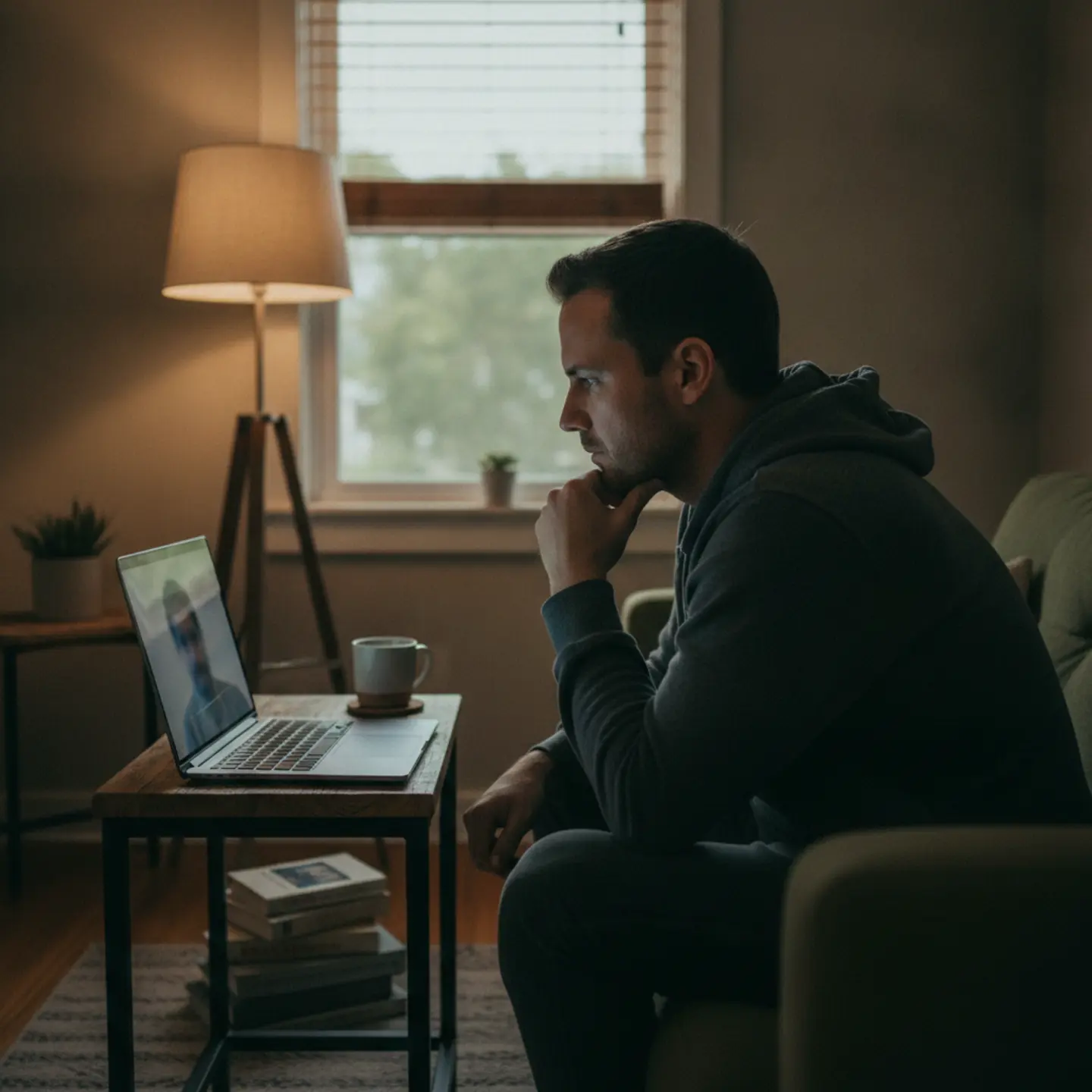
Many men in early recovery feel torn between the spiritual framework of NA and the secular approach of SMART Recovery. Both are legitimate, evidence-based paths. The best program is the one you’ll actually show up to — consistently.
Neither approach is inherently superior. Research consistently shows that personal fit and resonance with a program’s philosophy are among the strongest predictors of engagement — and engagement is what drives outcomes. If the language of surrender and spiritual growth speaks to you, NA may feel like home. If you’re more comfortable with a science-based framework and want to be your own change agent, SMART may be the better fit.
Meeting Structure and What to Expect When You Walk In
Walking into your first meeting — any meeting — takes guts. Knowing what to expect makes it easier. NA meetings typically run 60–90 minutes and follow a recognizable format: readings from NA literature (like “Who Is an Addict?”), personal shares where members offer their “experience, strength, and hope,” and sometimes a topic discussion or step study. There’s a strong tradition of anonymity — what’s shared in the room stays in the room. Newcomers are welcomed, often given a keytag marking their first day, and encouraged to get a sponsor and start reading the Basic Text.
SMART Recovery meetings have a different energy. A certified facilitator guides the group through a structured agenda: check-in, discussion of current challenges, review of SMART tools (like the ABC model for identifying irrational beliefs, or the cost-benefit analysis for weighing using versus abstaining), and action planning for the week ahead. The meeting closes with a check-out. It’s more workshop than fellowship — practical, forward-focused, and tool-oriented. Confidentiality is respected, but the strict anonymity tradition of 12-step isn’t part of SMART’s culture.
Try an Open Meeting Before Committing
Most NA and SMART Recovery meetings welcome newcomers to observe without sharing. Attend one of each type in your area. Pay attention to how you feel in the room, whether the language resonates, and if you can imagine yourself returning next week.
The Sponsor Model vs. The Facilitator Model: How Guidance Works
How you receive support inside each program looks very different. In NA, the sponsor relationship is central. An experienced member — someone who has worked the 12 steps themselves — guides a newcomer through each step in a one-on-one mentorship. This relationship is personal, ongoing, and often becomes one of the most significant connections in a person’s recovery. Working the steps with a sponsor is how change happens in NA; the meeting is where you find community, but the sponsor is where you do the work.
SMART Recovery doesn’t use sponsors. Instead, a trained, certified facilitator leads the meeting and teaches the 4-Point Program: building motivation, coping with urges, managing thoughts and feelings, and living a balanced life. Facilitators complete a structured online training course through SMART Recovery International and are accountable to the program’s guidelines. The key difference is philosophy: in SMART, you are your own change agent. The facilitator equips you with tools; you apply them. There’s no individual mentorship relationship built into the model.
If you’ve had a sponsor before and it clicked — that relationship where someone who’s been where you are picks up the phone at 10 PM — NA’s model is hard to replicate. If you’ve tried the sponsor route and it didn’t land, or if you’d rather build your own toolkit than work through someone else’s experience, SMART’s facilitator model might feel like a better fit.
Neither is wrong. They’re just different ways of getting the same thing done.
NA and SMART Recovery Meeting Availability in San Antonio and New Braunfels
If you’re in South Texas, the practical reality of local availability matters as much as philosophy. NA has a dominant presence in this region. San Antonio alone has more than 150 NA meetings per week — held daily at churches, community centers, clubhouses, and hospitals across the metro area. New Braunfels and Comal County have 20–30 NA meetings. Virtual options are widely available for both cities, adding flexibility for men with work schedules that don’t fit standard meeting times.
SMART Recovery’s local footprint is considerably smaller. San Antonio has approximately 5–10 SMART Recovery meetings; New Braunfels typically has 1–3. If consistent in-person attendance is important to your recovery — and research suggests it should be, especially in early recovery — NA has a clear practical advantage in this area. SMART Recovery’s strength in this region is its robust online platform, which offers meetings globally and around the clock. For men who are comfortable with virtual participation, SMART’s accessibility gap largely disappears.
Court-Ordered Participation Requires Prior Approval
If you’re court-mandated to attend mutual aid meetings, do not assume SMART Recovery will be accepted as equivalent to NA. Always get written approval from your probation officer or the court before relying on SMART Recovery for compliance. Texas courts widely accept NA attendance, but SMART Recovery acceptance remains inconsistent across jurisdictions.
How Each Program Handles Relapse: Shame vs. Learning
What happens when you slip? This is one of the most emotionally loaded questions in recovery, and how each program answers it matters enormously for men who are shame-prone or who’ve experienced judgment in other settings.
In NA, relapse is treated as a serious event that signals a need for renewed commitment to the steps. The program’s general stance is non-judgmental — the message is to come back, pick up a new keytag, and get back to work with your sponsor. That said, the language around “picking up” can carry implicit weight in some groups, and some men report feeling shame about resetting their clean date. The solution NA offers is always the same: return to the steps.
SMART Recovery explicitly reframes relapse as a “lapse” or “learning opportunity” rather than a moral failure. The program treats it as data — what triggered the lapse, what coping strategies weren’t working, what needs to be adjusted. There’s no clean date to reset, no keytag to surrender. For men who carry a heavy load of shame around their addiction history, SMART’s non-stigmatizing approach can lower the barrier to getting back on track after a slip.
Success Rates and What the Research Actually Shows
Both programs have research backing them — though the evidence base for NA is considerably larger, given its 70-year history. The most significant study is a 2020 Cochrane Review of 27 randomized controlled trials, which found that AA/NA participation led to higher rates of continuous abstinence than other common treatments and was at least as effective as professional interventions like CBT. Earlier research by Humphreys and Moos (2007) found that 12-step participation after formal treatment significantly predicted long-term abstinence and reduced healthcare costs.
SMART Recovery’s evidence base is growing. Studies show similar rates of abstinence and improved quality of life for participants who actively use the program’s tools. A comparative review published in the Journal of Clinical Psychology found that for certain populations, both programs produced similar positive outcomes. Direct head-to-head comparisons are still limited, but the emerging picture is that neither program is inherently superior — individual fit matters more than program type.
SAMHSA data consistently shows that 40–60% of individuals in recovery use mutual aid programs, and regular participation is strongly correlated with better long-term outcomes. The strongest predictor of success in either program isn’t the philosophy — it’s active engagement. Attending regularly, using the tools or working the steps, and building community are what move the needle.
| Feature | Narcotics Anonymous (NA) | SMART Recovery |
|---|---|---|
| Founded | 1953 | 1994 |
| Philosophy | Spiritual; 12-step tradition | Secular; CBT/REBT-based |
| Higher Power | Yes — broadly defined | No — focus on self-empowerment |
| Support Model | Sponsor (one-on-one mentorship) | Certified facilitator (group-led) |
| Relapse View | Return to steps; renew commitment | Learning opportunity; analyze triggers |
| SA Meetings/Week | 150+ | 5–10 |
| Annual Cost | $50–$200 (donations + literature) | $10–$50 (mostly free online) |
| Texas Court Acceptance | Widely accepted | Inconsistent — requires prior approval |
Cost, Accessibility, and What You’ll Actually Pay
Here’s the good news: both programs are essentially free. NA meetings operate on a voluntary donation model — no one is turned away for inability to contribute. SMART Recovery meetings are the same. Neither program is covered by insurance or Medicaid, but the cost is negligible compared to professional clinical services.
For an active NA participant, annual costs typically run $50–$200, covering small donations and optional literature like the Basic Text ($12–$15) or step workbooks. SMART Recovery participants spend even less — $10–$50 annually, since many worksheets and tools are available free online. Compare that to outpatient therapy in San Antonio, which runs $100–$250 per session without insurance, or $5,000–$12,000+ annually for consistent professional support. Mutual aid programs offer a level of sustained recovery support that no clinical service can match at that price point.
For men in early recovery dealing with transportation limitations or irregular work schedules, virtual meetings in both programs remove geographic and logistical barriers entirely. Both programs offer free online options accessible around the clock. For a deeper look at the real costs of recovery housing in Texas, the San Antonio recovery housing cost guide breaks down what structured support actually runs month to month.
Figuring Out Your Next Step After Treatment?
Choosing a mutual aid program is one piece of the puzzle. The other is having a structured place to land while you build the foundation. Drew’s works with men coming out of treatment across San Antonio and New Braunfels — and we can talk through what that transition looks like for you.
How Drew’s Sober Living Integrates Both Programs for Residents
Mutual aid programs — whether NA or SMART Recovery — are most effective when paired with a stable, structured environment. That’s the gap Drew’s Sober Living was built to close. The period between leaving treatment and establishing independent life is when relapse risk is highest, and meetings alone, as valuable as they are, can’t provide the daily accountability and structure that early recovery demands.
Drew’s requires daily 12-step meeting attendance as part of its structured recovery program, and residents are encouraged to explore both NA and SMART Recovery to find what resonates. The combination of daily breathalyzer testing, drug testing every two weeks, a strongly encouraged 30 hour work week, financial literacy training, and the brotherhood of other men walking the same path creates conditions that meetings alone cannot replicate. Men in early recovery need both the peer support of a mutual aid community and the daily accountability of a structured home — one reinforces the other.
For men who want to understand the full picture of what transitional housing looks like after treatment, the post on transitional housing after 30-day rehab walks through exactly why that bridge matters and what to look for in a sober living home.
Why Drew’s Sober Living Is the Right Choice for Men in Early Recovery
Drew’s Sober Living holds a perfect 5.0-star Google rating across 91 verified reviews — not because the program is easy, but because it works. Three structured men’s recovery homes across San Antonio and New Braunfels provide 27 beds and the daily accountability that mutual aid programs alone cannot deliver. Every resident is drug-and-alcohol tested every single day, the same standard across every house. That consistency is what makes the difference between a place to sleep and a real foundation for sobriety.
Founded in 2023 by Drew — who built every house policy from his own recovery experience — the program understands the gap between completing treatment and building an independent life. The strongly encouraged 30 hour work week, financial literacy training, and live-in house managers who are themselves men in long-term recovery create an environment where residents aren’t just staying sober; they’re building the skills and habits that make sobriety sustainable. Eighty-three percent of past residents moved out sober. That number reflects what happens when structure, community, and mutual aid work together.
Schedule a call to discuss your recovery plan and find out how Drew’s Sober Living can be the bridge between treatment and the independent life you’re building.
Frequently Asked Questions
Can I attend both SMART Recovery and Narcotics Anonymous meetings simultaneously?
Yes, and many men in recovery do exactly that. Since NA and SMART Recovery offer different philosophies and tools, combining both can provide a more comprehensive support system — the spiritual community and mentorship of NA alongside the practical, tool-based approach of SMART. There is no rule in either program that prevents participation in the other, and some men find that the two approaches complement each other well.
Will Texas courts accept SMART Recovery attendance the same way they accept NA?
Not universally. NA attendance is widely accepted by Texas courts, probation departments, and drug courts due to its long-standing presence and established structure. SMART Recovery acceptance is growing but remains inconsistent — some progressive courts or individual probation officers may accept it, but many will not. If you’re court-mandated, always get written approval from your probation officer or the presiding court before relying on SMART Recovery for compliance. Assuming equivalence without prior approval can put your probation at risk.
What happens if I relapse while I’m active in NA versus SMART Recovery?
In NA, you’re encouraged to return to meetings immediately, restart your step work with your sponsor, and pick up a new keytag. The program’s stance is that recovery continues — but some men experience shame around resetting their clean date, depending on the group culture. In SMART Recovery, a relapse is framed as a “lapse” — a learning opportunity rather than a moral failure. The program encourages you to analyze what triggered the lapse, identify what coping strategies need strengthening, and continue your recovery without judgment or a formal reset.
Can SMART Recovery help with addiction to substances other than alcohol?
Yes. SMART Recovery is designed to address any type of addictive behavior — alcohol, opioids, stimulants, cannabis, and even process addictions like gambling. Its tools are grounded in changing thought patterns and behaviors, which are universal across substance types. The program is not substance-specific, which is one reason it’s increasingly recommended by treatment providers as an adjunct to professional care for a wide range of addictions.
What makes Drew’s Sober Living different from just attending NA or SMART Recovery meetings?
Mutual aid meetings provide essential peer support, but they alone can’t bridge the critical gap between treatment and independent life — the period when relapse risk is highest. Drew’s Sober Living combines daily structure (breathalyzer testing every single day, drug testing every two weeks, a strongly encouraged 30 hour work week, financial literacy training) with the brotherhood of other men in recovery and the guidance of live-in house managers who are themselves in long-term recovery. Eighty-three percent of past residents moved out sober, and Drew’s carries a perfect 5.0-star Google rating across 91 verified reviews — because structure and community together produce outcomes that meetings alone cannot. Visit Drew’s Sober Living to learn more about how structured sober living accelerates your path to independence.
The question isn’t which program is better. The question is which one you’ll actually show up to — next week, and the week after that, and six months from now when the novelty has worn off and staying sober is just the daily work of being a man who’s building something real.
Some men walk into an NA meeting and feel it immediately — the room, the stories, the sense that these people get it. Others sit in a SMART meeting and feel the relief of a framework that doesn’t ask them to surrender anything, just to think more clearly and act more deliberately. Both of those experiences are valid. Both of those paths lead somewhere worth going.
The bridge between treatment and independent life isn’t a program. It’s a decision you make every day to show up — to a meeting, to a job, to a house full of men who are doing the same thing you are. That’s what recovery actually looks like.
Ready to Find the Right Recovery Support in San Antonio or New Braunfels?
Whether you’re coming out of treatment or looking for a more structured environment to support your mutual aid participation, Drew’s Sober Living is built for exactly this moment. Three houses, 27 beds, daily accountability, and a brotherhood that shows up — reach out and let’s talk about what the next step looks like for you.
Drew’s Sober Living · Men’s Recovery Residences in San Antonio & New Braunfels, TX
*Drew’s Sober Living is a structured sober living residence and does not provide clinical treatment, detox, or medical services. This article is for informational purposes only and does not constitute medical advice. Program availability, pricing, and admission requirements are subject to change, and recovery outcomes vary by individual. Please contact us directly for current information.