You’ve just completed inpatient treatment in San Antonio. You’ve done the hard work, and now you’re standing at a fork in the road that nobody fully prepared you for: where do you go next, and what kind of room do you sleep in when you get there? It sounds like a small detail. It isn’t. The choice between a private room and a shared room in a sober living home shapes your daily routine, your financial reality, your peer connections, and — in ways that are easy to underestimate — your early recovery experience. This guide exists to help you make that choice with clarity and confidence, not confusion.
Sober living is not just a place to sleep. It’s the bridge between the structure of inpatient treatment and the full independence of life on your own — and that bridge needs to be solid. The environment you live in during early recovery directly shapes your daily habits, your access to peer support, your financial stress level, and the accountability structures that keep you on track when things get hard.
San Antonio’s recovery housing market has grown meaningfully in recent years, which is good news: it means you have real options. But more options also mean more decisions, and without a clear framework for thinking through those decisions, the whole process can feel overwhelming. That’s especially true when you’re already navigating the emotional weight of early recovery.
Key Takeaways
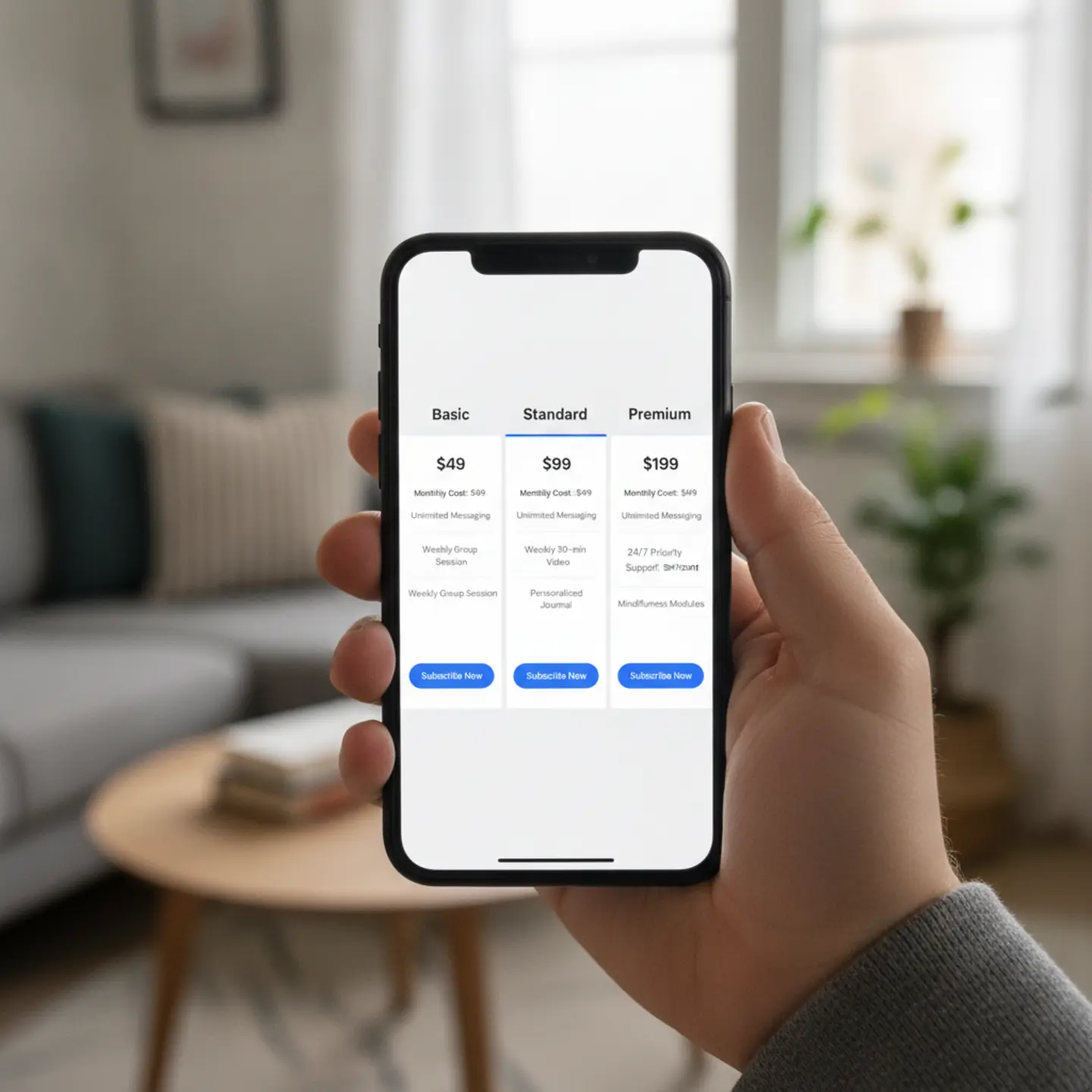
- Shared rooms in San Antonio sober living typically cost $800–$1,100 per month, while private rooms run $1,100–$1,800+ per month — a meaningful difference for men managing finances in early recovery.
- Shared rooms offer natural, daily peer accountability; private rooms require intentional engagement to avoid isolation.
- No published research shows one room type consistently outperforming the other — success depends far more on the quality of the home and your personal commitment to recovery.
- Men with trauma histories, co-occurring mental health disorders, or professional demands may genuinely benefit from the privacy a single-occupancy room provides.
- Financial assistance programs — including Be Well Texas vouchers, HUD-VASH for veterans, and nonprofit scholarships — may help bridge the cost gap for private room options.
- Always verify TROHN or Oxford House accreditation before committing to any sober living home in San Antonio or New Braunfels.
- The right choice is the one that keeps you engaged, accountable, and committed to your recovery — not the one that looks best on paper.
Why Room Type Matters in Your Recovery Journey
There is no universally “right” answer between a private room and a shared room. The right answer depends on your recovery stage, your financial situation, your history with trauma or mental health, your need for peer connection, and your personal temperament. Choosing a structured recovery environment is one of the most consequential decisions you’ll make in your first year of sobriety, and the room type is part of that decision — but only part.
This guide will walk you through each of those factors honestly, so you can make a decision that actually fits your life — not just the one that sounds good in a brochure. For families supporting a man in recovery, understanding these distinctions matters too. If you’re helping a son, partner, or brother navigate this decision, the resources available for families of men in sober living can help you understand what to look for and how to support without overstepping.
Look — I get why you’re asking the question. You just spent 30 or 60 or 90 days in a treatment bed that wasn’t yours, with people you didn’t choose, and now somebody’s telling you the next step is more of the same. That’s a lot to swallow. But here’s the thing nobody told you in treatment: the room you sleep in matters less than the men around you. The guys who do best in sober living aren’t the ones with the nicest setup. They’re the ones who let the brotherhood in — whether that brotherhood is two feet from their bed or down the hall.
Understanding Shared Room Sober Living in San Antonio
Shared room sober living is the most common accommodation model in San Antonio — and for good reason. In a shared room setup, two to four residents occupy a single bedroom, with access to shared bathrooms, a common kitchen, living areas, and laundry facilities. The monthly cost is lower, the peer connection is immediate, and the accountability structure is built into the fabric of daily life in a way that’s hard to replicate when you’re living alone.
In the San Antonio market, shared room sober living typically runs $800–$1,100 per month (approximately $200–$275 per week). That pricing is notably below the urban Texas average for accountability-based programs — and significantly below the national average for shared recovery housing, which runs $450–$800 per month at the lower end nationally. San Antonio’s generally lower cost of living works in your favor here.
Most reputable shared room homes include utilities, basic furnishings (a bed, dresser, and closet space), and access to all common areas in the quoted monthly rate. What you’re paying for isn’t luxury — it’s a clean, safe, functional environment with consistent structure, clear expectations, and a community of men who are working toward the same goal you are.
The Peer Support Advantage in Shared Living
The single greatest advantage of shared room living is something that’s easy to overlook when you’re thinking about privacy and personal space: you are never alone. In early recovery, that matters more than most people realize until they’ve experienced the alternative.
When you share a room with other men in recovery, you’re surrounded by people who understand what you’re going through because they’re going through it too. Your roommates model recovery behaviors — getting up for work, attending meetings, managing stress without substances — every single day. That social modeling is a powerful recovery tool. Research consistently emphasizes that peer proximity and structured social support are among the most significant factors in sustained sobriety for men in transitional housing.
The informal moments matter too. Conversations in the kitchen, watching a game in the living room, driving to a meeting together — these small interactions build the social recovery capital that protects against relapse. Isolation is one of the most dangerous conditions for a man in early recovery. Shared living is structurally designed to prevent it.
Managing Common Friction Points in Shared Rooms
Shared living isn’t without its friction points, and it’s worth being honest about them. Sleep disruption from different schedules, noise concerns, disagreements over shared spaces, and the occasional personality clash are real. The question isn’t whether these things happen — it’s how well the home manages them when they do.
Reputable homes address these issues proactively through clear house rules (quiet hours, guest policies, chore schedules), active management, and structured mediation when conflicts arise. Theft concerns — a common worry for men sharing a room — are minimized through secure personal storage and consistent enforcement of house policies. And the most important friction point of all — what happens if a roommate relapses — is handled with clear, non-negotiable policy: relapsed residents are removed from the home to protect the sobriety of everyone else. This isn’t punitive; it’s a structural protection for the community.
The quality of house management matters enormously here. A well-run shared room home handles friction before it becomes a crisis. A poorly run one lets problems fester. That’s why verifying accreditation and management quality — not just pricing — is essential before you commit.
Exploring Private Room Sober Living Options
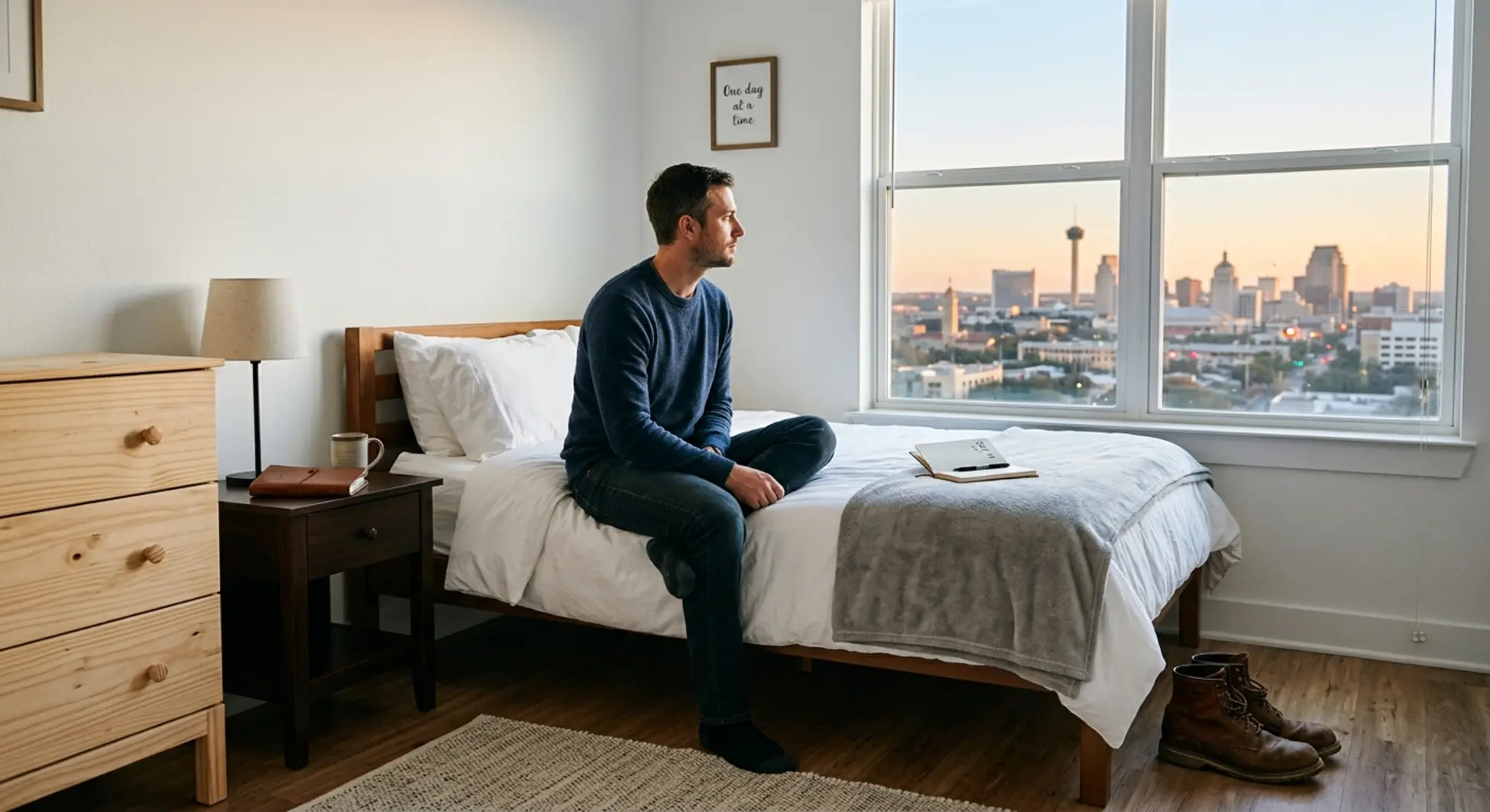
A private room in sober living means exactly what it sounds like: a bedroom intended for single occupancy. You have your own space to sleep, reflect, store your belongings, and decompress after a long day — without navigating a roommate’s schedule or energy. In the San Antonio market, private room options typically run $1,100–$1,800+ per month, depending on the home’s amenities, location, and overall quality.
That price difference — roughly 25–40% more than a shared room — reflects several factors: the lower occupancy density means fewer residents sharing costs, private rooms may include more personal amenities (potentially an en-suite bathroom, more extensive furnishings, dedicated storage), and the overall living experience is designed to offer more personal control. For men who genuinely need that space, it’s not a luxury — it’s a clinical necessity.
It’s also important to be clear about what private room living is not: it is not isolation. Reputable sober living homes offering private accommodations still operate with the same core structure as any well-run recovery home — house meetings, communal meals, shared common areas, peer engagement activities, and consistent accountability measures. The private room is where you sleep and recharge. The recovery work still happens in community.
Who Benefits Most from Private Room Living
Private room sober living is not the right fit for everyone, but for certain men, it’s genuinely the better choice. The clearest candidates include men with PTSD or significant trauma histories who struggle with shared sleeping spaces — the hypervigilance that comes with trauma can make sharing a room with near-strangers genuinely destabilizing, not just uncomfortable. Individuals with co-occurring anxiety, depression, or other mental health conditions that require personal space for self-regulation, grounding exercises, or simply the ability to have a bad moment without an audience also benefit. Men in later stages of recovery (six months or more of sobriety) who are ready for more independence while still benefiting from the structure and accountability of a managed home are another fit. So are professionals or students who need focused, uninterrupted time for work, study, or career development — men who are rebuilding their professional lives and need an environment that supports that rebuilding.
If you’re in early recovery and none of these profiles fit you, a shared room is likely the stronger choice — both financially and for the peer support it provides. But if you recognize yourself in any of the above, the extra cost of a private room may be a genuinely worthwhile investment in your stability.
Maintaining Community in Private Room Homes
The risk with private room living is real: if you’re not intentional about engaging with the community around you, privacy can quietly become withdrawal. Withdrawal from peers, from accountability, from the daily friction that actually builds recovery skills — that’s a path toward relapse, not away from it.
Well-managed homes with private rooms address this by scheduling regular house meetings, group activities, shared meals, and community-building events that all residents are expected to participate in. The expectation isn’t that you live in your room — it’s that your room is your private retreat within a larger community you’re actively part of. The quality of the home’s programming and management matters more than whether you have a private room or a shared one when it comes to building genuine peer connection.
Cost Comparison: What You’ll Actually Pay
Let’s talk numbers directly, because financial stress is one of the most common relapse triggers — and going into a sober living arrangement without a clear picture of the true cost is a setup for that stress. Understanding sober living costs in Texas means looking beyond the monthly headline rate to understand what you’re actually committing to.
Shared rooms in San Antonio: $800–$1,100 per month (approximately $200–$275 per week). Most reputable homes include utilities, basic furnishings, and access to all common areas in this rate.
Private rooms in San Antonio: $1,100–$1,800+ per month, depending on amenities, location, and overall home quality.
Hidden costs to budget for: Application fees ($0–$100), security deposits ($100–$500), drug testing fees ($20–$100 per test, depending on frequency and type), and move-in fees. At Drew’s, the move-in fee is $100 — and it’s not a refundable deposit, it covers your first two weeks. These costs are real and should be factored into your planning from day one.
Financial Assistance Programs Available in Texas
If the cost of a private room feels out of reach, or even if a shared room is a stretch, there are real assistance programs worth exploring before you rule anything out. Be Well Texas vouchers provide HHSC-subsidized support for young adults in recovery, with age-dependent eligibility — these can significantly offset monthly costs for qualifying individuals. HUD-VASH (Housing and Urban Development-Veterans Affairs Supportive Housing) offers vouchers specifically for veterans that help cover housing costs. San Antonio has over 156,000 veterans in Bexar County — this program is highly relevant to that population. Nonprofit assistance programs like The Bridge Program and Operation Homefront offer move-in cost assistance and scholarships for men in recovery. Some sober living homes also partner with treatment centers to offer sliding-scale fees and scholarship beds at reduced rates — always ask directly, because many providers don’t advertise this prominently. Medicaid may cover services if the home is integrated with ongoing treatment programming.
Calculating Your True 6-Month and 12-Month Costs
Here’s what the numbers actually look like when you extend the timeline — because most men benefit from staying in sober living for six months to a year, and it’s important to plan for that reality. A 6-month shared room stay runs $4,800–$6,600 (plus an estimated $200–$300 in additional fees). A 6-month private room stay runs $6,600–$10,800 (plus $200–$300 in fees). A 12-month shared room stay runs $9,600–$13,200 (plus $400–$600 in fees). A 12-month private room stay runs $13,200–$21,600 (plus $400–$600 in fees).
Those numbers are meaningful. But they need to be understood in context — which brings us to the most important cost comparison of all.
Why Sober Living Costs Less Than You Think
A 6-month shared room stay in San Antonio costs roughly $5,000–$6,600. Compare that to a single 30-day inpatient treatment episode, which often runs $10,000–$30,000. Add potential legal fees from relapse-related charges, lost employment income, or emergency room visits — and the math becomes undeniable. Sober living isn’t an expense. It’s an investment in preventing far more costly outcomes. The question isn’t whether you can afford sober living. It’s whether you can afford not to have it.
Want to Talk Through Pricing and Payment Options?
Understanding the true cost of your recovery housing is essential for planning. If you’d like to discuss pricing, payment plans, or financial assistance options available in San Antonio, a direct conversation can answer those questions clearly and without pressure.
San Antonio’s Sober Living Market: Supply, Demand, and What’s Available Now
San Antonio is growing — fast. The city’s population is projected to reach approximately 2.525 million in 2026, with an annual growth rate of around 1.36%. That growth drives demand across every housing category, including recovery housing. And the need is significant: an estimated 6% of Bexar County adults have a substance use disorder, with the county’s drug overdose mortality rate running approximately 18 per 100,000 people. Methamphetamine and synthetic opioids are driving a meaningful share of those deaths.
The current inventory of sober living homes in the area includes Drew’s Sober Living, which operates three homes specifically for men across San Antonio and New Braunfels — Chittim House in North San Antonio, Evergreen House in Central San Antonio, and Chapel Bend in New Braunfels. Eudaimonia Homes has 11 locations in San Antonio. But even with these options, the evidence suggests the market is undersupplied. There is, as one recovery housing analysis put it, a “large gap between people who need recovery support and the limited housing available after treatment.” That gap is particularly acute for men’s-specific housing.
For men seeking men’s sober living homes in the San Antonio area, this supply-demand imbalance has a practical implication: don’t wait until you’re being discharged from treatment to start your search. Start early.
Why Demand for Men’s Sober Living is Growing in San Antonio
Several factors are driving increased demand for men’s recovery housing in the San Antonio area specifically. Bexar County is home to over 156,000 veterans, many of whom are navigating substance use disorders, PTSD, and the complex intersection of both — the demand for men’s-specific, veteran-friendly recovery housing is significant and growing. Court-ordered recovery programs in San Antonio’s criminal justice system regularly refer men to structured sober living as an alternative to incarceration or as a condition of probation, creating consistent ongoing demand for available beds. Increasing methamphetamine and synthetic opioid use in the region is creating more men who need post-treatment transitional housing — and who often need it quickly after discharge. And the transition gap — the period between inpatient treatment discharge and stable independent living — is well-recognized as a high-risk window for relapse, driving more men and families to seek sober living proactively.
Availability and Waitlists: What to Expect
Given the supply-demand dynamics described above, popular homes — especially those with strong reputations and TROHN accreditation — may have waitlists. Shared rooms typically have higher availability due to greater occupancy density, while private rooms may have longer waits or require advance booking.
New Braunfels, which has grown from approximately 57,000 residents in 2010 to an estimated 117,000 in 2024, is experiencing its own surge in housing demand — including recovery housing. Drew’s Sober Living’s presence in New Braunfels through Chapel Bend reflects a deliberate effort to serve that growing community.
The practical advice: contact multiple providers early in your recovery planning. Ask about current availability, expected waitlist timelines, and what the intake process looks like. The application process at reputable homes is straightforward, but it takes time — time you may not have if you wait until the last week of inpatient treatment.
Regulatory Standards and How to Verify Legitimacy
Here’s something that surprises many people: Texas does not license sober living homes the way it licenses treatment facilities. There is no state-issued license required to open and operate a recovery residence. This means the burden of verifying quality falls largely on the consumer — on you, or on your family. Understanding what legitimate oversight looks like is essential before you hand over a deposit.
The gold standard for quality assurance is NARR (National Alliance for Recovery Residences) certification, administered in Texas through TROHN (Texas Recovery Oriented Housing Network). NARR certification levels range from Level I (peer-run, democratic operation) through Level IV (service-intensive with clinical supervision). Homes earn certification by meeting NARR standards across six domains, verified through document review and site inspections. For accredited sober living homes, this certification is a meaningful signal of quality — not a guarantee, but a strong indicator.
Texas House Bill 299 (2023) added regulatory weight to this framework by requiring homes that receive state funding to be accredited by TROHN or chartered by Oxford House. This doesn’t cover all sober living homes — only those participating in state-funded programs — but it establishes a clear quality standard for that segment of the market.
How to Verify a Home’s Legitimacy in San Antonio
Before committing to any sober living home, run through this verification checklist. Check TROHN certification via the NARR directory or TROHN’s official website. Verify Oxford House charter status via their official locator tool. Ask for proof of general liability insurance (minimum $1 million coverage is the recommended standard). Request clear, written house policies — rules, expectations, relapse policy, and fee structure should all be documented. Check online reviews and ask for references from past residents or treatment providers. Ask who manages the home day-to-day and what their qualifications and experience are.
Legitimate homes welcome these questions. They operate with transparency because they have nothing to hide. If a home is evasive, defensive, or unable to provide documentation, that’s a significant red flag.
What to Do If You Have a Problem
If you experience problems at a sober living home after moving in, you have recourse options. File complaints with TROHN for certification standard violations. Contact Texas HHSC if the home receives state funding. For discrimination based on disability status — and recovery from addiction is a protected disability under the Fair Housing Act — file a complaint with HUD. For deceptive business practices, Texas Law Help and local attorneys can advise on DTPA (Deceptive Trade Practices Act) options. You have rights, and legitimate providers know and respect them.
Signs a Sober Living Home Isn’t Legitimate
Avoid homes that lack TROHN or Oxford House accreditation, cannot provide proof of insurance, have no written house policies, refuse to answer basic questions about management or ownership, or have consistently negative reviews from past residents. Be especially wary of homes that pressure you to sign or pay immediately without giving you time to review policies. Trust your instincts — if something feels off during your visit or initial call, keep looking. The right home will never need to pressure you.
Private vs Shared Room: Side-by-Side Comparison
Now that you understand both options in depth, let’s put them side by side on the factors that matter most. This isn’t about declaring a winner — it’s about helping you see clearly which option aligns with your specific situation.
| Factor | Shared Room | Private Room |
|---|---|---|
| Monthly Cost | $800–$1,100/month | $1,100–$1,800+/month |
| Peer Support | Natural, daily, built-in | Requires intentional engagement |
| Privacy | Minimal — shared sleeping space | Significant — dedicated personal space |
| Accountability Structure | Equivalent in reputable homes | Equivalent in reputable homes |
| Isolation Risk | Low — constant peer proximity | Moderate — requires active participation |
| Best For | Early recovery, limited budget, men who thrive on connection | Trauma history, co-occurring disorders, professionals, later recovery |
| Recovery Outcomes | Dependent on program quality and individual commitment | Dependent on program quality and individual commitment |
Decision Matrix: Which Option Fits Your Situation?
Choose a shared room if: You’re on a tight budget, you thrive on peer connection and daily social interaction, you’re transitioning directly from inpatient treatment and need immediate community, or you want maximum built-in accountability during the most vulnerable phase of early recovery.
Choose a private room if: You have a trauma history or PTSD that makes shared sleeping spaces genuinely difficult, you’re managing co-occurring mental health conditions that require personal space for self-regulation, you’re in a later stage of recovery and ready for more independence, or you have professional or academic demands that require focused, uninterrupted time.
Consider a hybrid approach: Some homes — including those with multiple houses like Chittim House and Chapel Bend — allow residents to start in a shared room and transition to a private room as they progress in recovery and financial stability. This graduated approach can be the best of both worlds.
Your Recovery Stage Should Guide Your Choice
Men in early recovery (first 30–90 days) often benefit most from shared rooms and maximum peer support — the constant presence of others in recovery provides a safety net during the highest-risk period. Men in later recovery (six months or more of sobriety) may thrive with private rooms and more independence, using that space to rebuild professional life and personal identity. There’s no shame in changing your mind — many homes allow transitions as your needs evolve. Recovery is not a straight line, and your housing doesn’t have to be either.
Questions to Ask Before Choosing a Sober Living Home
Armed with the right questions, you can evaluate any sober living home with confidence. When you speak directly with a sober living provider, the questions below will tell you the most about whether a home is right for you. Ask about TROHN or Oxford House accreditation status and request proof — a legitimate home will have documentation ready. Ask about house rules, how they’re enforced, and what specifically happens if someone relapses — the relapse policy tells you a lot about how seriously the home takes its mission. Ask about staff-to-resident ratio and whether 24/7 management is available — active, present management is the difference between a well-run home and a poorly managed one.
Get clarity on what’s included in the monthly cost and what costs extra — get this in writing, because hidden costs are a common source of frustration and financial stress. Ask about average length of stay and whether residents typically transition to independent living successfully. Ask whether you can speak with current or past residents about their experience — reputable homes welcome this, and reluctance to provide references is a warning sign. Ask whether the home offers both shared and private rooms and what the transition process looks like. Ask about peer support activities, house meetings, and community-building programming. Ask how the home handles co-occurring mental health or medical needs. And ask about the specific relapse policy and how the home supports residents who are struggling before a relapse occurs — the best homes have both clear consequences and proactive support systems.
Frequently Asked Questions
Is a private room in sober living worth the extra cost?
The value depends entirely on your individual needs and circumstances. If you have trauma, co-occurring mental health disorders, or professional demands that require focus and personal space, the privacy a single-occupancy room provides may be genuinely essential to your stability — not a luxury, but a clinical necessity. For men who are primarily focused on peer connection, managing finances carefully, and building community in early recovery, a shared room typically provides ample accountability and support at a significantly lower cost. The right choice is the one that keeps you engaged, present, and committed to your recovery — not the one that costs the most or the least.
Will I get less peer support in a private room?
Shared rooms naturally offer more daily proximity to peers — you’re literally in the same room, navigating the same schedule, and building informal connections throughout the day. But reputable sober living homes with private rooms still prioritize communal activities, mandatory house meetings, shared meals, and group programming specifically to ensure that private room residents stay connected to the community. Active participation in those structures is the key variable. The risk with private rooms is not that community is unavailable; it’s that the structure requires you to choose it intentionally, every day.
What happens if my roommate relapses in a shared sober living home?
Reputable homes have clear, non-negotiable relapse policies that typically involve immediate removal of the relapsed resident from the home. This policy exists to protect the sobriety of every other resident — it is not punitive toward the person who relapsed, but it is firm about protecting the community. House managers are responsible for enforcing these policies consistently and fairly, ensuring the environment remains safe and drug-free. This is standard practice in well-managed recovery housing, and it’s one of the most important questions to ask before you move in.
Can I afford a private room in sober living on a limited budget?
Private rooms are generally more expensive — running $1,100–$1,800+ per month in the San Antonio market — but that doesn’t necessarily mean they’re out of reach. Be Well Texas vouchers, HUD-VASH for veterans, and nonprofit scholarship programs through organizations like The Bridge Program and Operation Homefront can meaningfully offset costs. Some San Antonio homes offer sliding-scale fees or partner with treatment centers to provide scholarship beds at reduced rates. Don’t rule out a private room based on the sticker price alone before exploring what assistance may be available to you.
Does room type affect my sobriety success?
Published research specifically comparing sobriety outcomes between private and shared room residents in sober living is limited — and what exists does not clearly show one room type outperforming the other. What research does consistently show is that success in recovery housing is more strongly linked to adherence to program rules, active engagement in peer support, consistent attendance at meetings, and individual commitment to recovery than to any physical characteristic of the room itself. The quality of the home’s management and programming, and your own willingness to show up fully, matter far more than whether you have a roommate.
How do I know if a sober living home in San Antonio is legitimate?
Start by verifying TROHN or Oxford House accreditation through official directories — both organizations maintain searchable databases of certified and chartered homes. Ask the home directly for proof of general liability insurance (the recommended minimum is $1 million in coverage), and request written copies of house policies covering rules, fees, and the relapse policy. Check online reviews and ask whether you can speak with past residents or treatment providers who have referred men to the home. Legitimate homes operate with full transparency. If a home is evasive or dismissive of your due diligence, that tells you everything you need to know.
Here’s what nobody tells you when you’re standing at this fork in the road: the room you sleep in for the next six months is not the variable that decides your recovery. The men around you are. The house manager is. Your willingness to show up — to meetings, to chores, to honest conversations when you don’t want to have them — is.
Pick the room that fits your life. Pick the home where the brotherhood is real. Pick the place where the rules are clear and the manager actually enforces them. That’s the recipe. The bed is just where you sleep at the end of a day you spent doing the actual work.
You already did the hardest part. Now comes the part that builds something.
You’ve Done the Research. Now Take the Next Step.
Whether you’re leaning toward a shared room for the community and affordability, or a private room for the space and focus you need, the right sober living home in San Antonio is out there. Drew’s Sober Living works with men at every stage of recovery, and every conversation starts with listening — to where you are, what you need, and what kind of environment will actually support your recovery. There’s no pressure, no judgment, and no obligation. Just honest answers to your questions.
Drew’s Sober Living · Men’s Recovery Residences in San Antonio & New Braunfels, TX